What Is Video Telematics? Road Safety for Truck Fleets
Key Takeaways
- ➤ Video telematics links camera footage with truck telematics data.
- ➤ Real-time in-cabin alerts help drivers correct risky behaviour early.
- ➤ Managers get event clips and data to coach drivers and resolve claims.
- ➤ Video telematics supports safer fleets, fewer incidents, and better control.
- ➤ Taabi offers a truck-focused solution built for Indian fleet needs.
Truck fleets face real risk every day. Long routes, heavy loads, and tight schedules leave little room for error. When something goes wrong, the cost is not only repairs. It can mean delays, claims, and drivers put in danger. That is why more fleet owners want to understand what video telematics is. Basic tracking shows where a truck went. Video telematics shows what happened on the road and inside the cabin. It links footage with driving data and gives timely alerts to drivers. Managers get proof for review. Drivers get support in the moment. Over time, fleets cut unsafe habits and reduce incidents.
What Is Telematics in Fleet Management?
Telematics in fleet management means using connected devices to collect truck data and send it to a dashboard. This data includes location, speed, idling, route history, and engine signals. Managers use it to track trips, fuel use, and driver performance.
But standard telematics only tells you what the truck did. It does not always tell you why a risky event happened. A tracker may show harsh braking, but not what caused it. That missing context is why fleets now add telematics video to operations.
Why Fleets Are Turning to Video Telematics
Fleets are adopting video telematics because it adds clarity to safety and accountability. A normal tracker cannot show road behaviour, driver fatigue, or what led to an incident. Video telematics fills that gap.
With fleet video telematics, managers get visual proof of risky moments, while drivers get real-time alerts that help them correct early. It also reduces false claims, supports fair driver coaching, and builds safer habits across routes. For many fleets, learning what video telematics is becomes the first step toward safer operations.
How Video Telematics Works
A typical setup uses a forward-facing and cabin-facing camera tied to a telematics device. The video telematics camera records the road and driver actions. At the same time, the telematics unit logs speed, braking, cornering, and location. Many fleets also add a fleet video camera on specific truck types, like tankers or tippers, to capture blind-side events.
When the system detects a risk such as lane drift, tailgating, fatigue signs, or phone use, it triggers an in-cabin alert. Short clips of the event are uploaded to cloud storage with trip data. This gives fleets both context and proof, not just numbers.
How Does Video Telematics Software Work?
The software is the control room. Managers open a dashboard to see live locations, event alerts, and video clips. They can filter by truck, route, driver, or type of risk. This is where vehicle camera telematics becomes powerful, because video and driving data sit together in one view.
Since the video is tied to a timeline of speed and location, a manager can replay an event and understand the cause clearly. This helps in coaching, fixing routes, and resolving disputes. It is also useful for compliance and audits. If you want to see what video telematics is in action, this dashboard is where it comes alive.
How Taabi.ai Empowers Fleets With Smarter Video Telematics
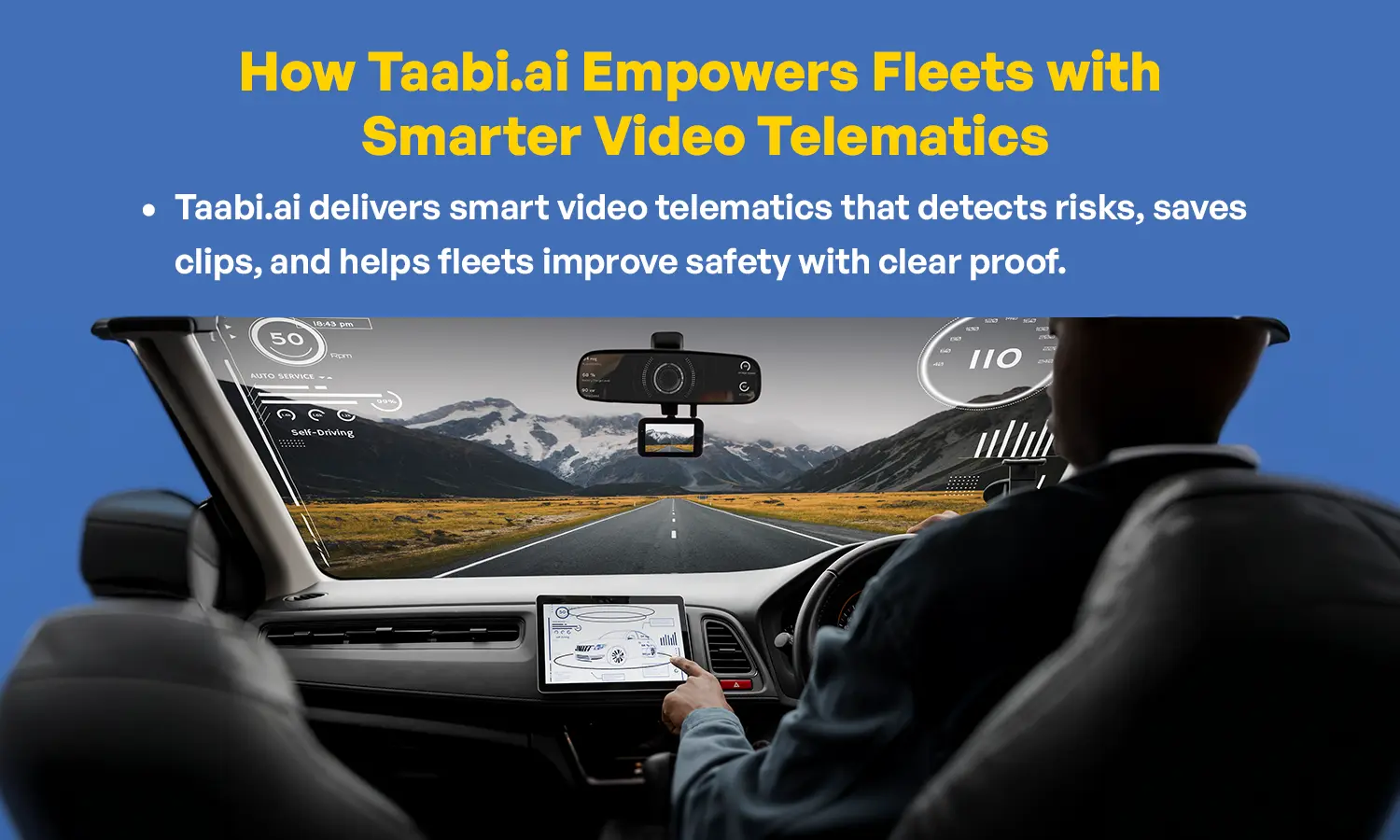
Taabi Provides video telematics for trucks, designed for Indian roads and driving conditions. Its telematics camera setup pairs road view, cabin view, and driving data into one place. Taabi flags fatigue, distraction, risky lane behaviour, overspeeding, and harsh driving in real time, and stores each event clip for later review.
Fleets can use Taabi to coach drivers fairly, reduce repeat risks, and handle claims with clear evidence. Unlike basic dashboard cameras, Taabi links every alert to data, so decisions are based on proof, not guesswork. This is a practical answer to what video telematics is for fleets that want safer routes and stronger control.
Conclusion
Knowing what is video telematics helps fleets choose safer ways to operate. By combining cameras, alerts, and driving data, fleets can prevent incidents, protect drivers, and keep deliveries on track. Taabi’s truck-first system makes this practical with real-time alerts and proof for every risky moment.
FAQS
Is telematics different from vehicle tracking?+−
Yes. Tracking shows location and route history. Telematics adds speed, idling, and engine data. With video telematics, fleets also see what happened on the road and inside the cabin, which helps explain risky events clearly.
What kind of vehicles can use video telematics?+−
Any commercial fleet vehicle can use it, especially heavy trucks, tippers, tankers, trailers, and construction vehicles. The system is built to handle long routes and high-risk driving environments where safety and proof matter most.
Does video telematics record drivers all the time?+−
The camera records continuously, but fleets usually review only event clips linked to risk alerts. The goal is safety and coaching, not constant manual monitoring. Event-based clips keep review focused and fair.