How Fuel Sensors Work in Commercial Fleets (OBD Misses This)

Key Takeaways
- ➤ Fuel makes up 30 to 40 percent of fleet operating costs.
- ➤ OBD estimates fuel use but does not measure tank volume.
- ➤ External sensors track fuel even when the engine is off.
- ➤ Theft and short-fueling become visible with exact data.
- ➤ Better fuel data improves routes, driving habits, and uptime.
Fuel Sensors Work in Commercial Fleets because fuel is no longer just an expense. By 2026, fuel takes up nearly 30 to 40 percent of a fleet’s total operating cost. Most transport businesses run on margins of just 9 to 10 percent. That means even small fuel losses quietly wipe out profits.
Many fleets still depend only on vehicle computer data to track fuel. On paper, this looks fine. On the road, it fails. This blog breaks down how Fuel Sensors Work in Commercial Fleets, what OBD really tells you, and why OBD alone leaves fuel theft, wastage, and refuel fraud completely unchecked.
Why Is Fuel Monitoring So Important for Commercial Fleets?
Fuel Sensors Work in Commercial Fleets because fuel loss is usually invisible. In fleets without proper monitoring, theft and misuse can eat up 10 to 25 percent of the fuel budget. This includes siphoning at rest stops, short-fueling at pumps, and fake fuel bills.
Fuel waste is not only theft. Idling is another silent problem. A truck burning fuel while standing still can waste thousands every year. Multiply that across 50 or 100 vehicles and the numbers get serious fast. A proper fuel tracking system shows where fuel is lost, not just how much was used.
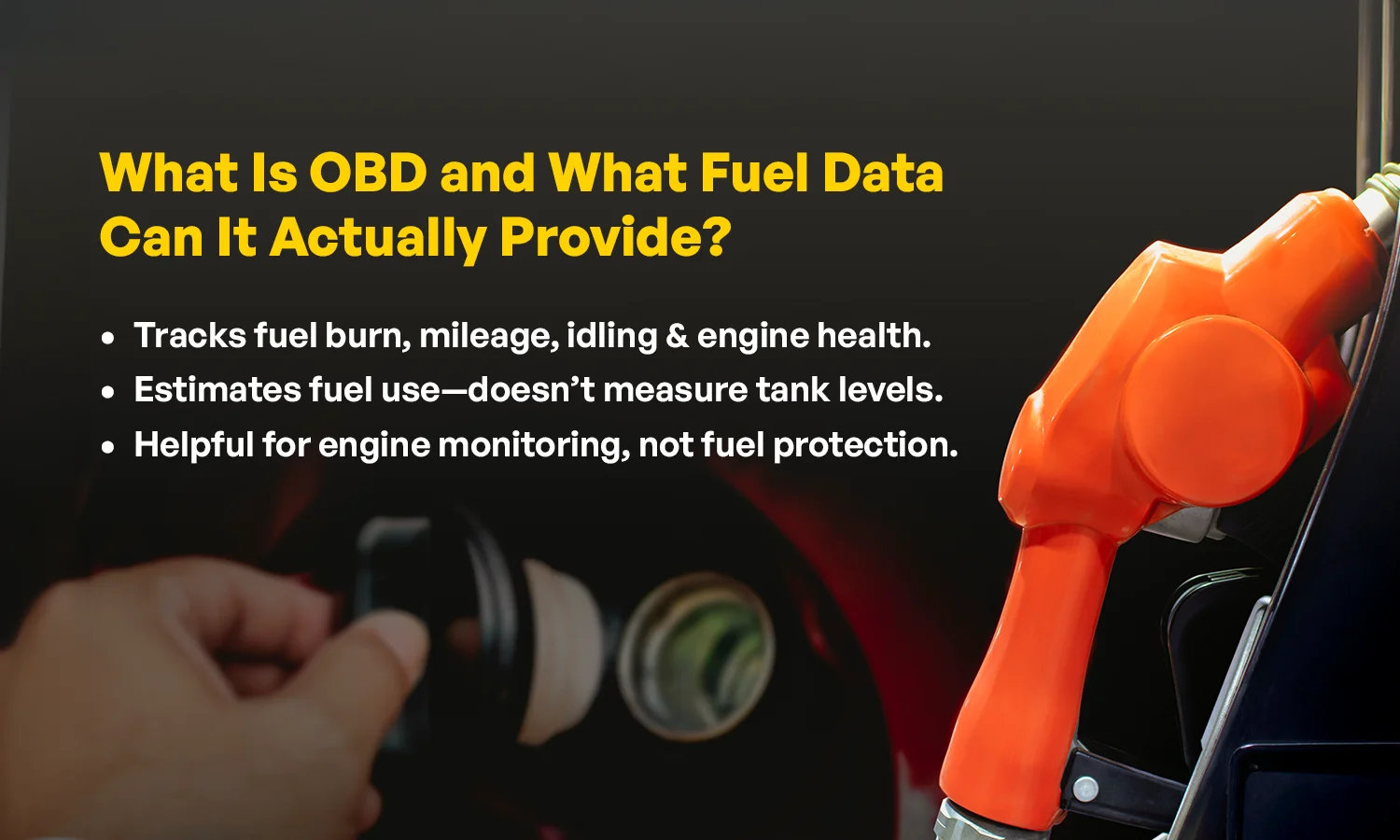
What Is OBD and What Fuel Data Can It Actually Provide?
Fuel Sensors Work in Commercial Fleets alongside OBD, not instead of it. An onboard diagnostic monitor connects to the truck’s internal computer and reads engine data. A typical obd system shows fuel burn rate, mileage, idling time, engine load, and fault codes. An obd monitor does not measure fuel inside the tank. It estimates fuel use based on injector timing and air-fuel ratios. Fuel level usually comes from a basic float sensor. On uneven roads or heavy loads, this data can be off by 5 to 10 percent. An OBD Fleet Tracker is useful for engine health, but it cannot protect fuel on its own.
How Do Fuel Sensors Improve Commercial Fleet Performance?
Fuel Sensors Work in Commercial Fleets by measuring fuel directly. A high-precision fuel tank sensor is installed inside the fuel tank using a metal probe. Most modern sensors use capacitive technology. As fuel rises or falls, electrical changes are converted into exact liters by a microchip. Unlike factory sensors, these probes ignore fuel movement on rough roads. A dedicated fuel sensor for trucks stays active even when the engine is off. This means sudden fuel drops trigger alerts instantly. Over time, fuel data also shows inefficient routes, overloading, harsh driving, and early engine problems that hurt mileage.
Why OBD Alone Isn’t Enough for Effective Fuel Management
Fuel Sensors Work in Commercial Fleets because OBD has serious blind spots. The biggest one is engine-off time. Most fuel theft happens when trucks are parked and the engine is off. During this time, OBD systems stop tracking fuel completely.
OBD data also shows fuel as a percentage, not liters. This makes it impossible to confirm if a pump actually delivered 100 liters or less. External sensors solve this. When fuel sensor data is matched with OBD engine status, theft stands out clearly. False alerts disappear, and real losses become visible.
When these two data sources are viewed together, fleets gain a broader operational view of fuel usage. Managers can see how refuelling patterns, driving behaviour, idle time, and route conditions affect consumption across the fleet. Over time, this level of visibility supports better planning and cost control. Platforms that combine sensor data with vehicle diagnostics help turn fuel monitoring into part of day-to-day fleet operations rather than a separate reporting task.
Conclusion
Fuel Sensors Work in Commercial Fleets because fuel loss today is organised, not accidental. OBD systems still matter for engine health and diagnostics, but they were never designed for fuel control. They estimate. They do not measure.
By using external fuel sensors along with OBD data, fleets finally see what happens when engines are off, refuels are done, and routes change. Platforms like Taabi.ai use this combined approach to turn fuel from a blind cost into a controlled number that fleets can act on.
FAQS
Where Is A Fuel Sensor Located In Commercial Fleets?+−
Fuel Sensors Work in Commercial Fleets by using an external probe placed directly inside the fuel tank. A hole is drilled at the top, and a metal probe reaches close to the bottom. A small external unit sends fuel data to the cloud in real time.
How Accurate Are Fuel Sensors?+−
Fuel Sensors Work in Commercial Fleets with much higher accuracy than built-in systems. Factory float sensors can show errors of up to 15 percent. External probes are calibrated to the tank shape and usually operate within a 1 percent error range.
Can Obd Systems Detect Fuel Theft?+−
Fuel Sensors Work in Commercial Fleets because OBD systems cannot reliably detect theft. Most theft happens when engines are off. OBD stops tracking at that point. Only an external sensor that stays active can catch sudden fuel drops and send alerts.