TMS vs ERP: Why ERP Alone Fails Your Fleet Operations
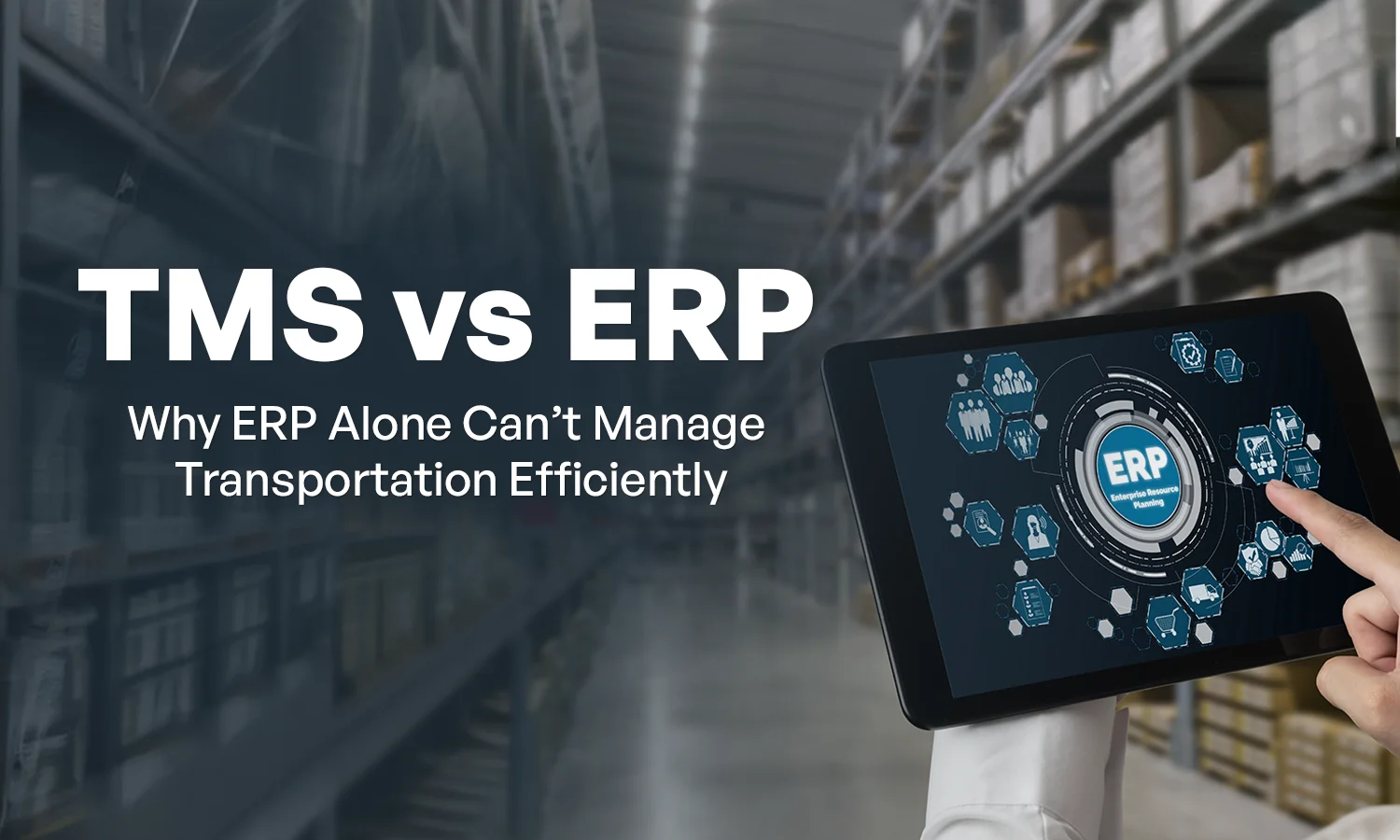
In 2026, many logistics companies make the same mistake: they assume that because they have a powerful ERP software, they don’t need a specialized TMS. While an ERP is the backbone of your business, relying on it for your transportation needs is like trying to drive a truck with a calculator.
At Taabi AI, we believe in using the right tool for the job. Here is why the TMS vs ERP debate matters and why your freight operations need a dedicated transportation management system to stay competitive.
What is an ERP System in Transportation?
An ERP software (Enterprise Resource Planning) is designed to manage the “Big Picture.” It handles Freight Accounting, human resources, and warehouse inventory. It’s excellent at recording what happened at the end of the day.
However, ERPs are inherently static. They were built for back-office functions, not for the chaotic, real-time world of the road. When it comes to fleet management in transportation, an ERP alone cannot tell you if a truck has diverted from its route or if a driver has suddenly braked hard. It lacks the “execution layer” required to manage moving assets.
Why Use Both ERP and TMS?
The most successful logistics teams in 2026 don’t choose one; they integrate both. Think of your ERP as the brain that plans the budget, and the TMS as the central nervous system that reacts to the environment.
By combining them, you get:
-
Seamless Freight Procurement:
Your ERP identifies the need for a shipment, and your TMS automatically finds the best carrier at the lowest rate.
-
Accurate Freight Accounting:
Instead of manual data entry, the TMS sends real-time delivery confirmations and fuel costs directly back to your ERP’s financial modules.
-
AI in Transportation Management:
While an ERP stores data, a TMS uses AI to predict traffic, weather, and vehicle health, keeping your fleet on the move.
Understanding Differences Between ERP and TMS Functions
The main difference lies in visibility and timing. An ERP is a system of record (past-focused), while a TMS is a system of action (real-time focused).
-
ERP Focus:
Financials, HR, Order Entry, and Billing.
-
TMS Focus:
Route Optimization, Real-time Tracking, Carrier Performance, and Freight Procurement.
Comparison Table: ERP vs. TMS Features
| Feature | ERP Software | TMS (Taabi AI) |
|---|---|---|
| Primary Goal | Business Admin & Finance | Transport Execution & ROI |
| Real-Time Tracking | No (Manual Updates) | Yes (Live GPS/IoT) |
| Route Optimization | Basic/Static | AI-Driven/Dynamic |
| Vehicle Diagnostics | None | Live OBD & Fuel Alerts |
| Implementation | 12-18 Months (Slow) | 3-6 Months (Fast) |
| Data Focus | Transactional | Operational & Predictive |
This is where a modern TMS adds value beyond ERP systems by generating operational intelligence from live vehicle, route, and freight data, helping logistics teams make faster and better transport decisions.
How Do You Choose the Right Systems for Freight Operations?
When building your tech stack, don’t look for a “one-size-fits-all” solution. Follow these Best Transportation Management steps:
-
Identify the Gaps:
If your team is still using WhatsApp or phone calls to find truck locations, your ERP is failing your logistics.
-
Look for Integration:
Choose a transportation fleet management software like Taabi that has an open API to "talk" to your existing ERP.
-
Prioritize Execution:
Ensure your chosen system can handle the "on-the-road" variables, fuel theft, engine health, and driver safety.
Conclusion
In the TMS vs ERP standoff, the winner is the company that integrates both. An ERP provides the administrative foundation, but a dedicated TMS gives you the agility to win on the road. By leveraging AI in transportation management, Taabi AI ensures your fleet isn’t just a cost on a spreadsheet, but a high-performing engine of growth.
FAQS
Is TMS part of ERP?+−
Some ERPs have “transportation modules,” but they usually lack the real-time IoT connectivity and predictive AI found in dedicated TMS platforms.
Is implementing a TMS worth it?+−
Absolutely; most fleets see an ROI within 3 to 6 months through fuel savings, reduced downtime, and lower freight costs.
Can TMS and ERP work together?+−
Yes, they are designed to be integrated. The ERP handles the order and the invoice, while the TMS handles everything that happens in between.