
OBD vs Fuel Sensors: 5 Key Differences Fleets Must Know

Managing fleet fuel efficiently starts with understanding where fuel is actually going. Fuel typically accounts for 30–40% of a fleet’s total operating cost, making fuel visibility one of the most important aspects of fleet management.
Many operators rely only on engine diagnostics or only on tank monitoring. However, the real advantage comes from understanding OBD vs Fuel Sensors and how each technology measures different parts of vehicle performance.
An OBD tracking device reads engine activity, while a fuel level sensor measures the physical fuel inside the tank. When these two systems work together, fleets gain a much clearer picture of vehicle health, fuel consumption, and operational efficiency.
What Is an OBD System, and What Does It Measure?
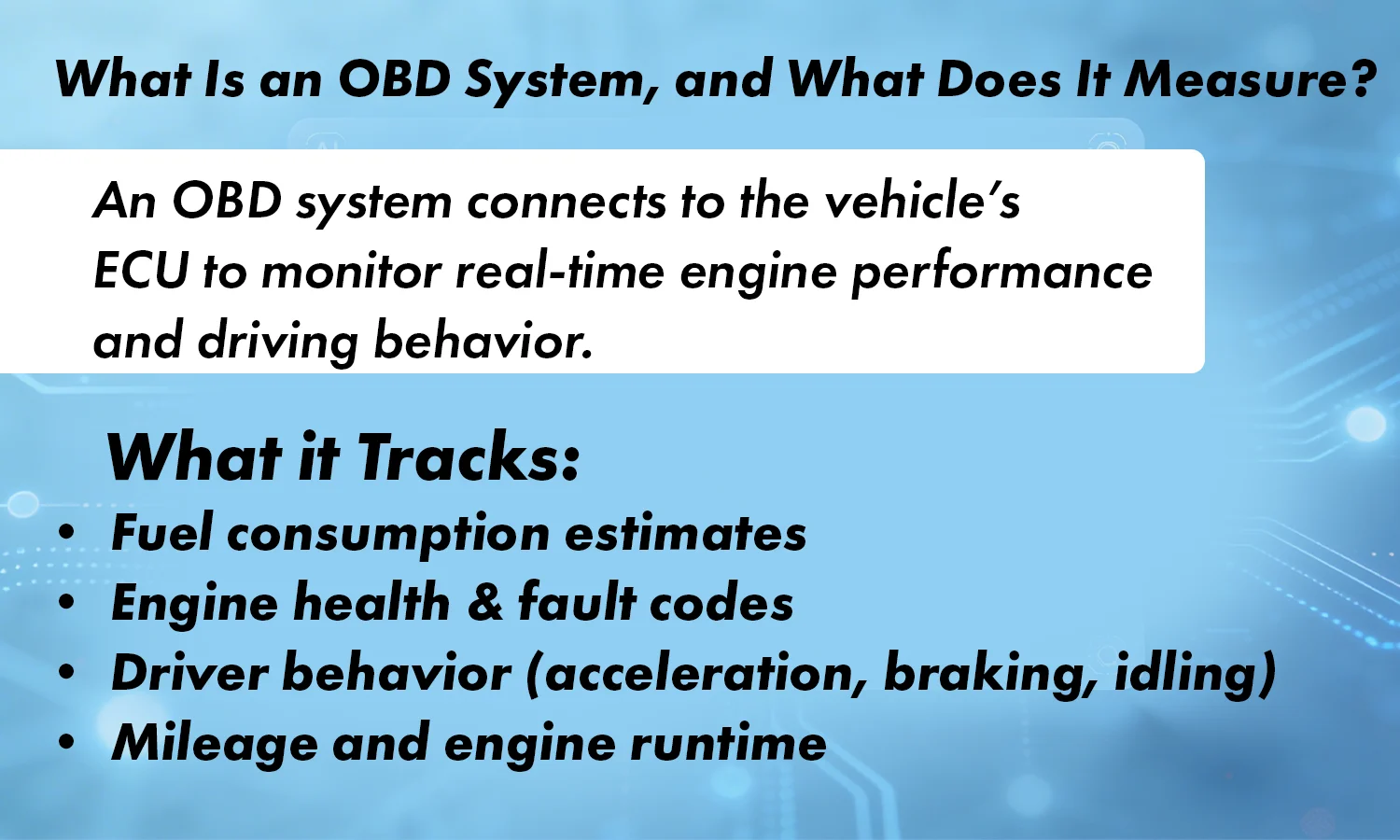
An OBD diagnostic system (On-Board Diagnostics) acts as the vehicle’s internal monitoring system. An OBD fleet tracker connects directly to the vehicle’s Engine Control Unit (ECU) and reads real-time performance data. Using on board vehicle diagnostics, fleets can monitor several engine-related signals such as:
- ➤ Fuel consumption estimates based on engine load and air-fuel ratios
- ➤ Engine health indicators and fault codes
- ➤ Driver behavior patterns, including harsh acceleration, braking, and idling
- ➤ Mileage and engine runtime data
Because of these capabilities, an OBD fleet tracker is extremely valuable for understanding how a vehicle is performing during daily operations. However, in the discussion of OBD vs Fuel Sensors, it is important to remember that an OBD system calculates fuel usage rather than measuring the fuel directly in the tank. This means it cannot always detect issues such as fuel theft or inaccurate refueling.
What Are Fuel Sensors, and How Do They Work?
While OBD monitors the engine, a fuel level sensor measures the physical amount of fuel inside the tank. These sensors are installed directly inside the tank and use technologies such as capacitive or ultrasonic measurement to calculate fuel volume with accuracy levels reaching up to 99%. A fuel tracking system connected to these sensors can capture several important fuel events:
- ➤ Static fuel levels when the vehicle is parked
- ➤ Refueling events and exact liters added
- ➤ Sudden fuel drops, which may indicate siphoning or leaks
- ➤ Fuel consumption patterns across trips and routes
Industry research suggests that fuel theft and reporting errors can account for 5–10% of total fleet fuel consumption when proper monitoring systems are not in place.
This is why fleets increasingly deploy a fuel management system for fleet operations to ensure that fuel usage is monitored accurately throughout the vehicle’s journey.
OBD vs Fuel Sensors: Understanding the Key Differences
The main distinction in OBD vs Fuel Sensors comes down to calculated data versus physical measurement.
| Feature | OBD Tracking Device | Fuel Level Sensor |
|---|---|---|
| Data Source | Engine Control Unit | Physical fuel tank |
| Fuel Accuracy | Estimated (85–90%) | High precision (up to 99%) |
| Theft Detection | Limited | Detects siphoning and leaks |
| Installation | Plug-and-play | Tank hardware installation |
| Key Purpose | Engine diagnostics | Fuel monitoring |
An OBD diagnostic system provides critical insights into engine activity and driver behavior. A fuel tracking system focuses on monitoring the actual fuel inside the tank. Understanding OBD vs Fuel Sensors helps fleet managers realize that each system solves a different problem.
How OBD and Fuel Sensors Work Together in Taabi’s Fleet Management Software
Instead of forcing fleets to choose between technologies, Taabi combines both data streams inside its fuel management system for fleet operators.
Taabi integrates OBD diagnostic data with fuel sensor readings, allowing the platform to compare engine fuel usage with the physical fuel level inside the tank. This combination creates operational intelligence that reveals exactly how fuel is being used across trips.
For example:
- ➤ If the engine shows no activity but the fuel level sensor detects a sudden drop, the system flags a possible fuel theft event.
- ➤ If the engine shows high fuel burn but tank levels remain stable, managers can investigate inefficient driving patterns.
Fleets that combine telematics diagnostics with fuel sensors can reduce fuel consumption by up to 10–15% through better visibility and driver management.
By analyzing both engine data and tank measurements together, Taabi provides a more accurate view of fleet operations and helps managers control fuel costs more effectively.
Conclusion
Understanding OBD vs Fuel Sensors is essential for fleets that want better fuel visibility and operational control. An OBD diagnostic system offers valuable insights into engine health and driver behavior, while fuel level sensors measure the actual fuel inside the tank. When these technologies are combined through an integrated platform, fleets gain the visibility needed to reduce fuel waste, detect theft, and improve operational efficiency. For transport companies focused on controlling costs and improving performance, using both technologies together provides a smarter foundation for modern fleet management.
FAQS
What does OBD stand for?+−
OBD stands for On-Board Diagnostics, a system that monitors vehicle performance and generates diagnostic data from the engine and other components.
Can you read the fuel level from OBD?+−
An OBD system can show a fuel percentage reading from the vehicle’s factory sensor, but it usually lacks the precision needed for accurate fuel monitoring.
Can OBD detect all truck problems?+−
An OBD diagnostic system can detect many engine and emission-related issues, but it cannot identify problems such as fuel theft, tire wear, or structural damage without additional sensors.