Smart Alerts: How Fuel Sensors and OBD Prevent Fleet Errors
Key Takeaways
- ➤ Smart Alerts reduce the need for manual supervision by flagging risks in real time.
- ➤ An OBD Fleet Tracker monitors engine health to prevent expensive roadside breakdowns.
- ➤ A fuel management system for fleet use stops theft and identifies wastage from idling.
- ➤ Integrating VT, FS and OBD data builds 360-degree operational intelligence.
- ➤ Automation through alerts is a primary step toward achieving operational autonomy.
Automation through alerts is a primary step toward achieving operational autonomy.
Human error is a significant drain on fleet resources. A driver might overlook a maintenance schedule or fail to report fuel loss during a trip. These gaps reduce margins and create operational stress. As we move through 2026, the solution is not more supervision but the use of Smart Alerts. By linking an on-board diagnostic tool with precision fuel sensors, Taabi AI turns vehicles into self-reporting assets. These systems catch errors before they become expensive disasters.
How Can Smart Alerts Reduce Human Error in Fleets?
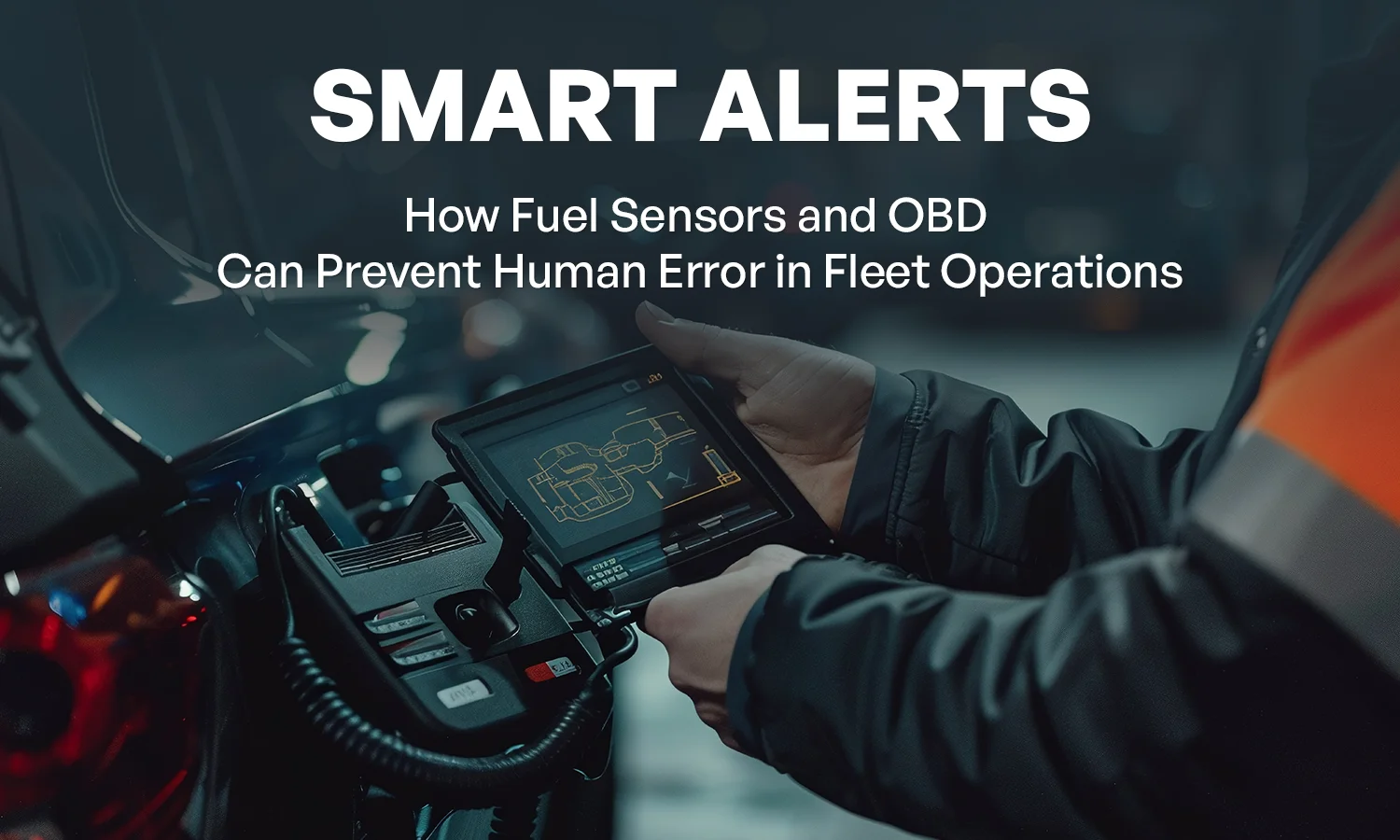
Human error usually stems from a lack of real-time visibility. A driver might ignore a minor engine noise or a manager might miss a fuel discrepancy in a manual logbook. Smart Alerts act as a digital supervisor that works around the clock. When an OBD Fleet Tracker is plugged into a vehicle, it constantly scans the onboard diagnostic monitor for irregularities. If a driver accelerates too harshly or leaves the engine idling for a long time, the system sends an instant notification. This removes the guesswork and ensures that operational standards are met without constant manual checking. It allows managers to focus on exceptions rather than monitoring every minute of a trip.
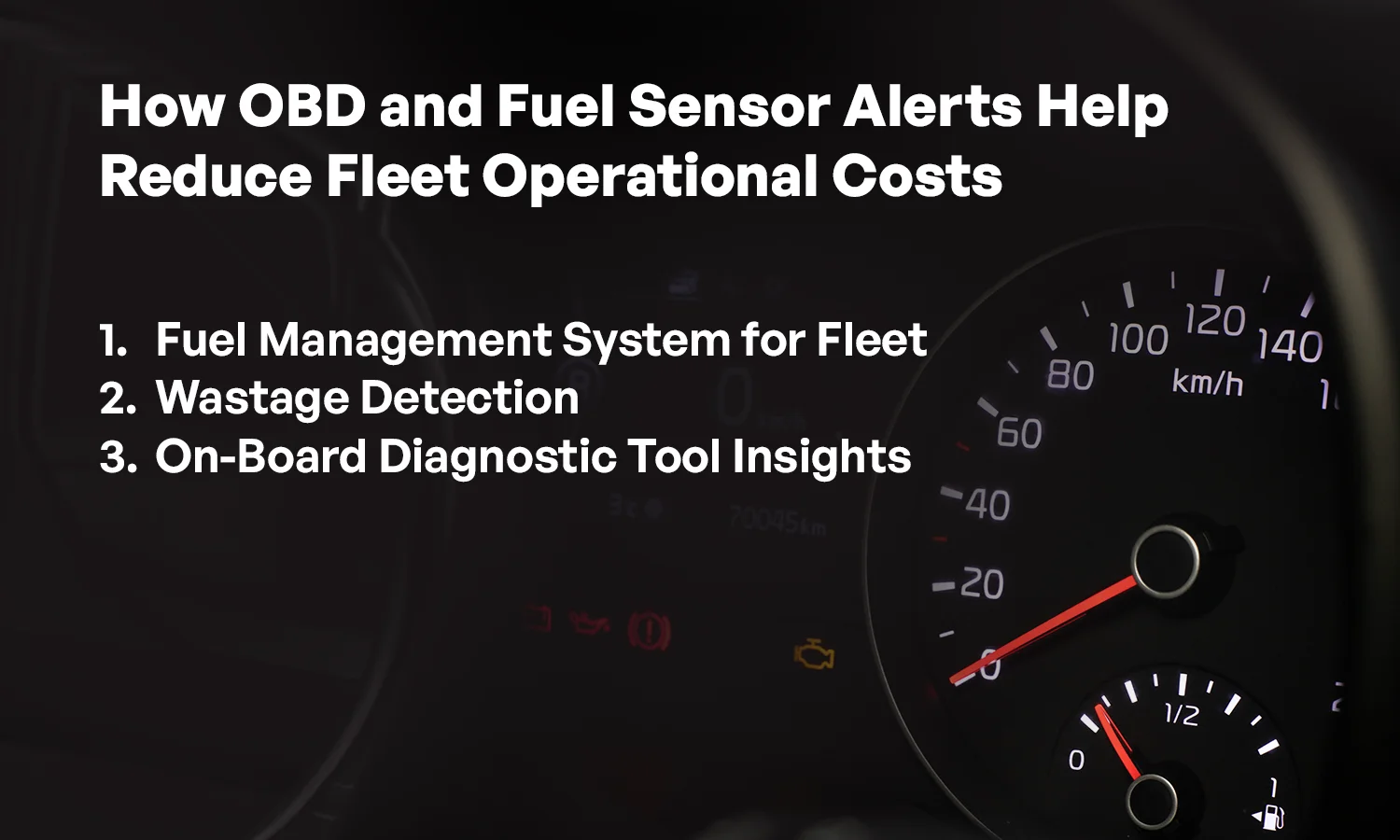
How OBD and Fuel Sensor Alerts Help Reduce Fleet Operational Costs
Fuel and maintenance are the two largest expenses for any logistics business. Smart Alerts targeted at these areas provide an immediate return on investment.
| Feature | Focus Area | Operational Benefit |
|---|---|---|
| Fuel level sensor | Fuel Management | Detects sudden drops and siphoning in real time Detects sudden drops and siphoning in real time |
| OBD Fleet Tracker | Maintenance | Identifies engine faults before they cause failures |
| Wastage Detection | Productivity | Flags excessive idling to reduce fuel spend |
A fuel management system for fleet operations relies on accurate data. By integrating a fuel level sensor with Taabi AI, you get notified of sudden level drops. This helps in detecting fuel theft that manual reporting often misses. Furthermore, on board diagnostic tool insights monitor parameters like throttle position and fuel trim. This identifies inefficient driving patterns that lead to high fuel consumption.
How OBD and Fuel Sensor Alerts Can Prevent Breakdowns
A typical setup uses a forward-facing and cabin-facing camera tied to a telematics device. The video telematics camera records the road and driver actions. At the same time, the Reactive maintenance is the fastest way to lose money in logistics. Fixing a truck only after it stops leads to downtime and higher repair bills. Smart Alerts shift your strategy toward predictive uptime. unit logs speed, braking, cornering, and location. Many fleets also add a fleet video camera on specific truck types, like tankers or tippers, to capture blind-side events. Through an on board diagnostic monitor, Taabi AI tracks Diagnostic Trouble Codes. If the system detects rising engine temperatures or a battery voltage drop, it sends a notification to the maintenance team. This allows you to fix a minor sensor issue for a small cost rather than replacing an entire engine later. When combined with a fuel tracking system, it also catches fuel leaks or injector issues that could lead to catastrophic engine failure.
What Are the Best Practices for Implementing OBD and Fuel Sensor Alerts?
To get the most out of your hardware, follow these steps for smart operations:
- ➤ Set Logical Thresholds: Do not alert for every minor event. Set notifications for critical issues like a 5% fuel drop in two minutes or high-priority engine faults.
- ➤ Integrate for a Unified View: Ensure your fuel tracking system and OBD data flow into one dashboard. This provides a complete picture of fleet health.
- ➤ Automate the Response: Link alerts to specific actions. For example, a low fuel alert should suggest the nearest authorized fuel station on the driver route.
360-Degree Operational Intelligence
In addition to OBD and fuel sensors, integrating Video Telematics is a key step for any modern fleet. While OBD handles health and fuel sensors handle costs, Video Telematics provides operational safety.
When you combine these three layers, you achieve 360-degree operational intelligence. This creates a total view of the vehicle, the fuel and the road. This integrated approach is the backbone for your journey toward operational autonomy. It ensures that your fleet can operate safely and efficiently with minimal manual intervention.
Conclusion
The most successful fleets in 2026 are those that use data to bridge the gap between human capability and mechanical reality. Smart Alerts from sensors and an on-board diagnostic tool provide the transparency needed to protect margins. By choosing a partner like Taabi AI, you empower your team to eliminate errors, maximize uptime and protect every drop of fuel.
FAQS
Can smart alerts help prevent maintenance issues before they occur?+−
Yes. By monitoring live engine data, these notifications flag minor faults like sensor wear or temperature spikes before they lead to a full breakdown.
What is a smart alert in fleets?+−
A Smart Alert is an automated real-time notification triggered by IoT sensors when a vehicle deviates from safe or efficient operating parameters.
Can smart alerts reduce fuel wastage and operational costs?+−
They detect fuel theft, unauthorized idling and inefficient driving habits. This allows managers to take immediate corrective action to save money.