How Vehicle Telematics Devices Reduce Fleet Fuel Costs
Key Takeaways
- ➤ Vehicle telematics devices track location, driving behaviour, and engine patterns in real time.
- ➤ Fuel savings come from fixing repeated waste like detours, harsh driving, and idling.
- ➤ A good system includes idling reports, driver behaviour insights, and fuel analytics.
- ➤ Idling control is one of the quickest ways to cut fuel costs.
- ➤ Adding telematics to fleet operations improves fuel discipline across all routes.
Introduction
Fuel is the biggest daily expense for most truck fleets. A few extra minutes of idling, a slightly longer route, or harsh driving habits can quietly push costs up across an entire month. Many fleets only notice the problem when the fuel bill becomes painful. This is where vehicle telematics devices make a real difference. They help you track how fuel is being used, what is causing waste, and which trucks or drivers need attention. Instead of guessing, managers get clear data to take action early. In this blog, we will look at what vehicle telematics devices are, how they save fuel, what features matter most, and why idling control is one of the fastest ways to reduce fuel spend.
What Are the Vehicle Telematics Devices?
Vehicle telematics devices are hardware units installed in trucks that collect live data from the vehicle and send it to a fleet dashboard. They usually connect to GPS and the truck’s onboard systems to track location, speed, engine performance, idling time, and other trip behaviour.
Think of them as a smart link between the truck and the manager. A telematics GPS and tracker setup shows where the vehicle is and how it is running at the same time. Instead of only seeing a moving dot, fleets can see what the truck is doing on that route. For commercial fleets, a telematics device for trucks is built to handle longer routes, heavy load patterns, and real-world road conditions. That makes the data more useful for fuel decisions.
How Can Telematics Devices Help Save Fuel?
Fuel waste comes from patterns that repeat daily. Vehicle telematics devices help fleets spot these patterns and fix them. Here is how they reduce fuel costs:
-
Better route discipline
When a truck takes detours or longer routes, fuel burn goes up. With telematics vehicle tracking, fleets compare planned routes vs actual routes and reduce unnecessary distance.
-
Driver behaviour control
Overspeeding, harsh acceleration, and harsh braking increase fuel usage. Telematics highlights these habits so managers can coach drivers based on real trip data.
-
Maintenance-linked fuel savings
Trucks with weak engine health or poor tyre pressure burn fuel faster. Telematics alerts help fleets act before fuel loss becomes routine.
-
Proof-based safety support
When fleets add fleet video telematics, they also get video context tied to driving events. This helps explain why fuel-heavy driving happens and improves coaching accuracy.
Used well, vehicle telematics devices turn fuel saving into a daily habit, not a one-time effort.
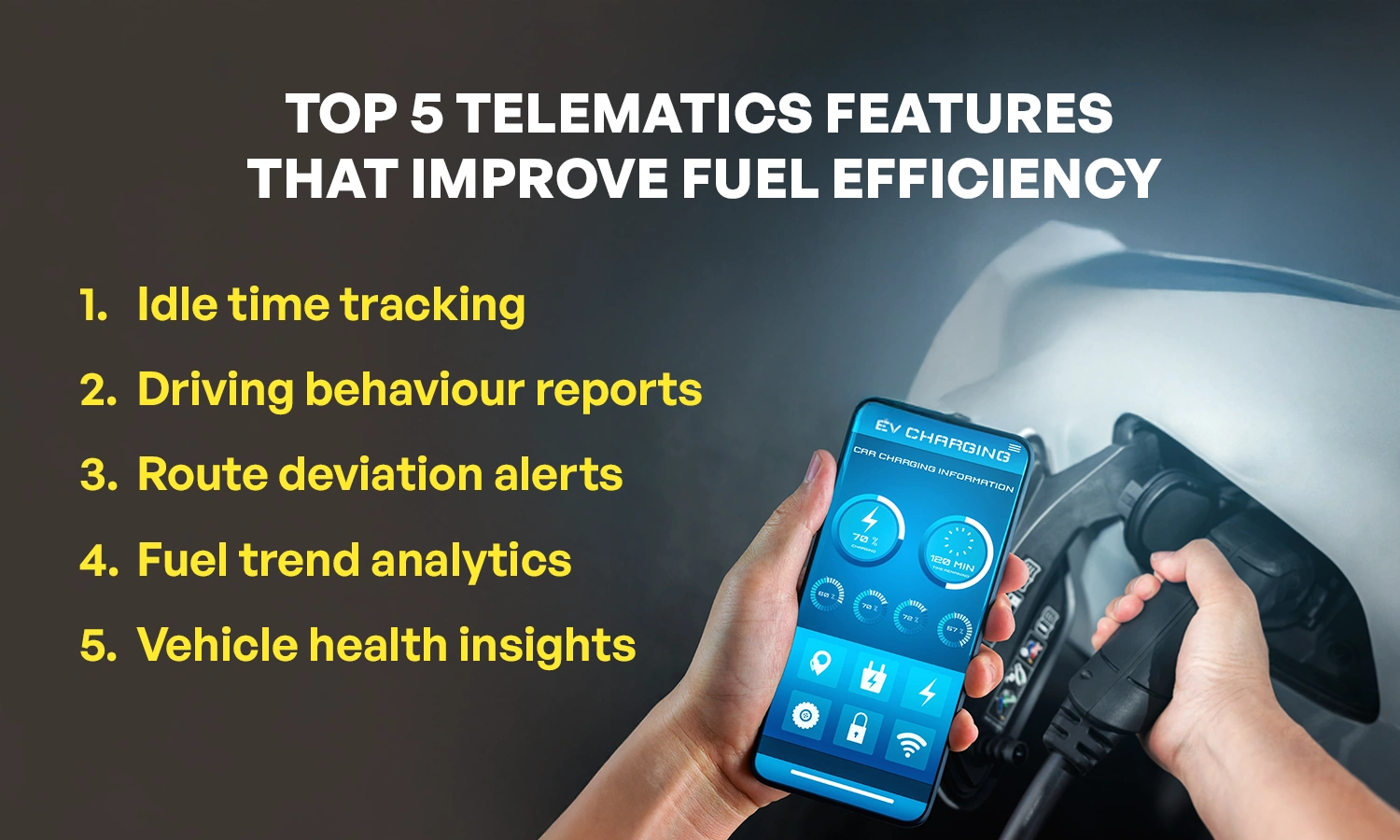
Top 5 Telematics Features That Improve Fuel Efficiency
Not all systems offer the same value. If fuel savings are your goal, here are five features to look for in vehicle telematics devices:
-
Idle time tracking
Shows how long each truck sits with the engine running, which is one of the biggest hidden fuel drains.
-
Driving behaviour reports
Highlights overspeeding, rapid acceleration, and harsh braking that increase fuel burn
-
Route deviation alerts
Flags detours and unplanned stops that add distance and fuel cost.
-
Fuel trend analytics
A clear telematics dashboard helps you compare fuel usage across trucks, routes, and drivers.
-
Vehicle health insights
Links engine stress and fault patterns to fuel efficiency, so servicing is planned early.
When these features sit in one system, fleets get a full view of what is driving their fuel bill and how to fix it.
How Do Telematics Devices Help Reduce Excessive Idling and Save Fuel?
Excessive idling is one of the fastest ways fleets lose fuel without noticing. A truck might idle during loading, waiting, traffic, or even because the driver wants cabin comfort. Ten minutes here and twenty minutes there add up to hours of wasted fuel in a week.
Vehicle telematics devices make idling visible. They show:
- ➤ Which trucks idle the most
- ➤ where idling happens
- ➤ How much fuel that idling burns
- ➤ Which drivers repeat the habit
Once the fleet sees this clearly, action becomes easy. Managers set idling limits, train drivers to shut off engines during long waits, and reward low-idle driving. A good telematics tracker also sends alerts when idling crosses a set threshold.
Over time, this single change can cut fuel spend sharply, especially in long-haul routes.
Conclusion
Fuel savings happen when fleets control daily behaviour, not only fuel purchase. Vehicle telematics devices help fleets do that by showing where fuel is wasted and why. From route discipline and driver coaching to idling control and health alerts, telematics turns fuel saving into a measurable system. With strong telematics fleet management, fleets can reduce fuel costs without reducing trip volume and build a cleaner, more predictable fuel budget month after month.
FAQS
Is telematics a GPS?+−
Telematics includes GPS, but it is more than that. GPS shows where a truck is. Telematics adds data about speed, idling, engine health, and driver behaviour, helping fleets understand the full trip.
Do all vehicles have telematics?+−
No. Telematics devices must be installed by fleet owners. Most commercial fleets add them because manual monitoring cannot keep up with route pressure and fuel costs.
Is telematics easy to install in fleets?+−
Yes. Installation is usually quick, and most systems work with standard vehicle power and diagnostics. After setup, managers access all tracking and fuel reports through a single dashboard.