Traditional TMS vs. AI-Powered TMS: Why Taabi is the Future
Introduction
In the fast-moving logistics world of 2026, relying on a Traditional TMS is like trying to navigate a modern city with a paper map from the 1990s. While it might have worked in a slower era, today’s supply chains are too complex and unpredictable for static tools.
At Taabi AI, we see the struggle fleet owners face when their software can’t keep up. Here is why the old way of managing transport is failing and how our machine intelligence is building a better path forward.
What is Traditional TMS and How Does It Work?
A Traditional TMS (Transportation Management System) was designed as a system of record. It functions mainly as a digital filing cabinet for your shipping data. In this setup, a manager manually enters data, assigns a carrier, and tracks the shipment via phone calls or basic GPS “pings.” It is reactive, it tells you that a delivery was late after the customer has already complained. While it helps organize paperwork, it lacks the live connection to shipment status, route progress, and operational data across the transport network.
Why Is Traditional TMS Ineffective for Modern Supply Chains?
Modern supply chains require speed and “uptime.” A Traditional TMS falls short because:
- ➤ Manual Data Entry: It relies on humans to input information, which leads to errors and slow procurement cycles.
- ➤ Lack of Live Context: It may show shipment location, but it cannot provide deeper insights into route performance, delivery delays, or freight cost trends.
- ➤ Fragmented Visibility: Data is often trapped in different places, GPS in one app, fuel logs in another, and billing in a third. This creates a “blind spot” in your transportation and logistics management.
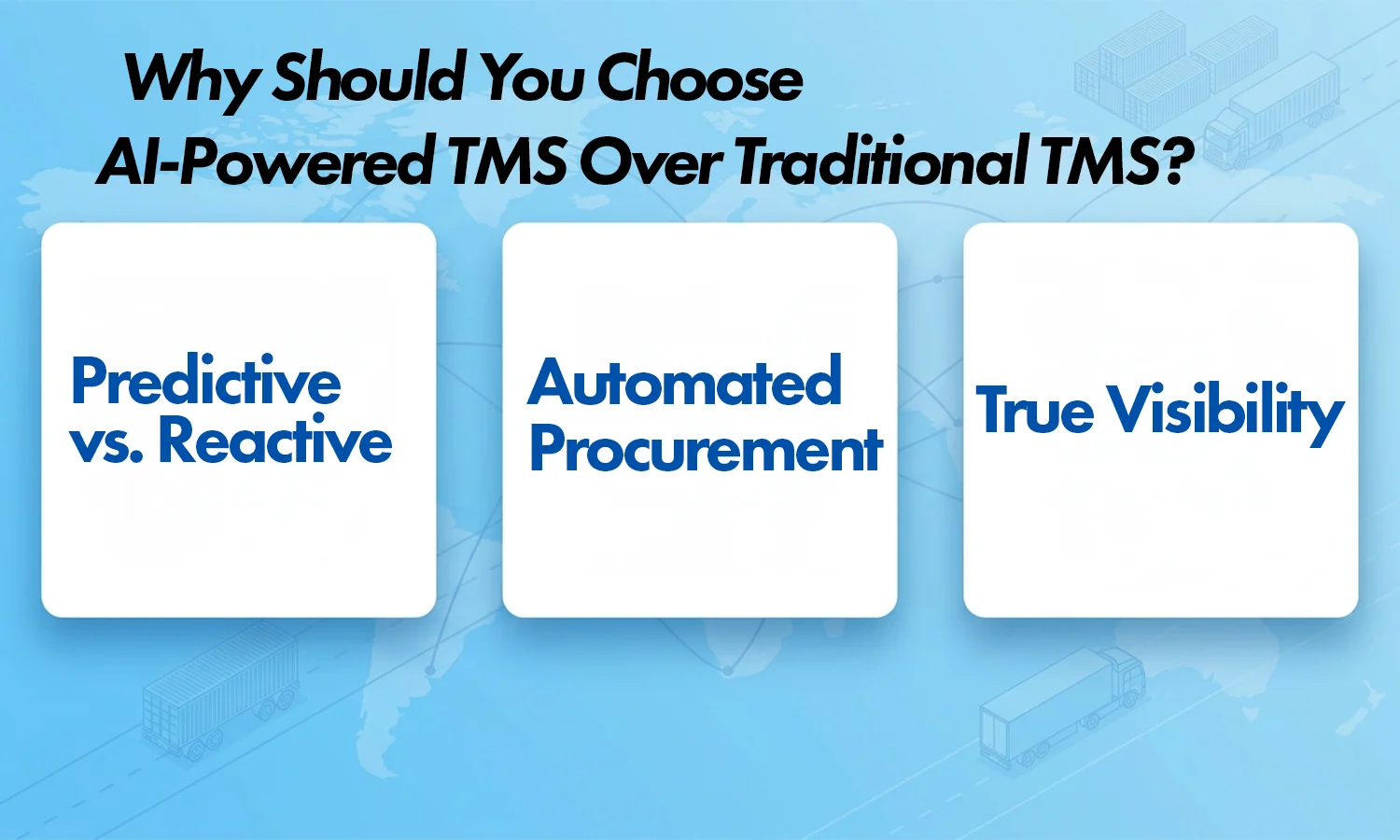
Why Should You Choose AI-Powered TMS Over Traditional TMS?
The shift from a standard TMS system for logistics to an AI TMS is the biggest upgrade a fleet can make. Taabi’s AI doesn’t just store data; it learns from it.
- ➤ Predictive vs. Reactive: Taabi predicts delays and operational disruptions before they happen
- ➤ Automated Procurement: We move your sourcing from days to hours by automating RFQs and digital auctions.
- ➤ True Visibility: We integrate operational data such as route performance, shipment status, and freight costs into a single dashboard
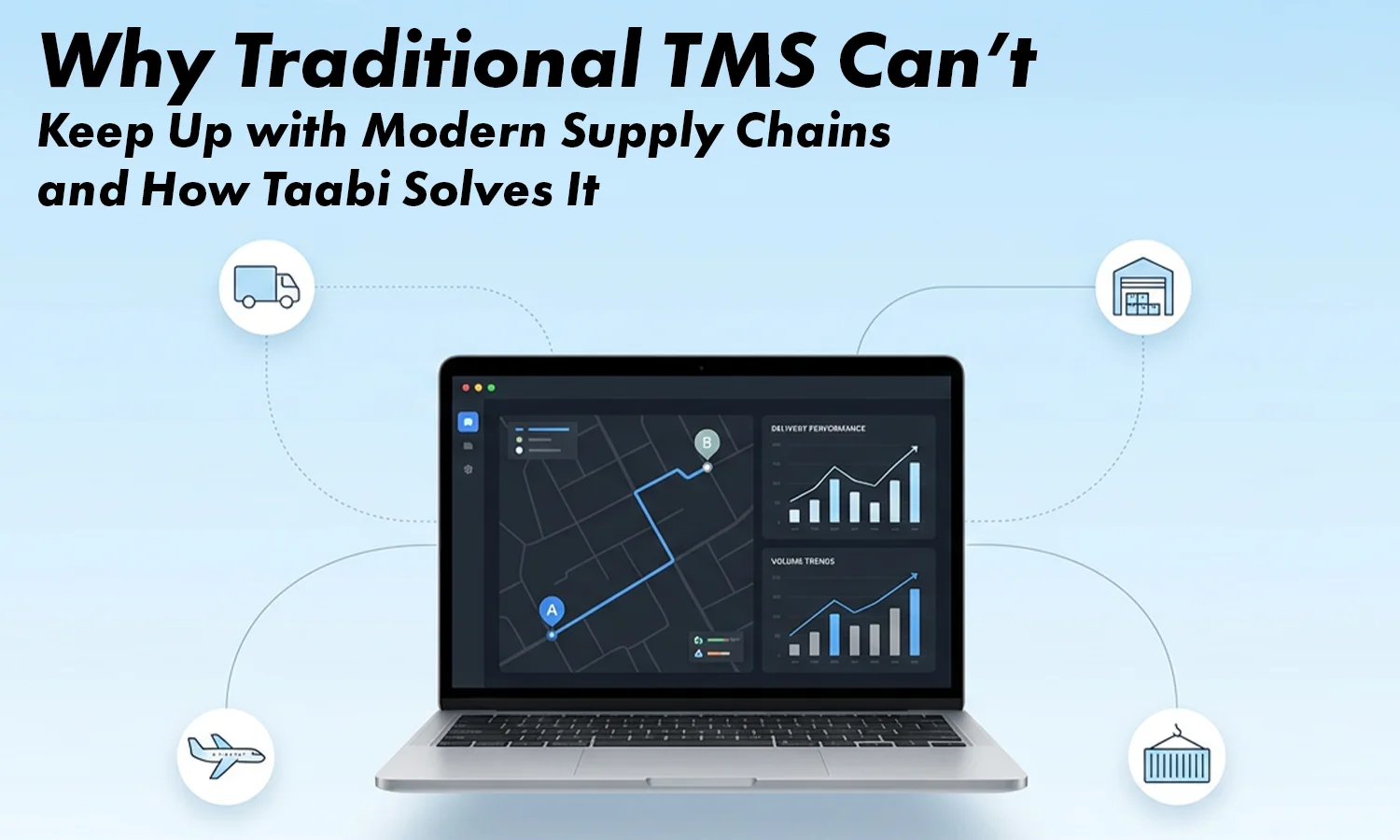
Why Traditional TMS Can’t Keep Up and How Taabi Solves It
Modern logistics is volatile. Fuel prices change daily, and customers demand instant updates. Taabi solves the limitations of a Traditional TMS through three core pillars:
1. Total IoT Integration
Unlike old TMS software, Taabi acts as a single source of truth. We integrate shipment tracking data, route analytics, and logistics performance metrics into one view. You don’t just see a dot on a map, you see shipment status, route performance, and delivery progress in real time.
2. AI-Driven Route & Load Optimization
Traditional systems use static routes. Taabi’s transportation fleet management software uses machine learning to analyze traffic, weather, and vehicle weight to suggest the most fuel-efficient path. This reduces empty miles and lowers your carbon footprint.
3. Smart Procurement & Governance
Taabi automates the entire freight lifecycle. From digital contracts to audit-ready logs, we remove the “human error” that plagues old systems. This leads to an 8-12% reduction in freight costs and ensures 100% compliance.
Conclusion
A Traditional TMS is no longer enough to stay profitable. To lead in 2026, you need a system that thinks, predicts, and acts. Taabi solves the gaps in old technology by providing a proactive, AI-driven transportation management system that keeps your fleet moving and your costs down.The future of logistics isn’t just about moving cargo; it’s about moving it with operational intelligence powered by Taabi.
FAQs
Can traditional TMS integrate with modern ERP?+−
Most can link via basic APIs, but they often struggle to pass real-time operational data such as shipment status, route updates, and freight costs.
What are the biggest limitations of traditional TMS?+−
The biggest gaps are the lack of predictive alerts, high dependence on manual data entry, and the inability to provide real-time supply chain visibility.
Can traditional TMS scale with business growth?+−
Scaling is difficult because old systems require more manual labor as you add trucks. Taabi’s AI automates the workload, allowing you to grow without adding more office staff.