TMS in Logistics: Meaning, Benefits and How It Works
In the fast-paced world of logistics, moving goods from Point A to Point B is no longer just about having a truck and a driver. It is about precision. As we move through 2026, the complexity of global supply chains has made manual coordination nearly impossible. This is where a Transportation Management System (TMS) steps in.
But what exactly is TMS in Logistics? Think of a TMS as the “Control Tower” of your supply chain. It is a specialized software that helps businesses plan, execute, and optimize the physical movement of goods while ensuring the entire process is compliant and documented.
What Is TMS in Logistics and How It Works
At its core, a TMS is a category of supply chain management software that focuses on transportation in logistics management. It acts as a bridge between your warehouse and your customer.
While a basic GPS tracker tells you where a truck is, a TMS tells you how it should get there, which carrier is the most cost-effective, and when it will arrive based on real-time AI data. For teams using Taabi AI, a TMS in logistics becomes even more powerful by integrating proprietary IoT data directly into the planning phase, creating a seamless loop between “The Plan” and “The Reality.”
Why Logistics Teams Need a Transportation Management System?
Logistics teams today face a “data mountain.” Managing freight rates, delivery schedules, and shipment coordination through spreadsheets is a recipe for delays and inefficiencies.
Transportation in supply chain management has become highly volatile. Without TMS in logistics, teams struggle with:
- ➤ Fragmented Data: Information is stuck in emails or WhatsApp chats.
- ➤ Reactive Planning: Responding to delays only after shipments miss delivery windows.
- ➤ Invisible Costs: Not knowing exactly how much fuel is being “bled” through idling or pilferage.
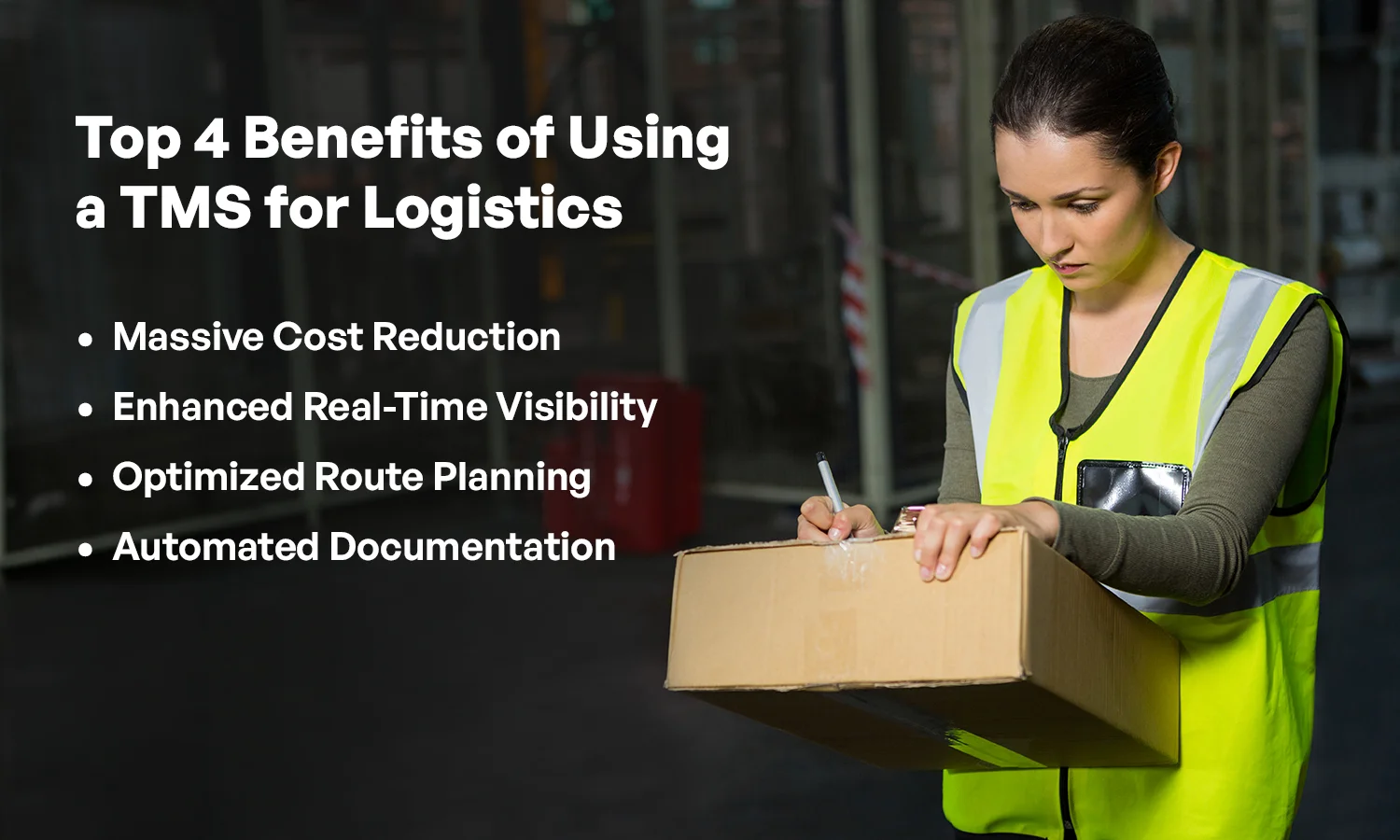
Top 4 Benefits of Using a TMS for Logistics
Implementing the best transportation management tools isn’t just a tech upgrade; it’s a financial strategy. Here are the core transportation management system benefits:
1. Massive Cost Reduction
TMS in logistics automatically compares freight rates and selects the most efficient carriers. By using AI in transportation management, systems can optimize loads, ensuring no truck leaves the yard h
2. Enhanced Real-Time Visibility
With a transportation fleet management software integration, you gain a “God’s-eye view” of your operations. You can track shipments minute-by-minute, allowing you to provide customers with hyper-accurate ETAs and proactive delay alerts.
3. Optimized Route Planning
Instead of just finding the shortest path, a modern TMS in logistics looks at weather, road quality, and traffic patterns. This doesn’t just save time; it reduces the physical stress on the vehicle, extending its lifespan.
4. Automated Documentation
Say goodbye to manual billing and paperwork. A TMS automates GST invoices, proof of delivery (POD), and audit reports, reducing administrative errors by nearly 80%.
What Does the Future of TMS in Logistics Look Like?
In 2026, the “Future” is already here, and it is defined by Predictive Intelligence.
We are moving away from systems that simply report what happened and toward systems that use operational intelligence to recommend what actions logistics teams should take next. AI in transportation management can now predict delivery delays or route disruptions before they occur by analyzing historical shipment data and real-time traffic patterns.. It can sense fuel theft the moment it occurs and suggest a route change before a driver even hits a traffic jam.
For fleet management in transportation, the goal is now Zero Downtime. At Taabi AI, we are building that future by ensuring your TMS in logistics is not just a digital filing cabinet, but a proactive partner that keeps your fleet in the fast lane.
Conclusion
A Transportation Management System is the difference between a logistics company that survives and one that leads. By centralizing your data and leaning on AI-driven insights, you can turn transportation from a “cost center” into a “competitive advantage.” If you’re ready to stop firefighting and start growing, a TMS is your first step.
FAQs
Who Cannot Use TMS?+−
While most benefit, individual vehicle owners or businesses with highly localized, non-frequent deliveries may find the initial investment exceeds their current operational scale.
What Is A TMS Tool?+−
A TMS tool is a software platform (like Taabi) used to automate freight booking, track shipments, and analyze carrier performance to ensure the lowest possible shipping costs.
Does TMS help reduce transportation costs?+−
Yes, significantly; it reduces costs by optimizing routes, consolidating loads to prevent “empty miles,” and identifying the most fuel-efficient driving patterns.