GPS and Telematics Tools | Real-Time Fleet Tracking

Key Takeaways
- ➤ A GPS vehicle tracking system gives live location and route history.
- ➤ GPS tracking helps fleets spot delays early and plan better trips.
- ➤ Telematics adds driving and vehicle context to tracking.
- ➤ Integrated GPS and telematics tools for vehicle tracking improve safety and control.
- ➤ Truck fleets gain the most when tracking is designed for commercial operations.
Introduction
If you run trucks every day, location visibility is not a bonus. It is basic survival. A delayed truck, an unplanned stop, or a wrong route can break delivery timelines and raise costs fast. That is why fleets are now leaning on GPS and telematics tools for vehicle tracking instead of phone calls and guesswork. GPS tells you where a vehicle is. Telematics tells you what the vehicle is doing and why it may be stopping, slowing, or behaving differently. When both work together, you get real-time tracking that actually helps make decisions. This guide explains what real-time tracking means, how to do it with GPS, what tools fleets should use, how telematics improves accuracy, and where this technology is heading next.
What Is Real-Time Vehicle Tracking?
Real-time vehicle tracking means you can see your vehicle’s live location on a digital map, along with its route history and current movement. A GPS vehicle tracking system works by pulling satellite signals to pinpoint the vehicle’s position. That position updates continuously, so managers can check a truck’s status at any moment. For fleets, this is more than a dot on a map. Real-time tracking helps confirm delivery progress, spot delays early, and improve route planning over time. With a proper fleet tracking system, you can manage ten trucks or five hundred without losing control.
How Can You Track Vehicle Location in Real Time Using GPS?
Tracking a truck in real time using GPS follows a simple flow:
- ➤ A GPS device is installed in the vehicle.
- ➤ It receives satellite signals and calculates the truck’s location.
- ➤ That location is sent to a central dashboard through a mobile network.
- ➤ Managers view live movement, routes, stops, and trip summaries.
Modern automotive GPS tracking devices do this quietly in the background. You do not need to call drivers to ask where they are, because the map already shows you. For fleets that handle long routes, having accurate truck GPS location improves planning and reduces waiting time at loading and unloading points.
This is the first layer of control, and it is where GPS and telematics tools for vehicle tracking begin.
What Are the Best GPS Tools for Vehicle Tracking?
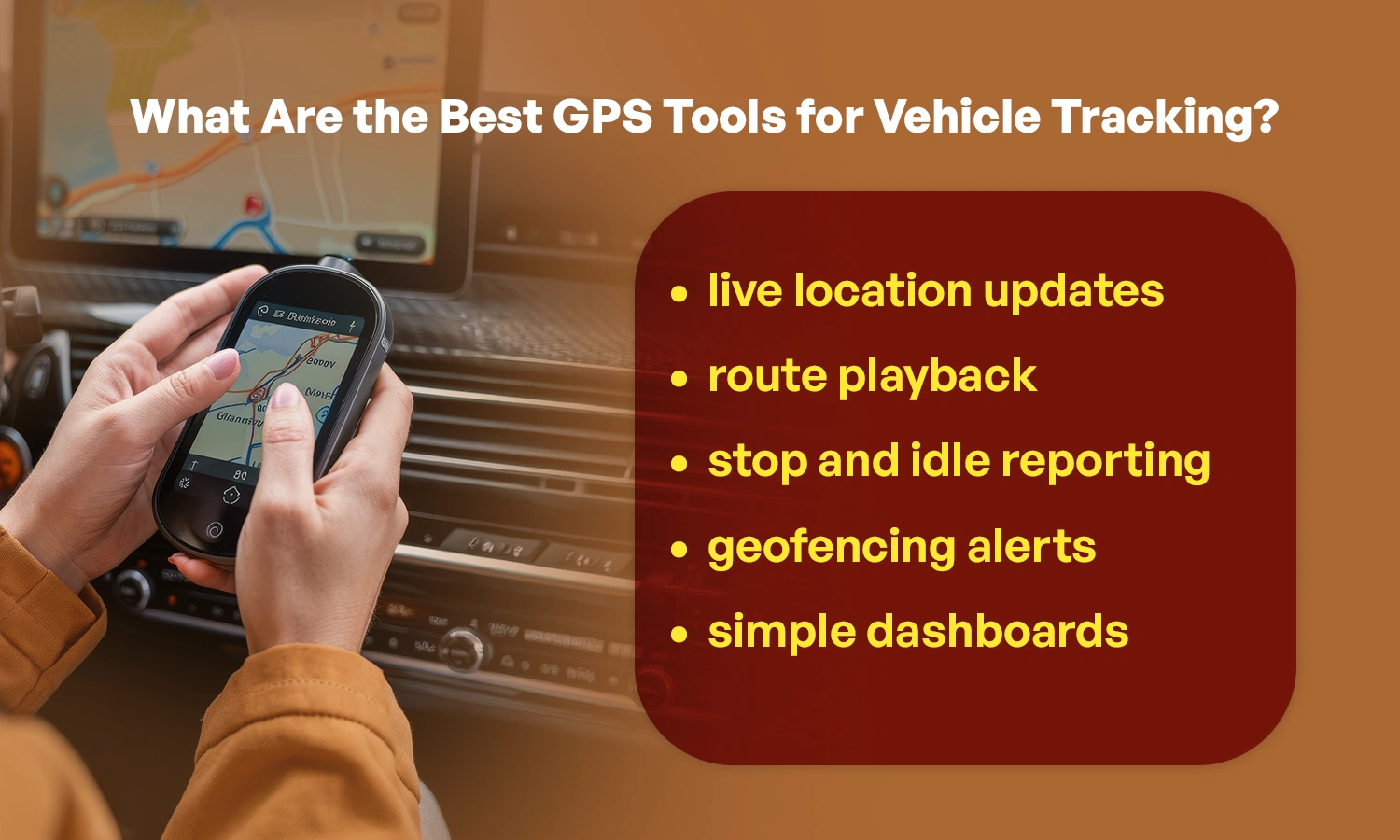
The “best” tool depends on your fleet size and trip type, but a few basics matter for all operators. Look for tools that offer:
- ➤ live location updates
- ➤ route playback
- ➤ stop and idle reporting
- ➤ geofencing alerts
- ➤ simple dashboards
For trucks, it is important to choose GPS tracking devices for commercial trucks that handle long routes, rough terrain, and heavy vehicle vibration. Many fleets also prefer a vehicle tracking system with GPS that supports multiple vehicles in one view, because switching between different apps wastes time.
If you run mixed assets, choose tools designed for a commercial vehicle gps tracking system so the dashboard fits fleet operations instead of private car users.
How Does Telematics Help in Vehicle Location Tracking?
GPS gives the location. Telematics gives context.
Telematics connects vehicle data like speed, braking, idle time, engine health, and driver behaviour with GPS location updates. This makes GPS and telematics tools for vehicle tracking far more useful than GPS alone.
Here is why telematics matters:
- ➤ It explains why a vehicle stopped. Was it traffic, a breakdown risk, or a route deviation?
- ➤ It tracks risky driving patterns tied to location, so managers can coach drivers properly.
- ➤ It improves accuracy during weak signals by storing data and syncing once the network returns.
- ➤ It helps fleets move from “where is my truck?” to “is my truck safe and running right?”
When fleets use integrated fleet vehicle tracking systems, they get a full picture of trip health, not just trip position. Taabi’s fleet stack, for example, combines GPS, telematics, and safety tools for trucks so managers can monitor routes and driver risk in one place without juggling separate systems.
How Are GPS and Telematics Technologies Evolving for the Future?
GPS tracking has already become standard. The next step is making tracking smarter and more predictive.
Future GPS and telematics tools for vehicle tracking will focus on:
- ➤ Sharper live alerts tied to real road risk
- ➤ better route planning using traffic and trip patterns
- ➤ deeper vehicle health signals to prevent breakdowns
- ➤ tighter integration with video safety systems for proof and coaching
This shift is helping fleets reduce delays, improve safety, and run more stable operations even on high-risk routes. Newer systems also make dashboards simpler, so managers do not need technical skills to take action. For truck fleets, this means real-time tracking will keep moving from basic visibility to complete operational control.
Conclusion
Real-time visibility is now a daily need for every fleet. GPS shows location, but telematics makes that location meaningful. Together, GPS and telematics tools for vehicle tracking help fleets reduce delays, handle route risks early, and support safer driving. With the right system in place, tracking becomes a business advantage, not just a map feature.
FAQS
Is GPS an AI tool?
No. GPS is a satellite-based positioning technology. It tells location and movement. AI may be added on top of GPS data in some fleet platforms, but GPS itself is not AI.
What is telematics in EV vehicles?
Telematics in EVs works the same way as in diesel trucks. It tracks location, speed, route behaviour, and battery or motor health signals. It helps EV fleets plan charging, reduce breakdown risk, and manage drivers better.
Can police access fleet telematics?
In most cases, fleet telematics data is private and controlled by the fleet owner. Law enforcement may request access during legal investigations, but it depends on local laws and proper process. Fleets should follow compliance rules for data storage and sharing.