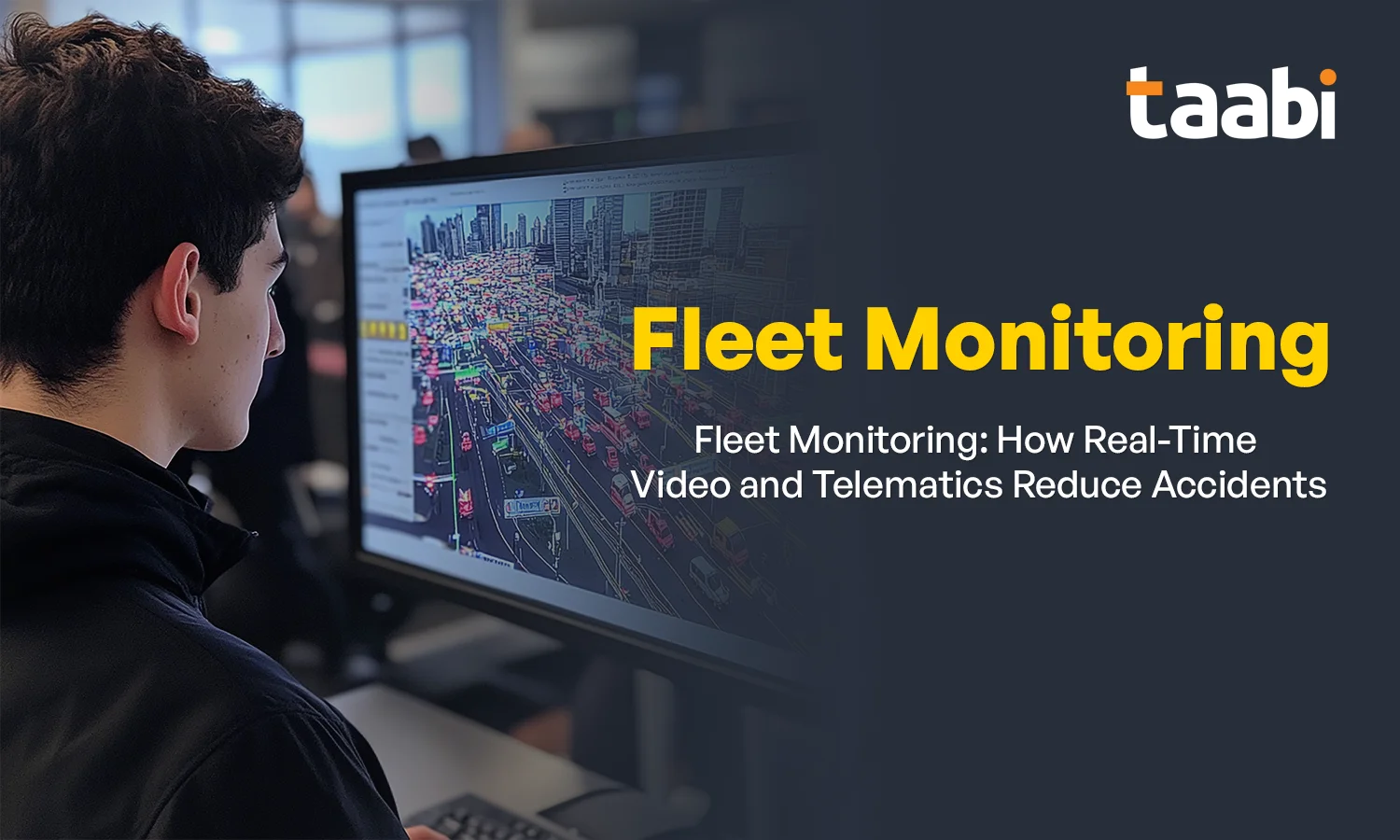
Fleet Monitoring: Video + Telematics Cut Accidents
Key Takeaways
- ➤ Fleet monitoring combines GPS, telematics, and video for full trip visibility.
- ➤ Real-time video adds proof and safer driver coaching.
- ➤ Telematics detects risky patterns like overspeeding and harsh braking early.
- ➤ Monitoring improves fuel control, route discipline, and service reliability.
- ➤ Taabi offers an integrated truck-focused monitoring solution.
Introduction
Accidents do not happen only because of bad roads. Most of the time, they happen because fleets cannot see risk building up in real time. Drivers get tired, routes change suddenly, and small mistakes turn into costly incidents. That is why more operators are investing in fleet monitoring. It brings together GPS tracking, telematics data, and real-time video to show what is happening on every trip. Managers get visibility, drivers get timely alerts, and fleets reduce avoidable accidents through early action. This blog explains what fleet monitoring means, how video and telematics reduce road risk, and why Taabi fits naturally into this approach for truck fleets.
What Is Fleet Monitoring?
Fleet monitoring is the process of tracking and managing trucks using connected systems. It includes location tracking, live trip visibility, driver behaviour insights, and vehicle performance alerts. A basic fleet tracking system can show the route, speed, and stoppages. But modern monitoring adds more detail, such as harsh braking, overspeeding, and fatigue risk, so fleets can prevent problems early.
Most fleets begin with GPS fleet tracking to know where vehicles are. Over time, they add monitoring tools that link GPS to driver and truck performance. The goal is simple: reduce blind spots, improve accountability, and protect both people and assets on the road.
Reduce Accidents?
Video changes fleet safety because it shows the real story behind risky events. A driver might brake hard because of a sudden lane cut, a pedestrian, or a distraction. GPS data alone cannot explain that. Real-time video can.
When fleets use video telematics, the camera records the road and cabin view and links it to speed and location. If risk appears, the system triggers alerts for the driver and stores event clips automatically. This helps fleets correct unsafe habits early, before accidents happen. In high-risk routes, video also reduces disputes. Fleets can prove what actually happened during an incident instead of relying on assumptions. This makes driver coaching fair and builds real safety improvement across trips.
What Role Does Telematics Play in Improving Driver Safety?
Telematics is the data layer behind monitoring. It tracks speed, idling, braking, lane behaviour, and engine signals and sends them to a dashboard. When combined with a commercial vehicle gps tracking system, telematics helps managers see patterns that lead to accidents. For example, if one route shows repeated harsh braking or overspeeding, managers can flag it early. If a driver has frequent fatigue alerts, they can adjust trip schedules. Telematics turns safety into measurable data instead of a guess. For trucks, systems like GPS tracking systems for trucks plus telematics signals give a full view of how a vehicle is being driven, not just where it is. That is why telematics is central to accident reduction.
What Are the Additional Benefits of Fleet Vehicle Monitoring Beyond Accident Reduction?
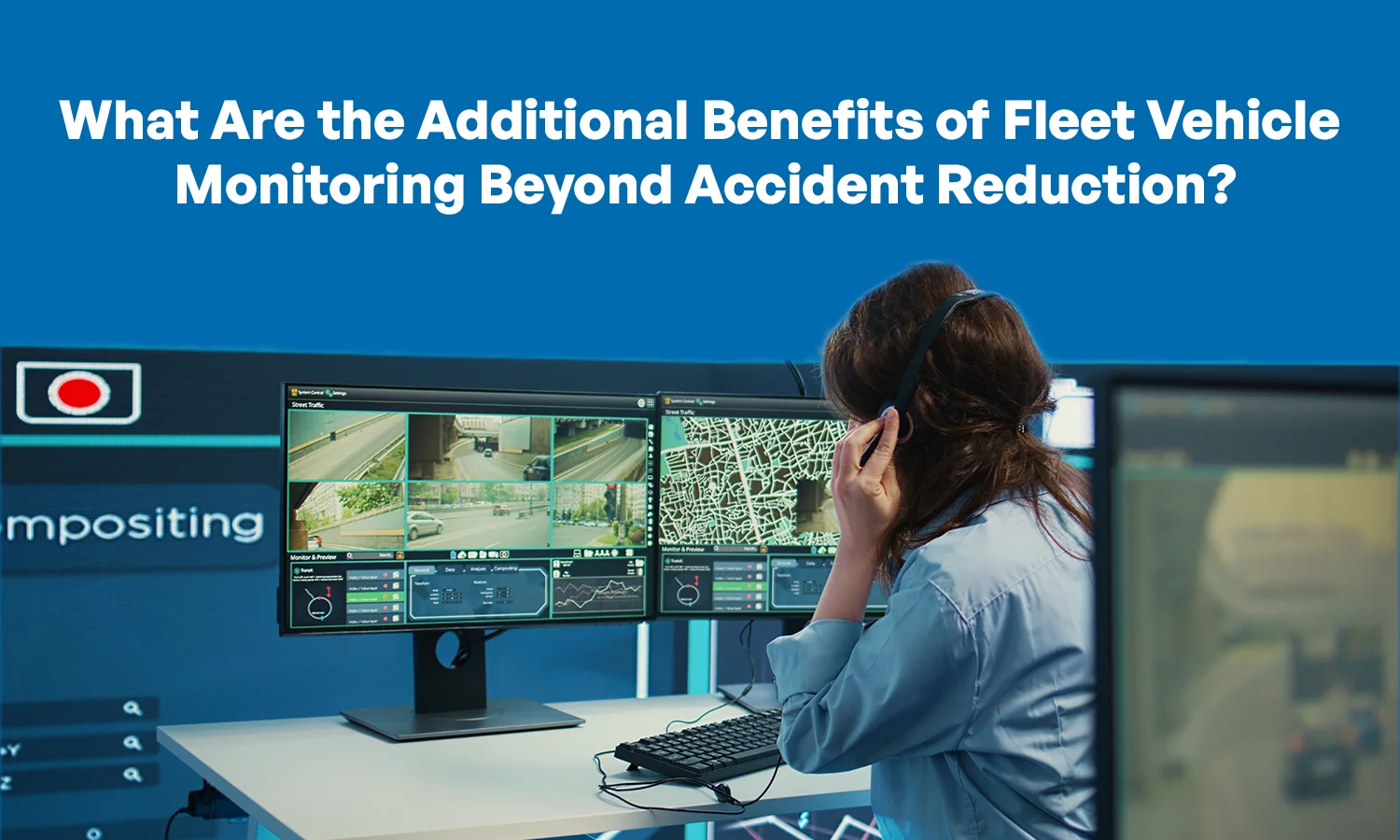 Safety is the biggest benefit, but it is not the only one. Fleet vehicle monitoring also improves daily fleet performance.
First, it supports faster decision-making. With fleet GPS monitoring, managers can check delays, reroute trucks during traffic, and respond to unplanned stops quickly.
Second, it improves fleet discipline. A fleet truck tracking system makes route misuse harder and helps fleets ensure trucks follow approved paths. Third, it supports cost control. When fleets reduce idling, harsh driving, and detours, fuel waste falls. Better driving also reduces repair and tyre costs, since trucks face less mechanical stress. Finally, monitoring improves customer trust. Fleets can share accurate ETAs and trip records, leading to better service quality and fewer complaints.
Why Taabi Is a Smart Choice for Fleet Monitoring
Taabi builds monitoring systems designed for truck fleets. It combines GPS tracking, telematics insights, and real-time video into one connected dashboard. This removes the need for multiple tools and makes monitoring simple for managers.
Taabi supports live trip visibility, risky driving alerts, behaviour review through video, and event proof for claims. Fleets using Taabi get a cleaner view of operations through a unified vehicle tracking system for fleet management, plus video context that supports safer coaching.
For fleets that want stronger safety and tighter operational control, Taabi offers a practical way to run a reliable truck monitoring system that works across long routes and high-risk conditions.
Conclusion
Accident reduction starts with visibility. Fleet monitoring gives fleets the power to spot risk early, support drivers on the road, and review incidents with proof. Real-time video shows what happened, telematics explains why it happened, and together they help fleets prevent repeat risk. With Taabi’s truck-first monitoring stack, fleets can improve safety and run with higher control across every trip.
FAQS
How to know if a vehicle is tracked?+−
If your fleet uses a GPS or telematics device, the vehicle is tracked. Managers can confirm tracking through the fleet dashboard, where live location, trip history, and safety events appear in real time.
Can fleet monitoring lower operational costs?+−
Yes. Monitoring reduces fuel waste, route misuse, downtime, and repair incidents. It also helps fleets avoid claim losses through video proof, leading to stronger cost control over time.
Do all vehicles have tracking devices?+−
Not by default. Tracking devices must be installed by fleet owners. Most commercial fleets fit GPS and telematics units as standard because visibility and safety depend on it.