
BLOG Details

BS6 Compliance and Fuel Efficiency: What Indian Fleet Operators Need to Know in 2026

taabi-team
BS6 Compliance and Fuel Efficiency

Introduction

India’s transition to BS6 (Bharat Stage 6) emission norms, which came into full effect for commercial vehicles in April 2020, was one of the most significant regulatory shifts in the country’s automotive history. Equivalent to Euro 6 standards, BS6 mandated a dramatic reduction in particulate matter (PM), nitrogen oxides (NOx), and hydrocarbons from diesel engines. Nearly six years on, BS6 continues to reshape fleet operations, fuel costs, and maintenance strategies in ways that many operators are still navigating without a coherent system.

What BS6 Actually Changed for Commercial Fleets

The transition from BS4 to BS6 was not merely a fuel specification upgrade. For commercial vehicle operators, it required new engine architectures, the mandatory adoption of Diesel Exhaust Fluid (DEF, also known as AdBlue), the installation of Selective Catalytic Reduction (SCR) systems, and Diesel Particulate Filter (DPF) technology across heavy-duty vehicles. Each of these additions changes the operational and maintenance calculus for fleet managers.
BS6 Technology Component Fleet Management Implication
Selective Catalytic Reduction (SCR)
Requires consistent DEF fluid monitoring and refilling, a new consumable cost
Diesel Particulate Filter (DPF)
Requires periodic regeneration cycles, affects fuel consumption during regen
High-Pressure Common Rail Injection
More sensitive to fuel quality, poor diesel quality damages injectors faster
On-Board Diagnostics (OBD-II / OBD-III)
Real-time engine health data accessible via telematics devices
Fuel Sulphur Content (max 10 ppm)
BS6 diesel is cleaner but priced at a premium in some markets

The Hidden Fuel Efficiency Cost of BS6 DPF Regeneration

One of the least-discussed aspects of BS6 compliance for fleet operators is the fuel consumption impact of DPF (Diesel Particulate Filter) regeneration. When a DPF regenerates, a process that burns off accumulated soot particles using elevated exhaust temperatures, the engine consumes additional fuel without contributing to vehicle movement. Depending on the vehicle’s duty cycle and load profile, DPF regeneration can add 3–8% to fuel consumption on affected trips. Operators who do not monitor DPF regeneration frequency and the driving patterns that trigger more frequent regeneration cycles are experiencing an invisible fuel drain that compounds over thousands of kilometres. Understanding the mechanics of pilferage is the first step toward preventing it. The most common methods in India include:
A predictive maintenance system integrated with an FMS can monitor DPF regeneration events, correlate them with operating conditions, and flag routes or driver behaviours that are triggering excessive regeneration, enabling targeted interventions.

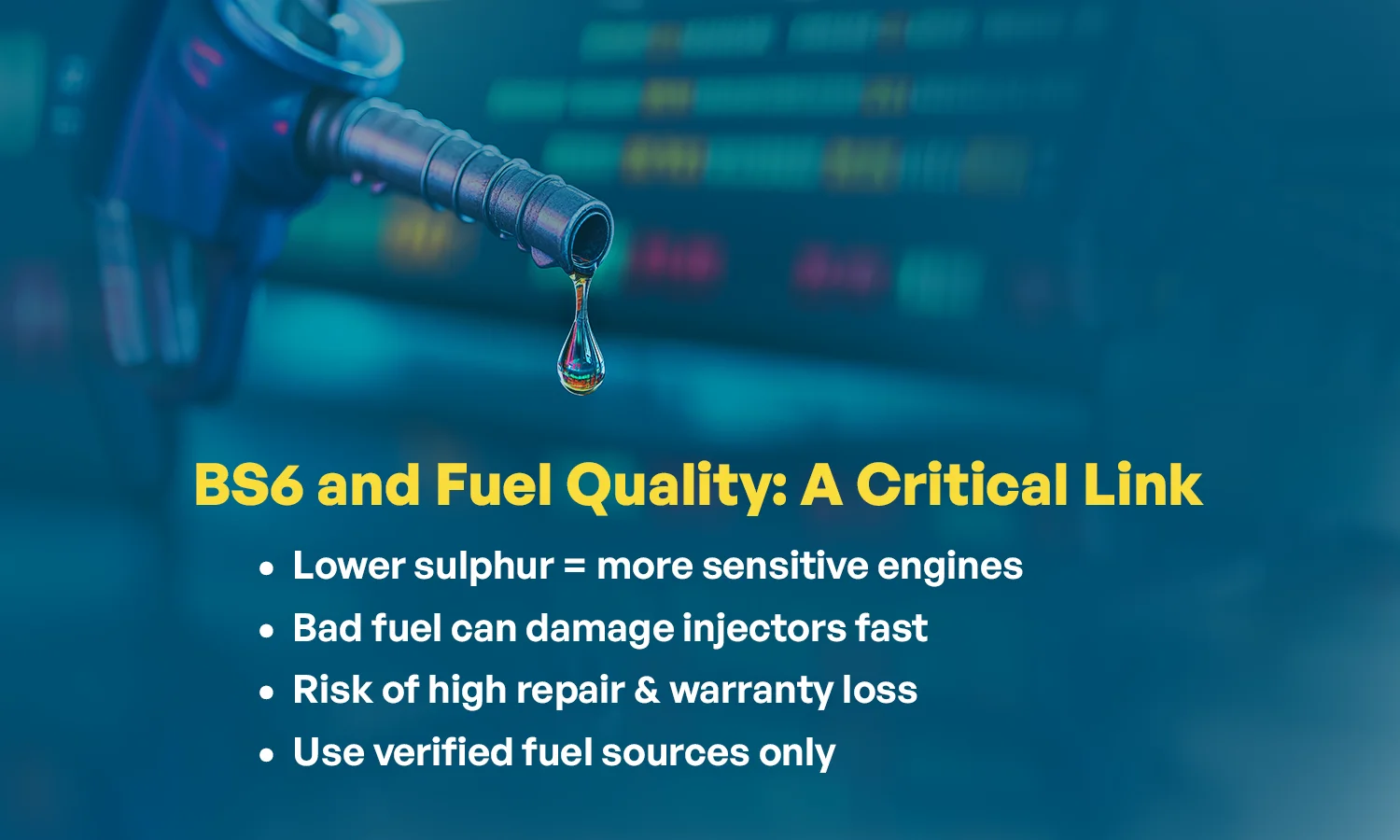
BS6 and Fuel Quality: A Critical Link
BS6 Compliance and Fuel Efficiency
BS6 diesel, with its 10 parts-per-million (ppm) sulphur content compared to BS4’s 50 ppm, is significantly cleaner, but also more sensitive to contamination and adulteration. BS6 vehicles’ high-pressure injection systems can sustain damage from sub-standard fuel far more quickly than their BS4 predecessors. For fleet operators sourcing diesel from unverified or black-market suppliers, as sometimes happens when pilferage creates off-book procurement chains, the risk of injector damage, costly warranty voiding, and accelerated engine wear is substantial. A rigorous fuel sourcing management system, integrated with authorised station whitelists, is therefore not just a cost strategy. It is a compliance and asset protection strategy.

OBD Data: The Compliance Intelligence You're Not Using Yet

Every BS6-compliant commercial vehicle manufactured since April 2020 has OBD (On-Board Diagnostics) connectivity that provides real-time engine health data. This includes fuel consumption rates, emission system performance, fault codes, and DPF status. Despite being legally mandated and physically present in every new truck, most Indian fleet operators are not extracting or acting on this data. A telematics platform connected to OBD ports transforms this dormant compliance data into live maintenance intelligence and fuel efficiency insights.

Preparing for BS6 Phase II and Beyond

India’s regulatory trajectory is clear: emissions standards will continue tightening. The draft framework for BS7 norms, expected to be announced by 2027–28, will further reduce NOx limits and introduce real-world driving emissions (RDE) testing requirements. Fleet operators who are already building digital infrastructure to monitor and optimise fuel consumption and emissions will be structurally better positioned for compliance as standards evolve.
ESG reporting requirements are also accelerating. Large logistics clients, particularly e-commerce majors and FMCG multinationals, are increasingly requiring Scope 1 emissions data from their carriers as part of supplier audits. A fuel management system that automatically generates per-trip and fleet-wide CO2 equivalent data is rapidly shifting from a nice-to-have to a commercial necessity.

What This Means for Your Fleet Management Strategy

BS6 compliance is not a one-time certification. It is a continuous operational discipline. The most effective approach combines a fuel management system for fleet (to monitor consumption, flag DPF regeneration anomalies, and ensure authorised fuel sourcing) with a vehicle health monitoring system (to track OBD data, DEF levels, and emission system performance), both feeding into a unified dashboard that gives fleet managers and compliance officers a single source of truth.

TAABI CAPABILITY

Taabi’s platform integrates OBD data, fuel sensor readings, and GPS telematics to generate BS6-aligned compliance reports, including CO2 equivalent emissions per trip, DPF regeneration event logging, and DEF consumption tracking. Audit-ready, automated, and updated in real time.
Explore Taabi’s Fuel Management System for BS6-compatible fleet compliance intelligence.

Make BS6 Compliance Effortless

Taabi generates audit-ready emission reports automatically.

FAQs

How does BS6 compliance and fuel efficiency impact my bottom line?
BS6 engines use SCR and DPF tech, which, while cleaner, introduce new costs like DEF (AdBlue) and fuel-heavy DPF regeneration cycles that can drain 3–8% of efficiency.
Why is fuel quality more critical for BS6 engines than older models?
The ultra-low sulphur (10ppm) requirement means BS6 injectors are highly sensitive; sub-standard or adulterated fuel causes rapid injector failure and voids expensive engine warranties.
What is DPF regeneration, and how does it waste fuel?
It’s a soot-cleaning process that raises exhaust heat by burning extra diesel; if not monitored, frequent idling-triggered “regen” cycles become an invisible fuel drain for fleets.
Can I monitor my BS6 engine health using existing telematics?
Yes, by tapping into the OBD-II/OBD-III ports, you can extract real-time data on emissions, fault codes, and fuel rates to prevent costly BS6-specific breakdowns.
Does Taabi’s system help with ESG and emission reporting?
Yes. Our platform automatically converts fuel consumption and OBD data into audit-ready CO2 reports, helping you meet the strict Scope 1 requirements of major e-commerce clients.

Read More Blogs

Expand your horizons with a wealth of captivating articles that complement our featured blogs; offering further perspectives, valuable insights, and a deeper exploration of the topics that intrigue you.

Subscribe now

Looking for Deep-Tech Logistics & Fleet Management Solutions?

Access the latest trends, expert commentary, and indicators for unique insights into the global economy.