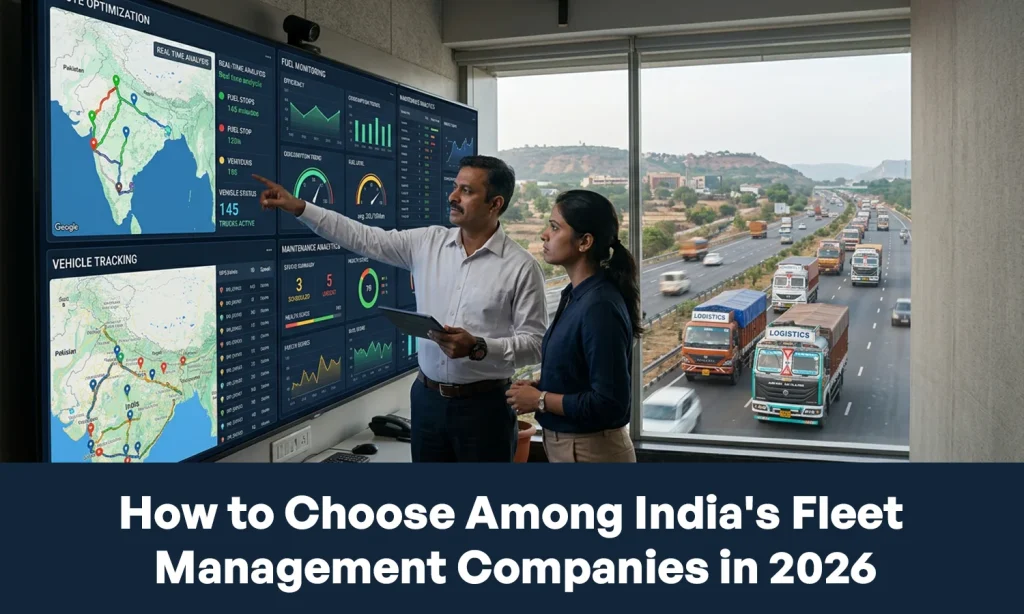
India’s transport and logistics industry is experiencing rapid digital transformation. As fleet operators seek greater visibility, improved efficiency, and tighter operational control, the number of technology providers entering the market continues to grow. While many vendors offer vehicle tracking and monitoring solutions, not every provider delivers the same level of value.
Many providers focus heavily on GPS tracking capabilities. While location visibility remains important, modern fleet operations require far more than vehicle positions on a map.
Leading fleet management companies in India provide comprehensive solutions that combine tracking, diagnostics, fuel monitoring, maintenance management, driver performance insights, and business analytics within a unified platform.
The goal should not be to collect more data. It should be to generate operational intelligence that helps managers make faster and better decisions every day.
Technology performance depends heavily on the quality of the hardware deployed in vehicles. Poor-quality devices often result in signal interruptions, inaccurate reporting, and increased maintenance costs.
When evaluating fleet management companies in India, operators should assess hardware durability, sensor accuracy, and performance under Indian operating conditions. Devices must withstand extreme temperatures, dust exposure, heavy vibrations, and monsoon weather.
Reliable hardware creates the foundation for trustworthy operational intelligence and consistent fleet visibility.
Pricing structures often vary significantly between providers. Comparing only the monthly subscription cost can lead to unexpected expenses later.
A complete evaluation of fleet management software pricing should include hardware costs, installation charges, support fees, software subscriptions, integration costs, training expenses, and future scalability requirements.
The lowest-cost provider may not always deliver the best long-term value. Transport operators should evaluate the total cost of ownership rather than focusing solely on initial pricing.
The best fleet management software in India should support seamless integration across business functions. Strong integration capabilities reduce manual data entry, improve accuracy, and create a more connected operating environment.
As businesses grow, scalability becomes equally important. A platform should be capable of supporting additional vehicles, locations, users, and operational requirements without major disruptions.
Even the most advanced technology platform can fail if users are not properly supported.
Strong Fleet Management Companies provide structured onboarding, installation assistance, training programs, and ongoing technical support. Transport businesses should evaluate response times, field service capabilities, and customer support coverage before making a decision.
Technology adoption improves significantly when operators, drivers, and managers receive the guidance needed to use the platform effectively.
The difference between a software vendor and a technology partner becomes clear after deployment.
Many providers focus primarily on selling devices and subscriptions. In contrast, the strongest fleet management companies in India actively help customers improve operational performance through analytics, reporting, optimization recommendations, and continuous platform improvements.
Businesses should look for partners that help transform data into operational intelligence rather than simply supplying tracking hardware.
The best fleet management software in India should provide an intuitive mobile experience with easy access to alerts, reports, vehicle status, and operational updates. A well-designed interface improves adoption and helps teams respond quickly to operational issues.
User experience plays a major role in determining how effectively technology is used throughout the organization.
The most valuable fleet management platforms do more than collect information. They help businesses understand what the data means.
Modern Fleet Management Companies should provide actionable dashboards that transform vehicle data into meaningful insights. Fuel trends, maintenance performance, route efficiency, driver behaviour, and asset utilization should all be available through clear reporting tools.
This operational intelligence enables transport businesses to move from reactive management to proactive decision-making.