


Key Takeaways
- ➤ Analytics from OBD and Fuel Data helps fleets detect mechanical risks early.
- ➤ Predictive systems analyse vehicle diagnostics and fuel patterns together.
- ➤ Fuel monitoring reveals losses that engine data alone cannot detect.
- ➤ Predictive maintenance can reduce downtime by up to 50%.
- ➤ Taabi converts vehicle data into operational intelligence that supports better fleet decisions.
Introduction
Vehicle downtime damages both schedules and revenue. A single breakdown can stop deliveries, disrupt routes and increase repair costs. Fleet operators now rely on Analytics from OBD and Fuel Data to identify early warning signals that indicate mechanical issues or inefficient fuel use.
What Is Predictive Analytics and How Does It Work in Fleet Management?
How OBD and Fuel Sensor Data Support Predictive Maintenance
Vehicle diagnostics reveal how the engine behaves under different loads while fuel monitoring shows how the truck consumes fuel across routes. When these datasets are analyzed together, Analytics from OBD and fuel data reveal deeper operational patterns.
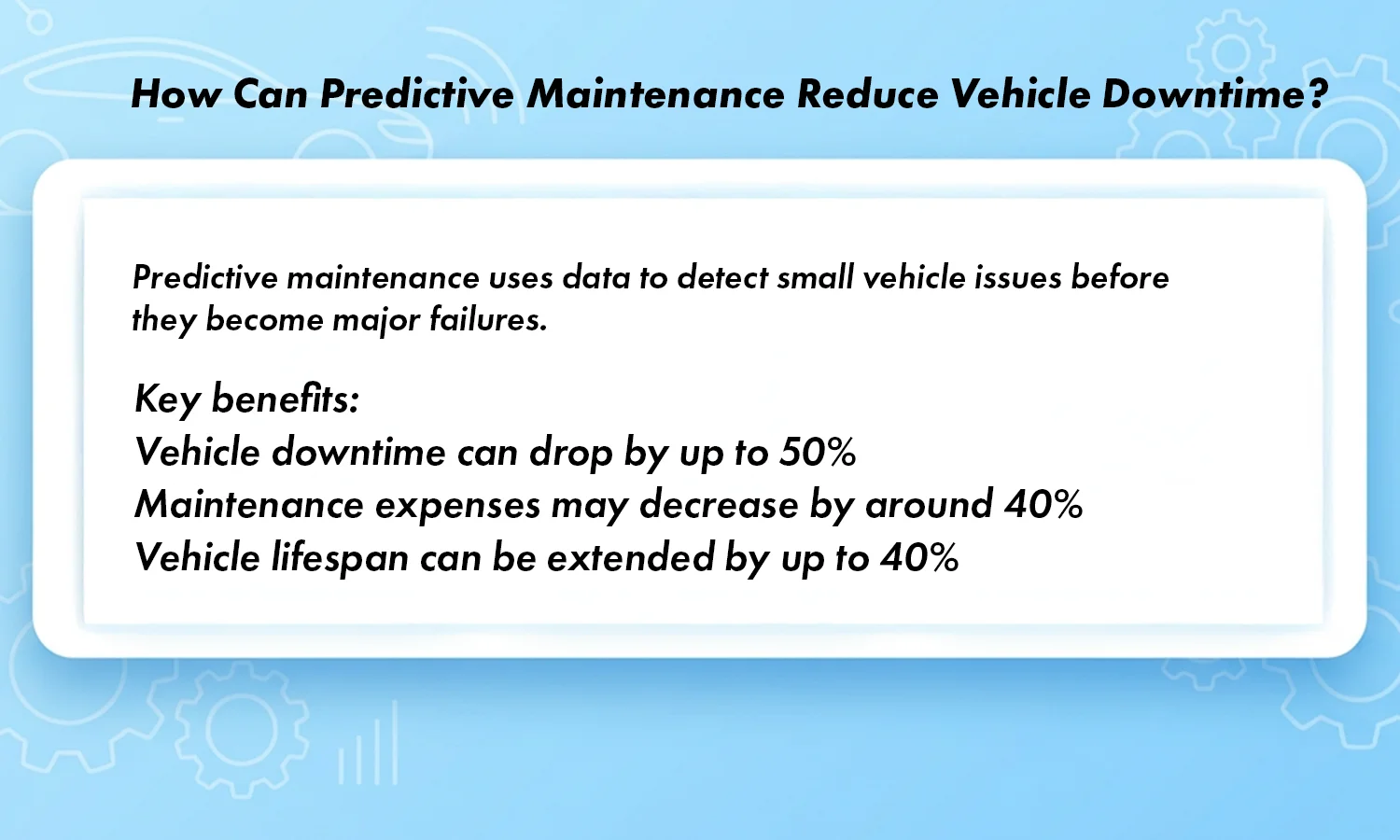
How Can Predictive Maintenance Reduce Vehicle Downtime?
- ➤ Vehicle downtime can drop by up to 50%
- ➤ Maintenance expenses may decrease by around 40%
- ➤ Vehicle lifespan can be extended by up to 40%
How Taabi’s TMS Uses OBD and Fuel Data to Improve Operational Intelligence and Reduce Vehicle Downtime
Predictive insights also improve predictive analytics in supply chain operations because vehicle availability directly affects delivery schedules. Taabi’s system connects fleet health signals with logistics planning so managers can respond before downtime disrupts operations.
As a result, fleets using Taabi often report improved vehicle utilisation and fewer unexpected breakdowns across long-haul routes.