


Key Takeaways
- ➤ The Future of Fleet Operations with OBD combines diagnostics data and fuel monitoring.
- ➤ Fuel expenses represent 50–60% of fleet operating costs for many trucks.
- ➤ Integrated monitoring helps detect fuel theft and inefficiencies earlier.
- ➤ AI predictive analytics reduces downtime and maintenance costs.
- ➤ Taabi converts vehicle data into Operational Intelligence that supports better fleet decisions.
Introduction
Fleet operators no longer struggle with visibility alone. The real challenge today is turning vehicle data into actionable decisions. The Future of Fleet Operations with OBD lies in combining diagnostics data with fuel monitoring to create smarter fleet systems.
For Indian truck operators, this shift has direct financial implications. A medium-duty truck typically incurs ₹80,000 to ₹1,20,000 in monthly operating costs, with fuel accounting for nearly 50–60% of total expenses. Without proper monitoring, inefficiencies such as fuel theft, excessive idling, and unplanned repairs can significantly increase those costs.
Moving beyond simple location tracking allows fleets to transform raw vehicle signals into operational insight. That transition is shaping the Future of Fleet Operations with OBD across the logistics industry.
The Role of OBD and Fuel Sensors in Modern Fleet Management
Modern fleets rely on connected systems to monitor vehicle health and fuel usage in real time. An on-board diagnostics system captures engine performance signals such as temperature changes, fuel burn patterns, and fault codes.
An OBD GPS Tracker connects to the vehicle’s diagnostic port and sends this data to a central platform. These signals help managers monitor driver behavior, engine performance, and vehicle health.
Fuel monitoring adds another layer of visibility. A fuel level sensor installed in the tank measures the exact amount of fuel present at any time. This data feeds into a fuel tracking system that records refueling events and sudden drops in fuel levels.
Together, these technologies support a connected fuel management system for fleet operations that improves control over vehicle performance and fuel consumption.
How Do OBD and Fuel Sensors Transform Fleet Tracking Into Operational Intelligence?
Basic tracking systems show vehicle location. Operational insight requires a deeper analysis of vehicle signals. The Future of Fleet Operations with OBD focuses on converting those signals into measurable decisions.
Fuel theft illustrates the importance of this shift. Unmonitored fleets can lose 5–15% of their fuel purchases to theft or misuse, which can equal about ₹11,000 lost per truck each month. Across the country, the trucking sector loses nearly ₹23,000 crore annually due to fuel pilferage.
When diagnostics data and fuel measurements are analyzed together, fleets gain Operational Intelligence that reveals inefficiencies earlier. Managers can identify abnormal fuel usage, detect unauthorized trips, and understand how driver behavior impacts fuel consumption.
This data-driven view turns simple vehicle tracking into a decision-making system that improves safety and cost control.
How AI Can Use OBD and Fuel Sensor Data for Predictive Maintenance
Predictive analytics helps fleets prevent breakdowns before they occur. AI models analyze patterns from diagnostics and fuel data to detect mechanical stress early.
An example illustrates this process. A small rise in engine temperature combined with higher fuel consumption may indicate a developing cooling system failure. Predictive systems flag this pattern before a warning light appears.
This approach reduces downtime and maintenance costs. Repairing a minor sensor issue may cost ₹5,000 to ₹15,000, while a full engine overhaul can cost ₹80,000 to ₹1.8 lakh.
Predictive monitoring also produces measurable operational improvements:
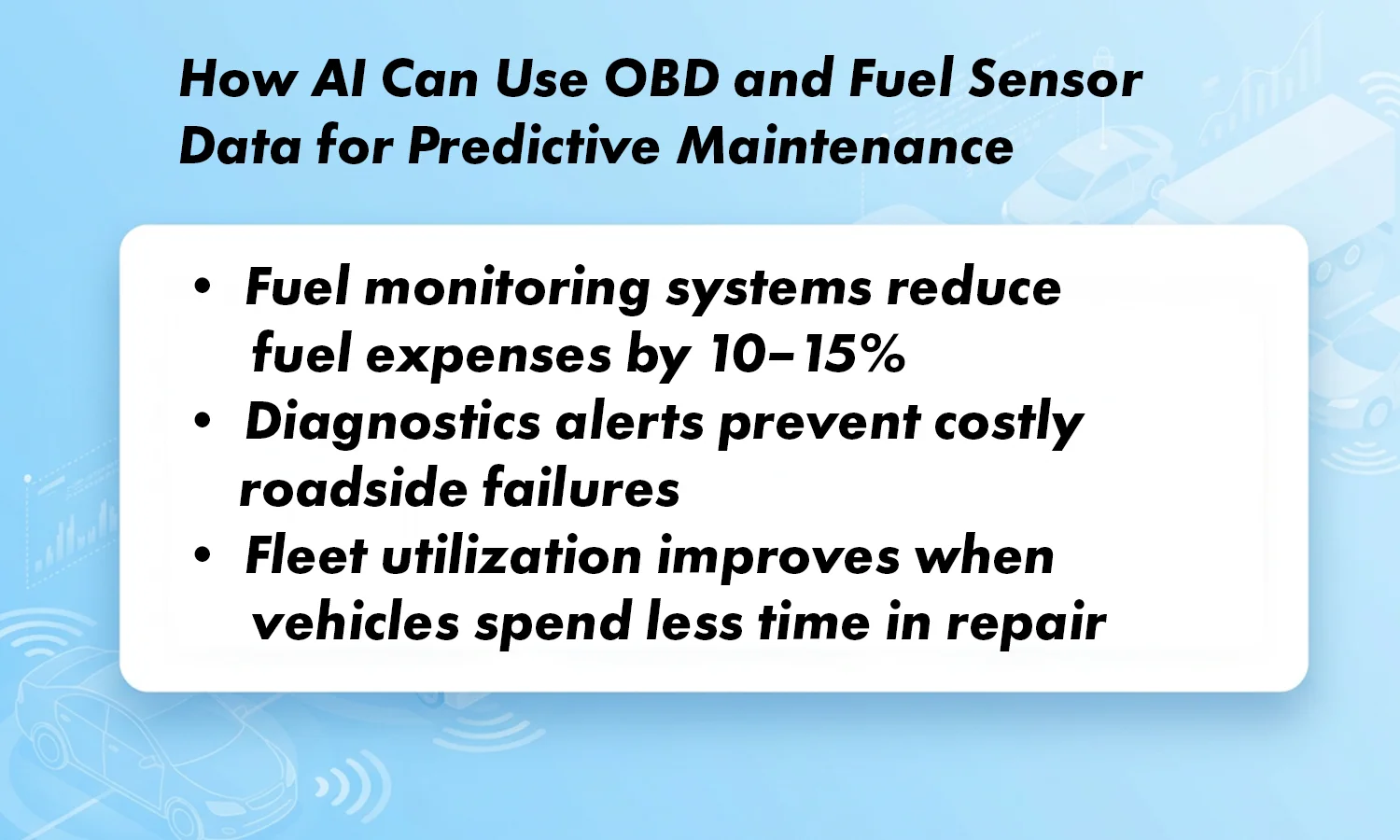
- ➤ Fuel monitoring systems reduce fuel expenses by 10–15%
- ➤ Diagnostics alerts prevent costly roadside failures
- ➤ Fleet utilization improves when vehicles spend less time in repair
These benefits demonstrate why the Future of Fleet Operations with OBD depends heavily on AI-driven predictive systems.
How Taabi AI Is Driving the Future of Fleet Operations from Tracking to Intelligence
Taabi’s platform integrates diagnostic signals and fuel monitoring into a unified system. By analyzing obd fleet management data alongside fuel readings, the platform converts vehicle signals into actionable insights.
For an average truck traveling 6,000 km per month, fuel spending can reach nearly ₹1.5 lakh. Taabi’s analytics platform helps fleets improve efficiency by identifying driving patterns and operational inefficiencies.
Many fleets using Taabi report measurable improvements:
- ➤ 5% baseline fuel efficiency improvement, saving roughly ₹7,500–₹8,000 monthly per truck
- ➤ Up to 15% fuel savings for large operators
- ➤ Operating cost reductions of 15–20% across fleet operations
These insights represent the Future of fleet management, where diagnostics, fuel monitoring, and AI analysis work together to improve decision-making across logistics operations.
FAQs
Can AI fleet systems help reduce operational costs?
Yes. AI analysis of vehicle diagnostics and fuel data helps fleets reduce maintenance costs, prevent downtime and improve fuel efficiency.
Why is OBD required?
OBD systems provide direct access to engine performance signals that help fleets monitor vehicle health and detect mechanical issues early.
What causes OBD failure?
Common causes include damaged wiring, faulty sensors, ECU communication errors or problems with the vehicle’s diagnostic port.