


Introduction
A 25-tonne truck running from Bengaluru to Bhopal in 2026 is not just a vehicle. It is a connected node generating thousands of data points per trip. Engine vibration, brake-wear curves, fuel flow rate, GPS coordinates, driver acceleration, tyre pressure, cabin temperature: every parameter is visible in real time if the operator chooses to look.
This is the world IoT fleet management has created, and Indian transport is moving in fast.
The Pain Point
Indian fleets have long suffered from a data blackout between trips. A truck leaves the warehouse, and for the next 36 hours, the operator is at the mercy of phone calls, FASTag pings, and the driver’s word. NITI Aayog has noted India’s logistics costs still sit at 13 to 14 percent of GDP. A large share of that inefficiency is rooted in this blind spot.
Fuel takes 30 to 40 percent of operating costs, per industry estimates in Autocar Professional. When fuel theft, harsh driving and unscheduled stops are invisible, every long-haul trip leaks money. Add unexpected breakdowns on NH44 or NH48, lost revenue from a missed delivery slot, and insurance load from accidents linked to fatigue, and the in-trip blackout becomes the biggest tax on profitability.
The Solution
IoT fleet management removes this blackout. By embedding sensors in the truck, connecting them via cellular networks (4G LTE Cat 1 is common), and streaming the data to a cloud platform, operators see the truck as if they were sitting next to the driver.
Three capabilities define modern IoT fleet management in India today.
First, telematics fleet management for fuel and driver behaviour. Sensors at the fuel tank flag sudden drops when the engine is off. Accelerometers spot harsh braking, rapid acceleration and dangerous cornering. Industry case studies cited by Eicher Trucks and Buses show 10 to 15 percent fuel savings after deployment.
Second, predictive maintenance. OBD-II data and engine health signals feed AI models that predict component failure before a breakdown. Operators schedule service during planned downtime, not at the side of a national highway at 2 AM.
Third, integrated compliance. With about 25 lakh goods vehicle movements reported daily through the GSTN e-way bill system, an IoT fleet management platform that ties telematics to e-way bills, FASTag and AIS-140 keeps the compliance loop automated.
Why India Is the Big IoT Fleet Management Story
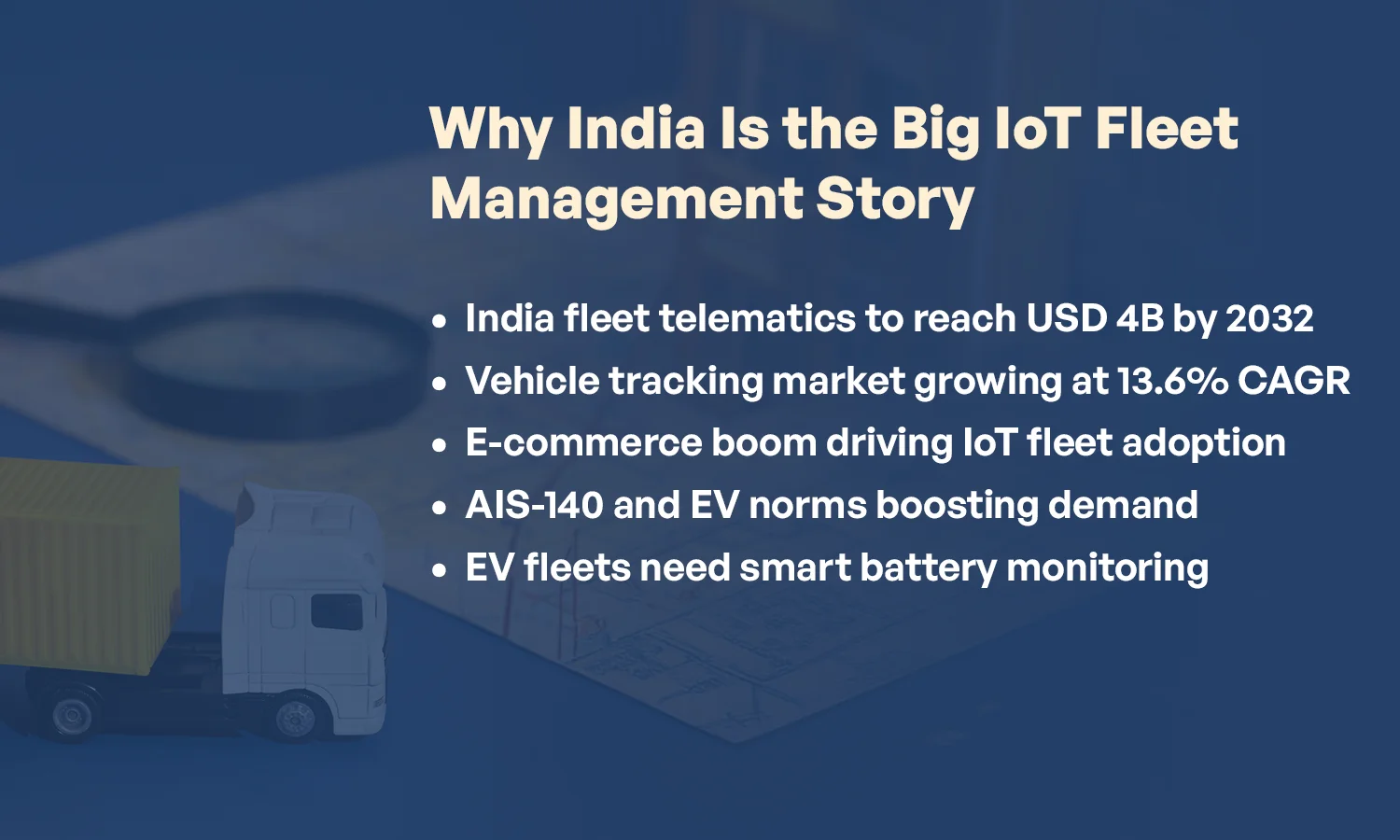
The numbers are clear. The India fleet telematics platforms market is projected to grow from USD 1.68 billion in 2025 to USD 4 billion by 2032 at about 13.2 percent CAGR, per Marknteladvisors. The India vehicle tracking market is forecast to reach USD 2.85 billion by 2033 at 13.6 percent CAGR, per IMARC Group.
Three forces are pushing IoT fleet management adoption.
E-commerce. India’s express logistics segment was around USD 9 billion in FY25 and is expected to roughly double by FY30, per Marknteladvisors.
Regulation. AIS-140 is widely enforced, BEE has released draft fuel norms covering light, medium and heavy commercial vehicles, and PM Gati Shakti is pushing the ecosystem toward data-led planning.
Electrification. EVs need active battery and energy management. Per IMARC Group, Indian EV sales rose from 50,000 units in 2016 to 2.08 million in 2024. IoT fleet management is the only realistic way to monitor battery health, charging cycles and route feasibility for an EV truck fleet.
What Makes Indian IoT Fleet Management Different
Indian operations punish generic global platforms. A successful IoT fleet management deployment in India must handle network drops in interior districts, with on-device buffering; 45-degree summers and monsoon humidity, with hardware rated for the environment; mixed fleets ranging from heavy trucks to LCVs, three-wheelers and electric vans; driver interfaces in Hindi, Tamil, Telugu, Marathi and other regional languages; and integration with VAHAN, FASTag, e-way bills and the Unified Logistics Interface Platform.
The best providers of IoT fleet management in India have built precisely for these conditions, not retrofitted European platforms.
The Fuel and Maintenance Story
A modern fuel management system tied to IoT fleet management does three things no spreadsheet ever could. It tracks actual diesel intake versus invoice data through sensors, detects siphoning attempts in real time, and links each litre to a specific trip, vehicle and driver. Fuel management software has graduated from a month-end report tool to a live cost-control layer. For most Indian operators, this is the fastest payback in the entire IoT fleet management stack.
Predictive maintenance is the second big payback. Connected telematics reduces unplanned downtime materially. For freight on the Delhi-Mumbai or Chennai-Kolkata corridor, a single breakdown can cost lakhs in penalties and reload costs. Predictive maintenance and a connected fuel management solution together transform the unit economics of long-haul transport.
What Indian Operators Ask
The two big questions about IoT fleet management in India are cost and complexity. Affordable AIS-140 hardware combined with subscription dashboards has answered both. Small operators can deploy an IoT fleet management stack in two to four weeks and see fuel and downtime savings within the first quarter.
The Way Forward
The Indian transport business will keep facing pressure from rising fuel costs, tighter emissions rules and customers expecting next-day delivery. Operators who treat trucks as connected data nodes will outpace those still relying on phone calls. Tata Motors has committed to connecting five lakh commercial vehicles through Fleet Edge, per Autocar Professional, signalling where the industry is going.
Ready to turn every truck into a live data node?
Explore taabi.ai’s IoT-powered platform for Indian roads, climate and compliance.
FAQs About Fleets
What is IoT-based fleet management for Indian operators?
It is a connected setup using sensors, cellular networks and cloud dashboards for real-time visibility into vehicle health, fuel, location and driver behaviour.
How fast is the return on investment?
Most Indian operators see measurable fuel savings and downtime reduction within three months, especially through the fuel management solution layer.
Does it work for electric fleets?
Yes. Modern platforms track battery health, charging cycles and energy use, critical for EV fleet economics.