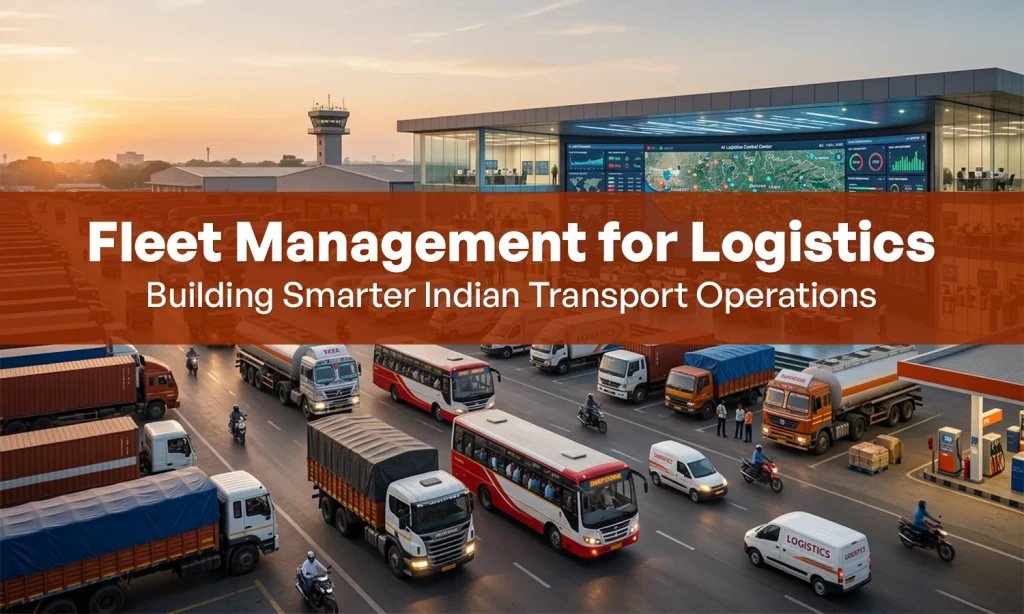
Efficient logistics operations depend on visibility, coordination, and data-driven decision-making. Fleet Management for Logistics helps transport companies improve vehicle utilization, reduce operating costs, streamline deliveries, strengthen compliance, and enhance customer service. This guide explores how modern fleet systems are helping logistics businesses build smarter and more efficient transport operations.
India’s logistics sector is evolving rapidly as businesses face increasing pressure to deliver faster, operate more efficiently, and maintain profitability. Traditional methods built around manual reporting, paper records, and constant phone coordination can no longer support the demands of modern supply chains.
Every logistics network depends on the smooth movement of vehicles between warehouses, manufacturing facilities, distribution centres, and delivery points.
A modern fleet management system provides dispatch teams with live updates on vehicle locations, trip progress, fuel levels, and operational status. Instead of waiting for manual driver updates, managers can view real-time information from a centralized dashboard.
This visibility allows logistics teams to coordinate loading schedules more effectively, reduce delays, and respond quickly to disruptions that may impact customer commitments.
Operational efficiency depends on ensuring the right vehicles are assigned to the right jobs. A vehicle breakdown during transit can disrupt delivery schedules and create costly delays throughout the supply chain.
This proactive approach reduces unexpected downtime and improves reliability across logistics operations.
One of the biggest hidden costs in logistics is vehicle waiting time. Trucks that spend hours waiting at loading bays or unloading facilities reduce overall fleet productivity.
Using transport management India solutions integrated with fleet systems, operators can monitor arrival times, loading durations, and turnaround performance across locations. These insights help identify bottlenecks and improve coordination between transport teams and warehouse operations.
Faster turnarounds allow companies to maximize vehicle utilization and complete more revenue-generating trips.
For logistics companies, profitability often depends on how effectively assets are used throughout the day.
A comprehensive vehicle fleet management system helps operators monitor vehicle utilization rates, identify idle assets, and optimize route planning. Dispatchers can match available vehicles with nearby assignments while reducing unnecessary empty kilometres.
Better asset utilization improves revenue potential without requiring significant investments in additional vehicles.
Fuel remains one of the largest operating expenses in logistics transportation. Even small inefficiencies can have a significant impact when multiplied across large fleets.
Modern Fleet Management for Logistics solutions provide detailed visibility into fuel consumption, route efficiency, idling behaviour, and driver performance. Managers can quickly identify unusual fuel usage patterns and take corrective action.
This level of visibility helps businesses reduce waste, improve efficiency, and protect operating margins.
Customers increasingly expect accurate shipment updates and delivery confirmation throughout the transportation process.
By combining telematics data with digital delivery workflows, Fleet Management for Logistics platforms can automatically record arrival times, trip completion status, and electronic proof of delivery. This reduces paperwork while improving transparency across the supply chain.
The result is faster communication, improved customer confidence, and more efficient billing processes.
As logistics businesses grow, operational information often becomes fragmented across different teams and software platforms.
A centralized fleet management system creates a single source of truth by consolidating vehicle data, maintenance records, trip information, driver performance metrics, and operational reports into one platform.
This unified approach improves collaboration between departments while ensuring important business information remains accessible and organized.
Compliance plays a critical role in transportation management. Operators must monitor driving hours, vehicle speeds, maintenance schedules, and regulatory requirements consistently.
Modern Fleet Management for Logistics solutions automate much of this process through digital tracking and reporting tools. Managers can monitor driver behaviour, identify safety risks, and maintain accurate compliance records without relying on manual processes.
A strong compliance framework reduces operational risk while improving relationships with customers and regulatory authorities.
Successful logistics businesses rely on visibility, efficiency, and operational control. With the right Fleet Management for Logistics strategy, companies can reduce costs, improve service quality, and maximize asset productivity across their transportation networks.