4 Ways Analytics from OBD and Fuel Data Reduce Downtime
Key Takeaways
- ➤ Analytics from OBD and Fuel Data helps fleets detect mechanical risks early.
- ➤ Predictive systems analyse vehicle diagnostics and fuel patterns together.
- ➤ Fuel monitoring reveals losses that engine data alone cannot detect.
- ➤ Predictive maintenance can reduce downtime by up to 50%.
- ➤ Taabi converts vehicle data into operational intelligence that supports better fleet decisions.
Introduction
Vehicle downtime damages both schedules and revenue. A single breakdown can stop deliveries, disrupt routes and increase repair costs. Fleet operators now rely on Analytics from OBD and Fuel Data to identify early warning signals that indicate mechanical issues or inefficient fuel use.
A long-haul truck in India typically travels about 6,000 km per month and consumes fuel worth nearly ₹1.5 lakh. Unexpected downtime quickly turns into financial loss. Using predictive analytics allows fleets to analyse vehicle signals earlier and prevent those interruptions.
What Is Predictive Analytics and How Does It Work in Fleet Management?
Predictive analytics examines patterns in operational data to anticipate problems before they happen. In fleet operations, this process relies heavily on AI predictive analytics to interpret vehicle signals and detect irregular trends. Modern trucks generate continuous data through sensors connected to the vehicle’s OBD port. A connected on-board diagnostic monitor collects information about engine health, fuel usage and performance behaviour. When processed through analytics software, this data highlights patterns that indicate a possible future failure. Through real-time data analysis, fleet operators can see small changes in engine performance that normally go unnoticed. Predictive models then flag these signals so maintenance can be scheduled before the truck fails on the road.
How OBD and Fuel Sensor Data Support Predictive Maintenance
Vehicle diagnostics reveal how the engine behaves under different loads while fuel monitoring shows how the truck consumes fuel across routes. When these datasets are analyzed together, Analytics from OBD and fuel data reveal deeper operational patterns.
An obd software platform reads engine parameters such as temperature changes, load variation and irregular fuel burn. At the same time, fuel sensors track the physical fuel level inside the tank. A fuel level obd reading alone may estimate consumption but it cannot confirm exact fuel volume.
Fuel sensors provide that measurement. Together they create a complete operational dataset that predictive systems can analyze to detect inefficiencies or mechanical stress.
Industry data suggests that unmonitored fleets lose 5–15% of total fuel purchases due to theft or inefficiency. When analytics tools correlate diagnostic signals with fuel patterns, managers can identify abnormal fuel loss early.
How Can Predictive Maintenance Reduce Vehicle Downtime?
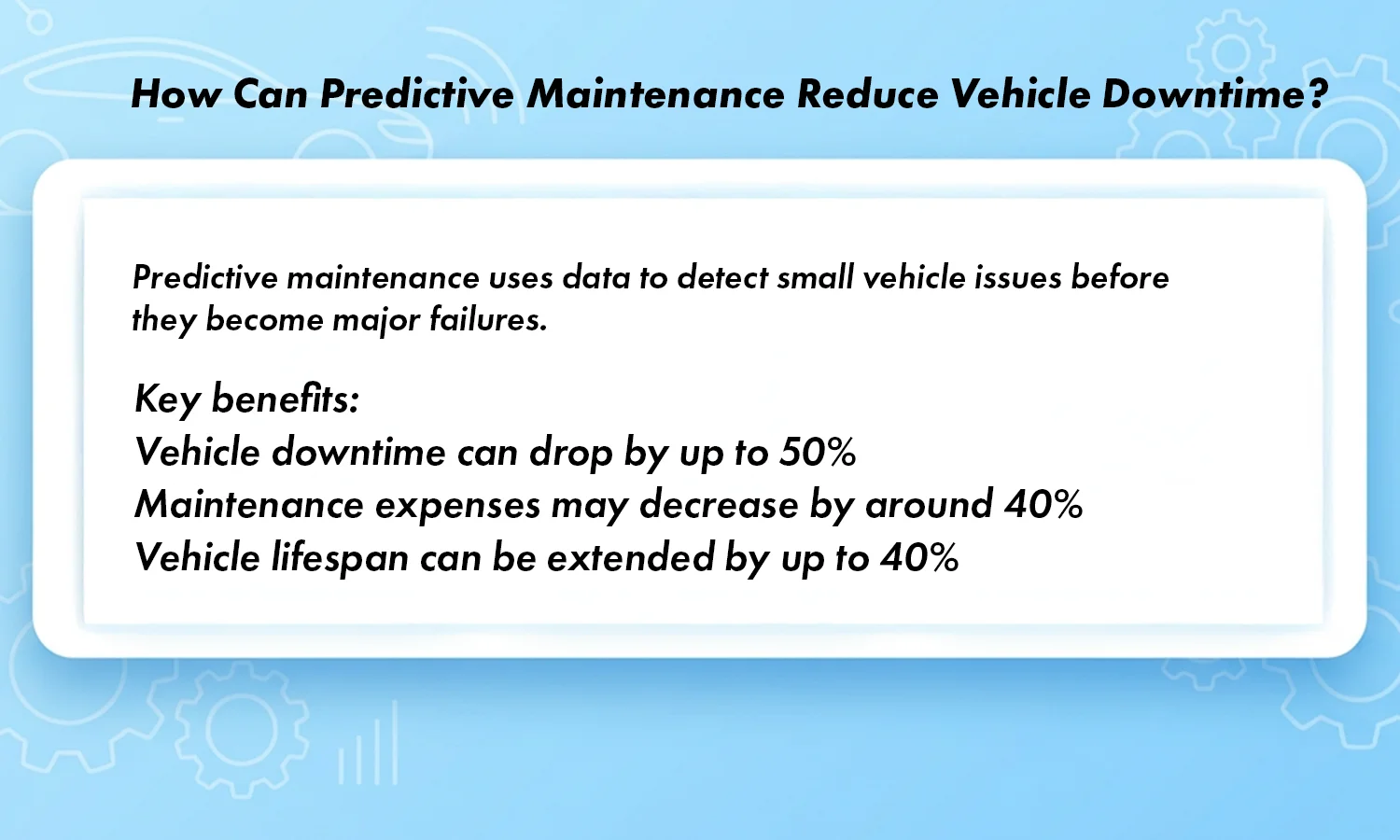
Reactive maintenance creates unpredictable expenses. Emergency roadside repairs often cost ₹50,000 or more, while a major engine overhaul can reach ₹80,000 to ₹1.8 lakh. Predictive monitoring changes the maintenance approach by detecting small faults before they escalate. Fleets using predictive analytics typically see measurable operational improvements:
- ➤ Vehicle downtime can drop by up to 50%
- ➤ Maintenance expenses may decrease by around 40%
- ➤ Vehicle lifespan can be extended by up to 40%
These gains happen because predictive systems identify problems early and allow planned maintenance instead of emergency repairs.
How Taabi’s TMS Uses OBD and Fuel Data to Improve Operational Intelligence and Reduce Vehicle Downtime
Taabi’s platform processes Analytics from OBD and Fuel Data inside its TMS environment. Engine signals, fuel readings and trip data are analysed together to generate operational intelligence. This analysis helps fleet managers detect patterns such as rising fuel consumption, inefficient driving behaviour, or early signs of engine stress. When diagnostic data shows abnormal activity while fuel levels change unexpectedly, the system flags the event immediately.
Predictive insights also improve predictive analytics in supply chain operations because vehicle availability directly affects delivery schedules. Taabi’s system connects fleet health signals with logistics planning so managers can respond before downtime disrupts operations.
As a result, fleets using Taabi often report improved vehicle utilisation and fewer unexpected breakdowns across long-haul routes.
FAQs
Is predictive analytics suitable for fleets of all sizes?+−
Yes. Predictive monitoring benefits both small fleets and large operators because early detection reduces expensive repairs and downtime.
Which is an example of predictive analysis?+−
A gradual increase in engine temperature identified through diagnostic monitoring can signal a future coolant system failure before a warning light appears.
Is predictive analytics part of AI?+−
Yes. Predictive analytics uses machine learning algorithms to process vehicle signals and forecast potential issues.