

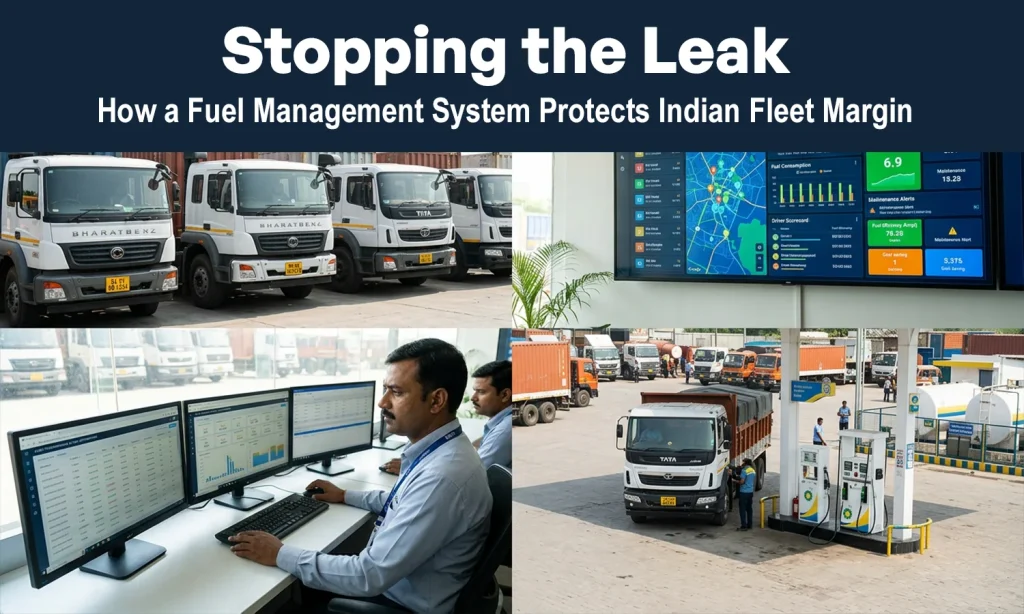
Stopping the Leak: How a Fuel Management System Protects Indian Fleet Margins

taabi-team
Indian Fleet Margins

Overview

Fuel costs remain one of the largest expenses for transport operators. A modern fuel management system does more than monitor fuel levels. It provides operational intelligence that helps businesses detect fuel losses, improve driver behaviour, optimize consumption patterns, and make smarter decisions that directly protect profitability and fleet performance.

Introduction

For transport companies across India, fuel is often the single largest operational expense. Even minor discrepancies in fuel usage can significantly impact profitability when multiplied across dozens or hundreds of vehicles. Rising diesel prices, unauthorized fuel extraction, excessive idling, and inefficient driving habits all contribute to shrinking Indian Fleet Margins.

This is why a modern fuel management system has become an essential part of fleet operations. Beyond tracking fuel levels, today’s systems generate valuable operational intelligence that helps businesses understand consumption patterns, identify losses, improve accountability, and make data-driven decisions across the fleet.

Tracking Fuel Theft and Real-Time Tank Variations

Fuel theft remains a persistent challenge in commercial transportation. Traditional fuel records often depend on manual logs and fuel station receipts, making it difficult to identify discrepancies quickly.

A modern fleet fuel management solution continuously monitors fuel levels using sensors that track changes inside the tank. Sudden fuel drops, unauthorized extractions, and unusual fuel events can be detected instantly.

Rather than discovering losses weeks later during audits, transport managers receive immediate alerts that allow them to investigate and take corrective action before costs escalate.

Turning Fuel Data Into Operational Intelligence

The true value of a fuel management system extends beyond theft prevention. Modern platforms convert raw fuel data into meaningful operational insights.
Managers can compare fuel consumption across routes, vehicles, drivers, and operating conditions. These analytics help identify patterns that may be affecting profitability and reveal opportunities for improvement.
This level of operational intelligence aligns fuel management with broader business objectives, helping operators make more informed decisions rather than simply reacting to problems after they occur.

Reconciling Fuel Invoices With Actual Fuel Levels

Fuel billing discrepancies can be difficult to detect when organizations rely solely on fuel station invoices.
A modern fuel management software platform cross-verifies invoice data against actual fuel levels recorded by onboard sensors. Every refueling event can be validated against physical fuel additions, creating a more accurate audit trail.
This verification process improves financial transparency while helping finance and operations teams identify irregularities before they affect overall fleet profitability.

Understanding the Impact of Driver Behaviour

Fuel efficiency is influenced heavily by driver habits. Excessive idling, harsh acceleration, aggressive braking, and overspeeding all increase fuel consumption over time.
A well-designed fuel management solution helps operators identify these behaviours using performance analytics and consumption reports. Managers can then provide targeted coaching to improve driving practices and reduce unnecessary fuel usage.
Improving driver performance not only lowers fuel costs but also contributes to safer operations and reduced vehicle wear.

How Idling Patterns Affect Fleet Performance

Many operators underestimate the impact of excessive idling. Vehicles that remain stationary with engines running consume significant amounts of fuel without generating productive output.
Through advanced fleet fuel management analytics, businesses can identify vehicles, routes, and locations where idling occurs most frequently. This allows managers to address inefficiencies and improve operational discipline.
Reducing unnecessary idling creates measurable fuel savings while improving overall fleet productivity.

Using Fuel Intelligence to Improve Maintenance Outcomes

Fuel data can often reveal issues that extend beyond consumption alone. Unexpected changes in fuel efficiency may indicate mechanical problems developing within the vehicle.
Modern fuel management software can help maintenance teams identify early warning signs such as injector problems, clogged filters, engine inefficiencies, or drivetrain issues. Detecting these problems early helps prevent expensive repairs and unexpected breakdowns.

This connection between fuel performance and maintenance planning adds another layer of operational intelligence that strengthens overall fleet reliability.

Creating a Data-Driven Approach to Fuel Control

The most successful transport operators treat fuel management as an ongoing optimization process rather than a periodic audit activity.

A comprehensive fuel management system combines monitoring, analytics, alerts, and reporting into a single framework. Instead of simply tracking fuel consumption, operators gain a deeper understanding of how fuel impacts routes, drivers, assets, and profitability.

This shift from monitoring to operational intelligence enables businesses to improve efficiency while protecting margins in an increasingly competitive transport environment.

Optimize Your Operations Today

Fuel management is no longer just about preventing losses. It’s about creating operational intelligence that helps businesses improve efficiency, strengthen accountability, and make smarter fleet decisions.

Ready to gain greater control over fuel costs and fleet profitability? Book a demo and discover how intelligent fuel monitoring can transform your transport operations.
FAQs

How accurate are fuel monitoring sensors on rough roads?
Modern sensor systems use advanced calibration and filtering algorithms to compensate for fuel movement caused by uneven terrain, slopes, and vehicle motion. This helps maintain accurate readings even under demanding operating conditions.
What fuel savings can transport operators typically achieve?
Results vary depending on fleet size and operational practices. However, many operators report significant reductions in fuel wastage after implementing a comprehensive fuel management system and improving operational visibility.
Can fuel theft be detected when vehicles are parked?
Yes. Modern fleet fuel management platforms monitor fuel levels continuously and can generate alerts whenever unauthorized fuel removal is detected, even when the engine is turned off.
How are fuel invoices verified digitally?
A fuel management software platform compares invoice records with actual fuel additions measured by onboard sensors, helping organizations identify discrepancies quickly and accurately.
Can fuel management systems integrate with accounting software?
Yes. Most modern fuel management solutions support integration with ERP, accounting, and operational platforms, helping organizations automate reporting and financial reconciliation.

Read More Blogs

Expand your horizons with a wealth of captivating articles that complement our featured blogs; offering further perspectives, valuable insights, and a deeper exploration of the topics that intrigue you.

Subscribe now

Looking for Deep-Tech Logistics & Fleet Management Solutions?

Access the latest trends, expert commentary, and indicators for unique insights into the global economy.