


Key Takeaways
- ➤ Predicting Vehicle Problems with AI allows fleets to detect faults before breakdowns occur.
- ➤ OBD diagnostics and fuel sensor data enable predictive maintenance systems.
- ➤ Predictive monitoring can reduce vehicle downtime by 30–50%.
- ➤ Early fault detection can reduce repair costs by 20–40%.
- ➤ The Indian AI-powered fleet market is projected to reach ₹245.8 billion by 2029.
Introduction
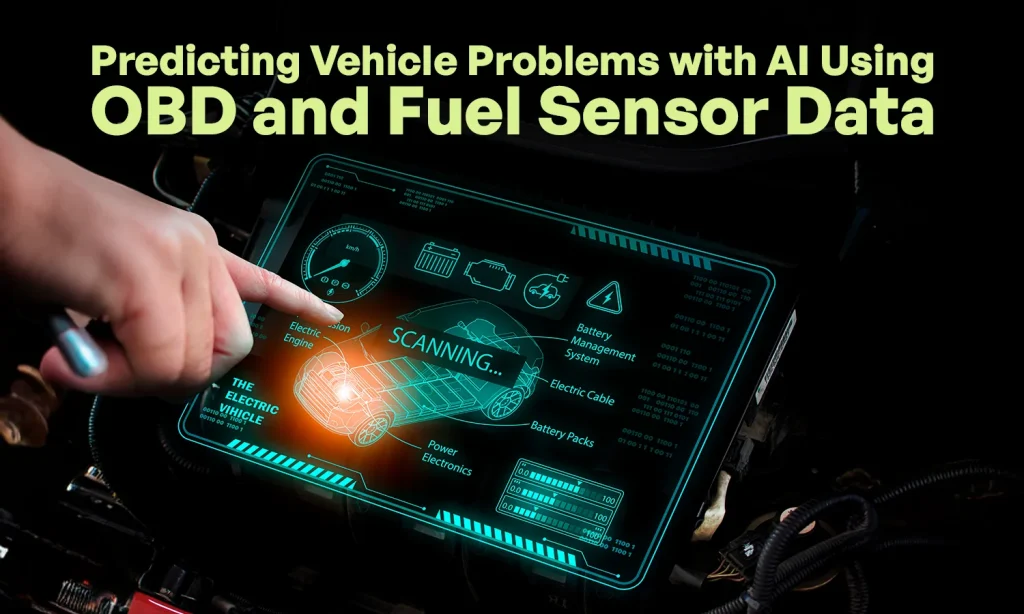
Artificial intelligence analyses diagnostic signals, fuel consumption patterns, and vehicle behaviour to identify anomalies. This approach allows fleets to move from reactive repairs toward predictive maintenance strategies that improve reliability and reduce operational disruptions.
How Can AI Help Predict Vehicle Problems?
The process behind Predicting Vehicle Problems with AI usually follows four steps.
Data collection
Pattern analysis
Anomaly detection
Failure prediction
What Role Do OBD and Fuel Sensors Play in AI Diagnostics?
An OBD Fleet Tracker collects real-time engine diagnostics including RPM, coolant temperature, and engine load. Fleet operators often use specialized obd software to transmit this diagnostic information to central monitoring platforms where predictive models analyse long-term performance trends.
Fuel sensors provide an additional layer of insight. These sensors monitor fuel levels and consumption patterns, helping fleets detect irregular usage patterns or inefficiencies. When this information is analysed alongside diagnostic data, AI systems gain a more complete view of vehicle performance.
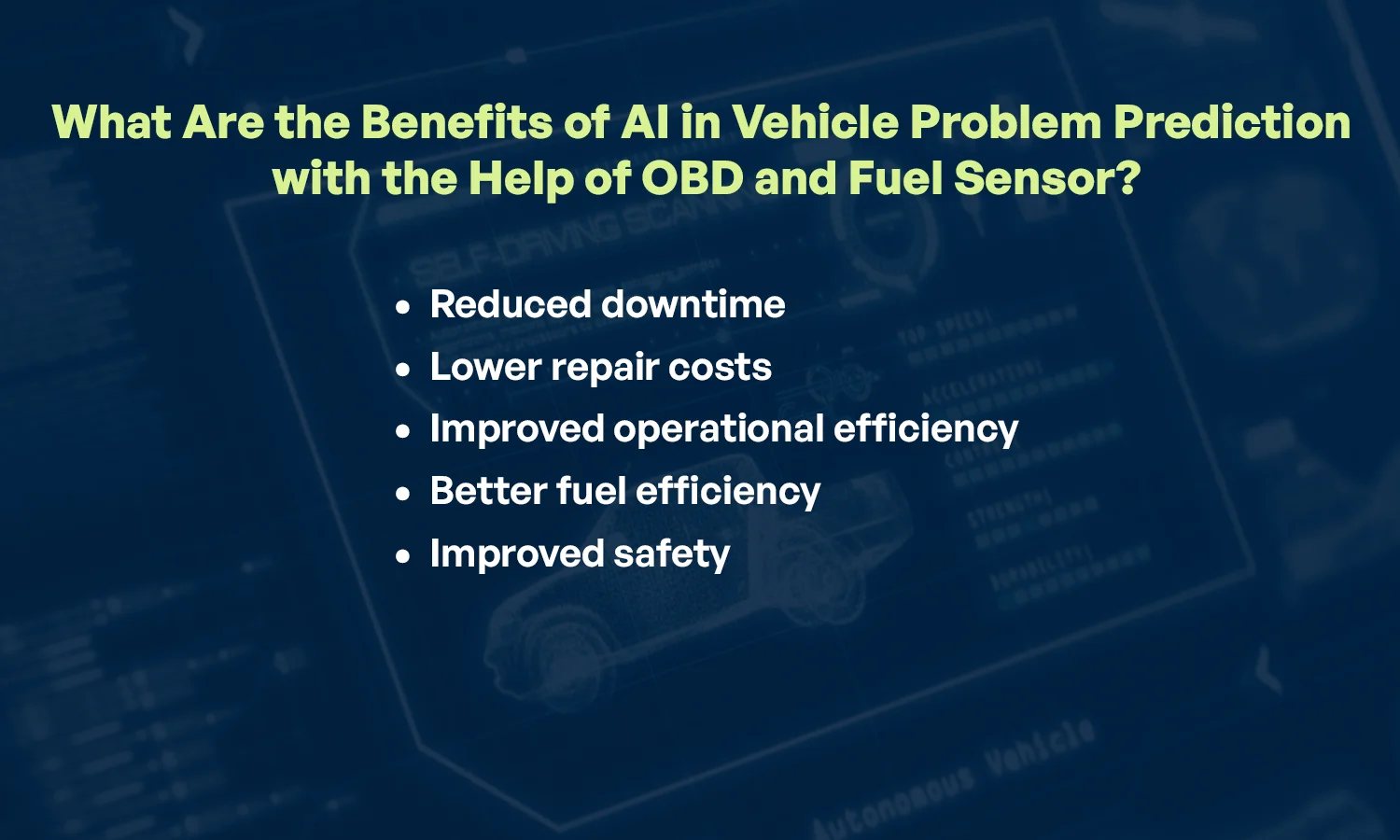
What Are the Benefits of AI in Vehicle Problem Prediction with the Help of OBD and Fuel Sensor?
- ➤ Reduced downtime
Predictive maintenance systems can reduce unexpected vehicle downtime by 30–50% by identifying problems early. - ➤ Lower repair costs
Early detection of faults can reduce maintenance expenses by 20–40%, since small issues are addressed before major failures occur. - ➤ Improved operational efficiency
Large fleet operators using predictive monitoring systems have reported 15–35% improvements in operational efficiency. - ➤ Better fuel efficiency
AI analysis of fuel consumption patterns and driving behaviour can deliver 10–15% improvements in fuel efficiency. - ➤ Improved safety
Early detection of mechanical faults such as engine overheating or brake wear reduces the risk of accidents.
These advantages highlight the growing importance of Predicting Vehicle Problems with AI for modern fleet operations.
How AI Will Shape the Future of Fleet Management with OBD and Fuel Sensors
Conclusion
FAQs
Route and fuel optimization is a key example, using real-time variables to engineer the most efficient, data-driven path for every journey.
No. AI acts as a digital diagnostic partner, providing the strategic blueprint while the mechanic executes the critical physical repair.