Truck fleets are facing tougher road conditions every year. Highways are crowded, delivery pressure is constant, and risks build up fast when drivers are tired or distracted. One mistake can cost money, time, and sometimes lives. That is why Video Telematics Is Rising in 2026 as a serious safety and performance layer for truck fleets.
Fleets are moving beyond basic tracking because they need proof, early alerts, and better control. Video telematics gives all three. It helps drivers stay safer on the road and helps managers take faster action when risk starts growing. Let us look at why adoption is accelerating this year.
Driver safety is no longer something fleets can manage only through policies or after-trip reviews. Indian roads are more mixed than ever, with heavy trucks sharing space with faster cars and smaller vehicles that appear suddenly. Standard tracking can show speed or braking, but it cannot show what caused the risk.
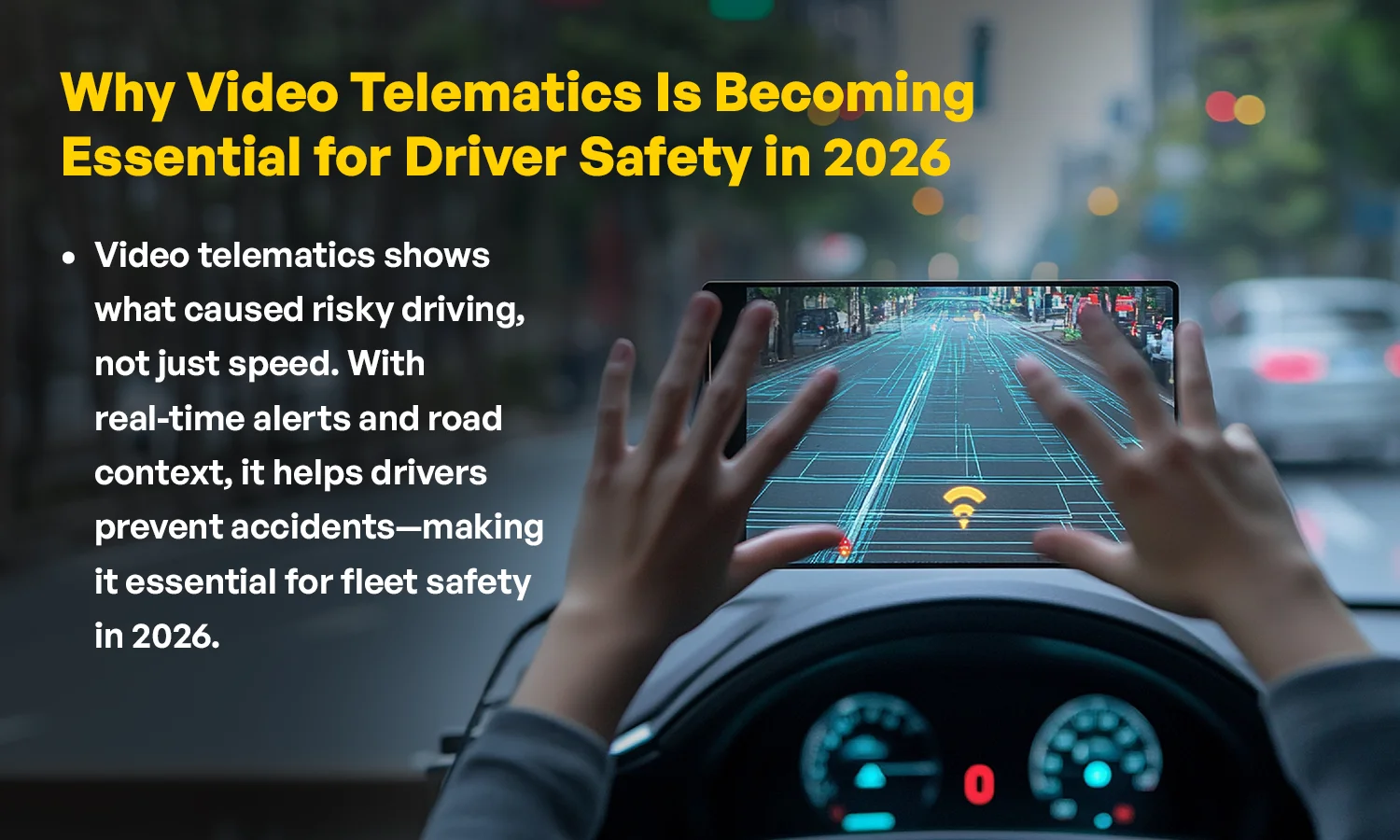
A video telematics camera fixes that gap. It records what the driver sees on the road and links it to driving data like speed, lane movement, braking, and turns. If a driver reacts late, drifts across lanes, or misses a hazard, the system captures the full context. It also sends quick in-cabin alerts so drivers can correct before the situation becomes dangerous.
This move from after-incident review to real-time prevention is one clear reason Video Telematics Is Rising in 2026 for truck fleets.
The growth in video telematics is not just because fleets are adding cameras. It is because AI makes those cameras useful at scale, which is why Video Telematics Is Rising in 2026 faster than in earlier years.
This also changes coaching. With telematics video, managers can show the exact clip behind a risky action and explain what should be improved. Drivers learn faster because feedback is based on proof, not assumptions. As this becomes normal across fleets, video telematics shifts from being a nice add-on to a core safety tool.
Another big driver is accountability. Fleets need clear answers when incidents happen. They also need stronger discipline on routes that carry high risk. This is where fleet tracking video makes a difference.
When a truck faces an incident, a route deviation, or an unplanned stop, managers can verify what actually happened within minutes. This reduces false claims, protects fleets in disputes, and brings fairness into driver reviews. It also helps spot repeat patterns across routes and drivers so risk can be handled early.
Taabi supports driver safety through instant alerts for fatigue, distraction, unsafe speeding, and risky lane behaviour. Event clips are stored automatically for coaching and compliance. Fleets can also use live streaming when a risk alert needs immediate attention.
Many fleets still run a patchwork of tools. A plain fleet video camera setup can show a scene, but it cannot explain the driving context. Taabi’s vehicle camera telematics gives the full story, what happened, why it happened, and what changed after coaching. That fits where the future of fleet telematics is heading, one connected system that improves safety and control together.
This practical, truck-first design helps fleets stay ahead as Video Telematics Is Rising in 2026 and becoming a standard expectation in fleet safety.
Video Telematics Is Rising in 2026 because fleets want safer driving, clearer proof, and tighter control over daily risk. AI is making video data easier to use, and truck operators are seeing results through fewer incidents and better driver discipline. With Taabi’s truck-focused approach, fleets can adopt video telematics as a real safety partner on every route, helping protect drivers, assets, and operations at scale.