

BLOG Details

How to Integrate TMS with OBD Effectively Along with Fuel Sensors & Fleet Systems

taabi-team
TMS with OBD

Key Takeaways

  • TMS with OBD integration connects your business office to your actual trucks.
  • An obd monitor is great for engine health, but needs fuel sensors for complete cost control.
  • Integrated TMS software reduces manual paperwork and speeds up dispatching.
  • Taabi.ai uses AI to fuse these data points into one simple, actionable dashboard.

Ready to Bridge the Gap in Your Fleet Data?

In 2025, running a successful transport business is all about connecting the dots. Many fleet owners use a TMS system to manage their loads and a separate fleet tracking system to see their trucks. But if these systems don’t talk to each other, you are missing the “Corner Office” view of your operations.
Integrating your TMS with OBD data is the secret to a high-performing fleet. It’s the difference between knowing where your truck is and knowing how it’s performing. By bringing these data streams together, you stop the guesswork and start making decisions that save money and increase uptime.

What Is TMS and Why Integration Matters for Fleet Operations?

A TMS software in logistics is your operational hub. It handles the “business” side, booking loads, carrier selection, and billing. However, a TMS software alone cannot tell you if a truck is about to break down or if fuel is being stolen.
Integration matters because it turns your TMS system into a live monitoring tool. When your logistics data meets real-world vehicle data, you can automate dispatching based on real-time vehicle availability and trip readiness, rather than just which one is empty.

Why Integrating TMS with OBD Alone Is Not Enough

Before we dive into the integration, let’s look at the obd monitor. Every modern truck has an OBD port. This system acts as the vehicle’s self-diagnostic tool, reporting on engine health, emissions, and basic mileage.
While an OBD Fleet Tracker is excellent for reading engine codes, it has limitations. It can tell you the engine’s “calculated” fuel use, but it cannot detect a physical siphon or a slow leak in the tank. Relying only on TMS with OBD means you are still blind to the biggest cost in Indian trucking: fuel theft. To get the full picture, you need to add specialized sensors to the mix.

How Do Fuel Sensors Improve TMS and OBD Integration?

When you add a fuel management system for fleet sensors to your setup, you close the loop. While the obd monitor tracks the engine, the fuel sensor tracks the actual liquid in the tank.
By feeding this sensor data into your TMS software, you can correlate fuel drops with specific trips or drivers. This “Data Fusion” allows you to see if a fuel loss happened during a delivery or while the truck was idling. It turns your vehicle management system into a powerful security tool that protects your margins from siphoning and fraud.
TMS with OBD

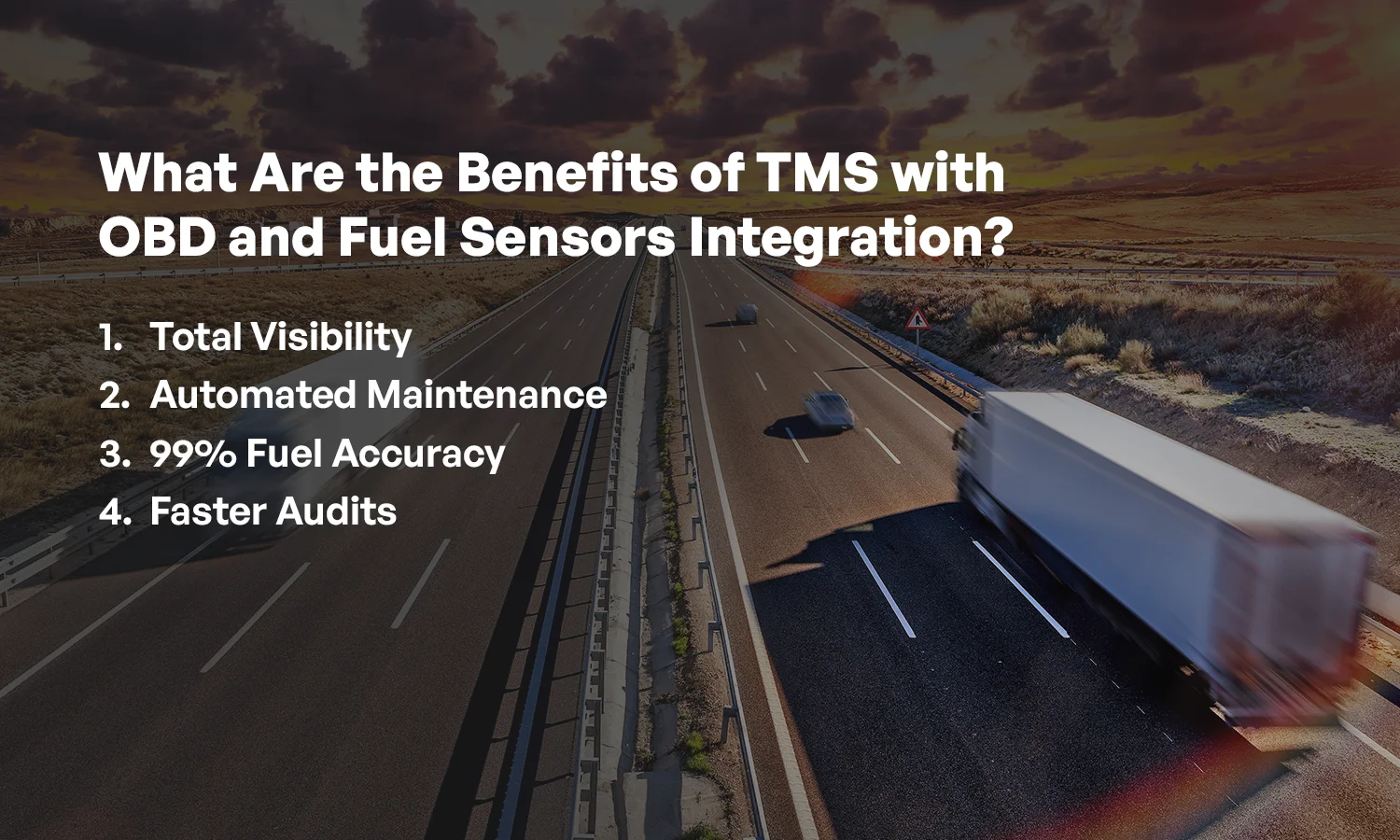
What Are the Benefits of TMS with OBD and Fuel Sensors Integration?

  • Total Visibility: You see the load, the vehicle health, and the fuel level on one screen.
  • Maintenance Alerts: OBD error codes can be sent to fleet managers through the integrated platform, helping them schedule repairs before small issues escalate.
  • 99% Fuel Accuracy: You stop relying on “estimated” fuel and start seeing every liter.
  • Faster Audits: Combining TMS software in logistics with sensor data makes IFTA and tax reporting a breeze.

How Is Taabi Shaping the Future of Integrated Fleet Management?

At Taabi, we don’t just provide a fleet tracking system; we provide a complete ecosystem. Our proprietary AI algorithms take data from your TMS with OBD and fuse it with our precision fuel sensors.
This creates a vehicle management system that generates operational intelligence by analyzing data from logistics workflows, engine diagnostics, and fuel activity in one platform. Whether it’s identifying early operational anomalies or spotting a minor fuel discrepancy, Taabi’s integrated platform ensures that your journey from the driver’s seat to the corner office is powered by the best technology available.

Conclusion

Integrating your logistics and vehicle data is the only way to stay competitive in 2025. By combining your TMS system with an OBD2 tracking device and fuel sensors, you create a shield around your profits. Don’t settle for scattered data; choose an integrated path with Taabi.ai and lead your fleet with confidence.

FAQs

Can TMS work with OBD and fuel sensors together?
Yes, a modern TMS with OBD setup can integrate both diagnostics and fuel sensors to provide a 360-degree view of your fleet’s performance.
Is SAP a TMS system?
Yes, SAP offers a well-known TMS system that many large enterprises use to manage their global supply chain and logistics.
Can TMS integration help reduce operational costs?
Integrating your TMS with OBD and fuel sensors can reduce costs by 10-15% through better routing, fuel security, and predictive maintenance.

Read More Blogs

Expand your horizons with a wealth of captivating articles that complement our featured blogs; offering further perspectives, valuable insights, and a deeper exploration of the topics that intrigue you.

Subscribe now

Looking for Deep-Tech Logistics & Fleet Management Solutions?

Access the latest trends, expert commentary, and indicators for unique insights into the global economy.