


Introduction
Why Is GPS Vehicle Tracking Important?
A reliable vehicle GPS tracker gives you visibility and control. For most businesses, GPS tracking is used to:
- ➤ Know where vehicles are and what route they took
- ➤ Reduce delays with better dispatch and routing
- ➤ Cut idle time and unnecessary movement
- ➤ Improve customer updates and accountability
- ➤ Support basic safety and compliance checks
If you already run a vehicle tracking system, choosing the right tracker upgrades accuracy, alert quality, and reporting.
Types of GPS Vehicle Trackers Available in 2026
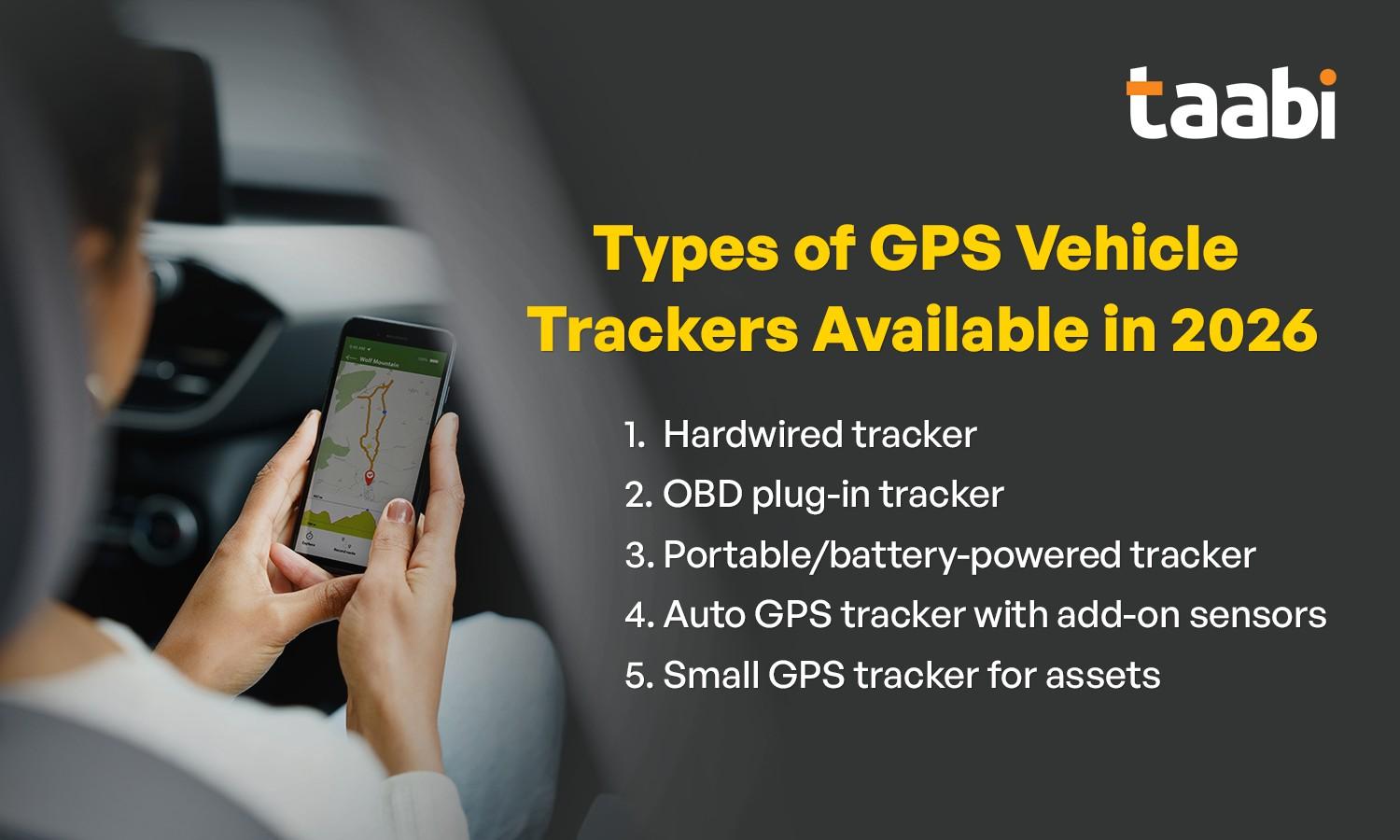
In 2026, most businesses choose from these vehicle tracking devices:
-
Hardwired tracker
Best for fleets and commercial vehicles. Stable power, harder to tamper with, and reliable for long-term use.
-
OBD plug-in tracker
Quick install for compatible vehicles. Common for small fleets and service vehicles.
-
Portable/battery-powered tracker
Useful when you cannot wire into the vehicle. Good for trailers, assets, or short-term needs.
-
Auto GPS tracker with add-on sensors
Some fleets add fuel, temperature, door, or ignition sensors depending on operations.
-
Small GPS tracker for assets
A small GPS tracker is best for non-powered assets or equipment where movement alerts matter more than trip analytics.
When choosing a vehicle GPS tracking device, first decide whether you need a vehicle-focused tracker or an asset tracker.
How Do GPS Vehicle Tracking Systems Work?
A GPS tracker collects satellite location signals, then sends that data to your platform using mobile networks. In a typical GPS tracking system, managers see:
- ➤ Live location and trip history
- ➤ Stops, idle time, and route deviations
- ➤ Alerts like speed, ignition, or geo-fence events
When connected with vehicle fleet management, tracking data supports dispatch decisions and daily operations. For larger teams, fleet tracking is most useful when alerts and reports are reviewed daily, not just in emergencies.
6 Key Features to Look for in a 2026 GPS Tracker
-
Strong location accuracy + stable uptime
A tracker must perform consistently across routes, not only in city limits.
-
Fast update frequency
More frequent updates improve live visibility, especially for delivery and field service.
-
Smart alerts that matter
Look for geo-fence, overspeed, long idle, ignition, and route deviation alerts.
-
Anti-tamper support
Hardwired units with tamper alerts help businesses that face theft or misuse risk.
-
Clean dashboard and reporting
If the platform is confusing, the tracker becomes useless. Reports should quickly show idle time, late starts, and route compliance.
-
Scalable device management
The best setups make it easy to add vehicles, manage devices, and handle replacements without downtime.
How to Select the Right GPS Tracker for Your Business Type
Use your business style to choose the right Best GPS Vehicle Tracker fit:
- ➤ Delivery fleets: Prioritise update frequency, geo-fencing, stop reports, and route discipline.
- ➤ Service teams and technicians: Focus on live visibility, quick dispatch, and simple dashboards.
- ➤ Long-route transport: Choose hardwired devices, stable uptime, and anti-tamper features.
- ➤ Asset-heavy operations: Use a mix: vehicle trackers for vehicles, and a small GPS tracker for trailers or equipment.