Top 5 Ways Video Telematics for Driver Behaviour Helps
Key Takeaways
- ➤ Video telematics for driver behaviour connects driving data with real road and cabin footage.
- ➤ Video adds context, making driver feedback fair and clear.
- ➤ Real-time alerts help drivers correct risky actions early.
- ➤ Fleets gain safer routes, fewer incidents, and stronger compliance records.
- ➤ Taabi offers a truck-first video telematics setup built for Indian fleets.
Introduction
Driver actions decide more than just mileage. They decide on safety, delivery timelines, fuel loss, and even legal risk. In truck fleets, one tired blink or one risky overtake can lead to damage that takes days to recover from. That is why fleets are investing in video telematics for driver behaviour. It is not just about tracking trucks. It is about understanding how drivers behave on the road, correcting unsafe habits early, and keeping every trip accountable. When video and telematics data work together, fleets get the full story behind every event, not half of it. In this blog, we will break down how video telematics for driver behaviour supports better driver performance, stronger compliance, and long-term fleet results.
How Does Video Telematics Improve Driver Behaviour Monitoring?
Traditional telematics can show speed, braking, and route patterns. But it cannot tell you what the driver saw, what the driver did, or what caused the risk. That missing context makes coaching hard and disputes harder.
With driver behaviour monitoring through video, fleets see real scenes linked to real data. If a truck brakes suddenly, the manager can check the clip and understand the reason. If a driver is flagged for distraction, the footage confirms it. This gives fair feedback to drivers and removes guesswork for managers.
Video telematics also supports live alerts inside the cabin. Drivers get timely warnings when risky patterns appear. Over time, this helps fleets shift from reacting to incidents to preventing them.
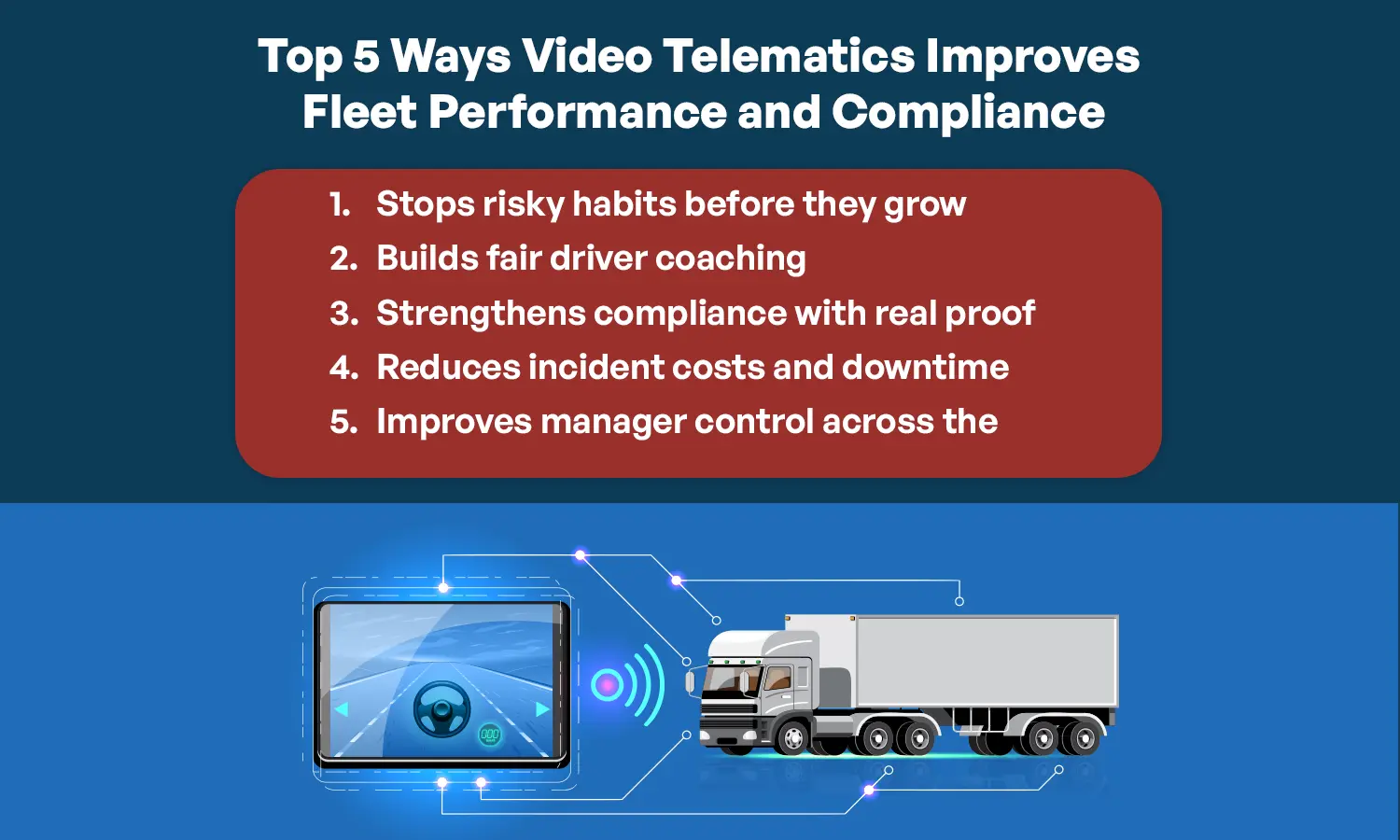
Top 5 Ways Video Telematics Improves Fleet Performance and Compliance
Here are five direct ways video telematics for driver behaviour improves daily operations.
- ➤Stops risky habits before they grow
With driver behaviour tracking, fleets can see patterns like harsh acceleration, sharp turns, or lane drift. Since these actions are linked to real clips, drivers understand the feedback clearly and improve faster. - ➤Builds fair driver coaching
A simple number does not explain the full story. Video does. A camera for driver behaviour gives proof of what happened, so training becomes specific and fair. This reduces friction between drivers and managers. - ➤Strengthens compliance with real proof
Fleets face audits, insurance claims, and customer scrutiny. Video clips tied to telematics data create a clean record of driver actions and incident causes. This helps fleets meet safety rules, defend claims, and avoid penalties. - ➤Reduces incident costs and downtime
Unsafe driving leads to repairs, route delays, and truck unavailability. When fleets improve behaviour early, incident rates fall. That means fewer stoppages, smoother routes, and higher weekly output. - ➤Improves manager control across the fleet
With fleet driver behaviour monitoring, managers can compare routes, drivers, and risk types on one dashboard. This helps them spot high-risk drivers early, support them, and protect overall fleet safety and scorecards.
Why Is Video Telematics Essential for Modern Fleet Success?
Fleet operations are getting tighter. Customers want on-time deliveries. Regulators want safer roads. Fleet owners want fewer losses and better control. In this mix, it is not enough to know where trucks are. You need to know how they are being driven.
Fleet video telematics gives managers that full view. It adds road context, cabin insight, and event proof to normal telematics. This lets fleets cut avoidable risk, train drivers better, and maintain clear operational discipline. It also supports benchmarking across routes, drivers, and regions. In short, video telematics for driver behaviour helps fleets protect drivers, reduce disruptions, and run with higher confidence.
The Role of Taabi in Video Telematics for Driver Behaviour
Taabi builds video telematics for truck fleets, designed for Indian operating conditions. Its system combines road-facing and cabin-facing cameras with telematics signals to give a clean, real-time view of risk.
Taabi’s telematics video layer helps detect fatigue, distraction, overspeeding, harsh driving, and unsafe lane actions. Drivers receive instant alerts in the cabin. Managers get event clips stored with trip data, making reviews simple and fair.
With fleet tracking video, fleets can verify what happened during route deviations, unplanned stops, or accident claims. This improves compliance, reduces disputes, and supports stronger safety coaching at scale.
Taabi keeps the focus on outcomes that matter for truck fleets: safer driving, clear evidence, and a steady improvement in driver performance through video telematics for driver behaviour.
Conclusion
Better fleets are built on better driving. That is the main value of video telematics for driver behaviour. By linking video proof to telematics data, fleets get the context needed to coach drivers fairly, reduce incidents, and maintain strong compliance. With systems like Taabi, truck fleets can support drivers in real time and improve performance across every route.
FAQS
Is video telematics difficult to install?+−
Not really. Most systems are plug-and-play for trucks and can be installed during regular maintenance. Once installed, the dashboard starts receiving video and telematics data immediately, so fleets can begin monitoring without long setup cycles.
Can Anyone Access Telematics?+−
Access is controlled by the fleet owner. Managers and safety leads get role-based logins, while drivers usually see only in-cabin alerts. This keeps reviews fair and ensures sensitive footage stays within authorised teams.
Can Video Telematics Reduce Fleet Operational Costs?+−
Yes. Safer driving reduces repairs, downtime, and claim costs. It also improves driver habits that waste fuel or cause delays. Over time, this leads to fewer incidents and more consistent fleet output, which directly lowers operating losses.