Vehicle Telematics for Business Fleets: 10 Key Benefits

Key Takeaways
- ➤ Vehicle telematics for business fleets combines GPS and vehicle data for full visibility.
- ➤ Fleets gain stronger route control, fuel savings, and faster response to delays.
- ➤ Driver behaviour tracking improves safety and compliance.
- ➤ Predictive maintenance reduces breakdowns and increases uptime.
- ➤ Taabi offers a truck-first telematics solution built for commercial fleets.
Introduction
Running a fleet is not only about moving vehicles. It is about keeping every trip safe, on time, and cost-controlled. If you do not know where your trucks are, how they are driven, or when they need service, small problems turn into big losses. That is why more operators are choosing vehicle telematics for business fleets. It combines GPS, vehicle data, and driver insights in one place. You get real-time visibility, early alerts, and reports that help you act fast. In short, telematics helps you manage a fleet with facts, not assumptions.
This blog explains what telematics is, how it works, and the top benefits it brings to commercial fleets, with Taabi as a practical example.
What Are Vehicle Telematics and How They Work?
Vehicle telematics uses connected hardware and software to collect fleet data and display it on a dashboard. GPS provides location tracking and inferred speed, but it does not provide engine health, fuel usage, or video. For that, fleets use separate devices such as OBD or ECU-connected sensors for vehicle data, fuel sensors for consumption visibility, and cameras for safety monitoring.
All these inputs come together in one system, so managers can see live locations, route history, driver patterns, and vehicle condition in a consolidated view. For fleets, telematics reduces blind spots and helps teams respond faster across day-to-day operations.
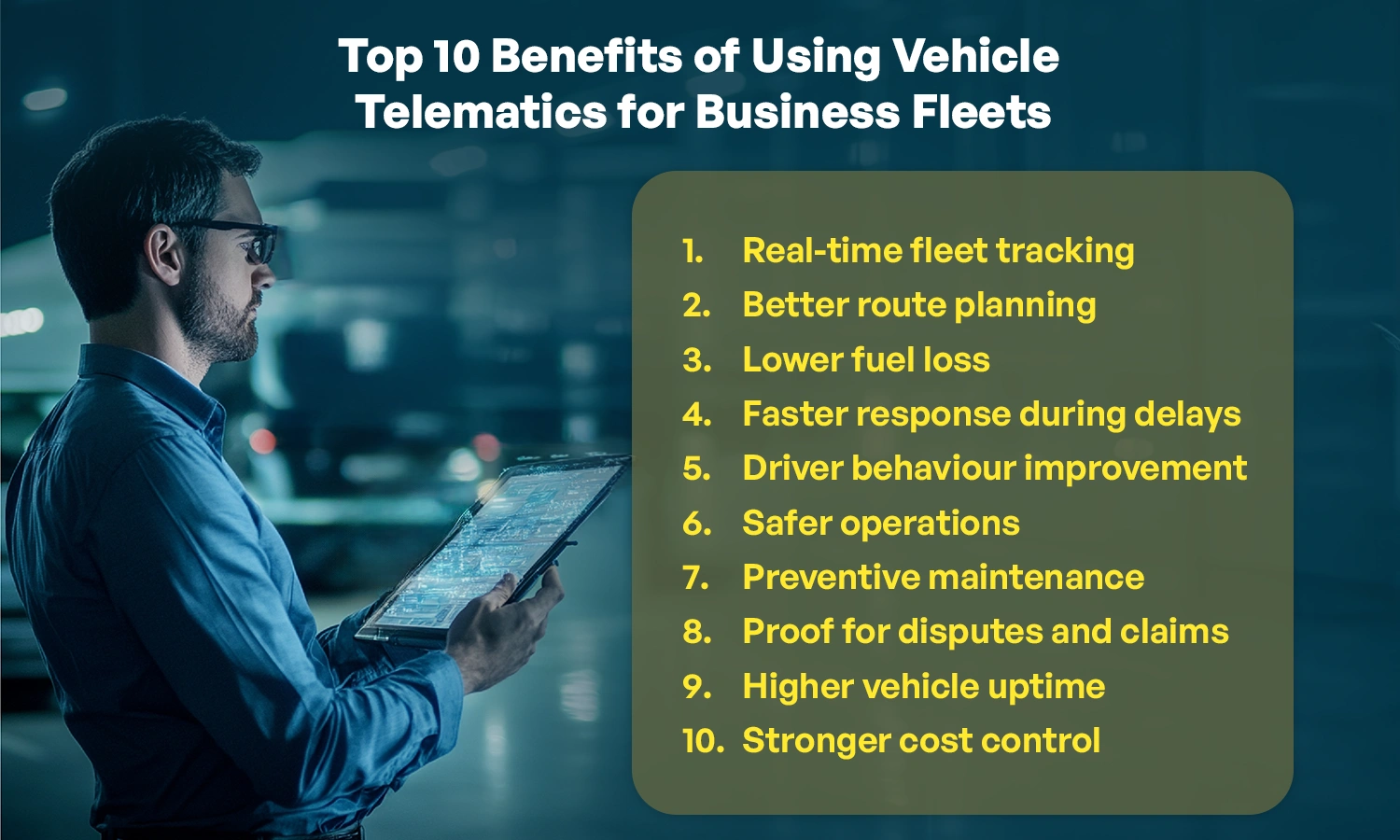
Top 10 Benefits of Using Vehicle Telematics for Business Fleets
Here are the biggest benefits that fleets see after adopting vehicle telematics for business fleets.
-
Real-time fleet tracking
Live maps show where every vehicle is right now. This makes fleet tracking simple and reliable.
-
Better route planning
Managers can compare planned routes to real routes and cut wasteful detours.
-
Lower fuel loss
Telematics shows idling, speeding, and route inefficiency, helping reduce avoidable fuel burn.
-
Faster response during delays
If a truck stops longer than expected, managers get alerts and can act early.
-
Driver behaviour improvement
Patterns like harsh braking or overspeeding are easy to spot and correct with coaching.
-
Safer operations
With alerts on risky habits, fleets reduce incidents and improve compliance over time.
-
Preventive maintenance
Engine signals help predict issues early, so trucks are serviced before breakdowns.
-
Proof for disputes and claims
Trip history and event logs offer clear evidence for customer or insurance cases.
-
Higher vehicle uptime
Fewer breakdowns and better trip planning keep trucks running more days per month.
-
Stronger cost control
With reports on usage, fuel, routes, and maintenance, fleet owners can manage spending with clarity.
These benefits add up to better control, safer driving, and stronger business margins.
Types of Vehicle Telematics Used in Business Fleets
There are different telematics setups depending on fleet size and vehicle type.
For trucks, fleets often use GPS tracking for truck systems that combine real-time location with driver and engine data. Some operators still think of telematics as just truck GPS, but modern systems go far beyond location only.
For mixed fleets, telematics is also common in vans and light vehicles, where devices like an OBD2 GPS tracker can plug into the vehicle port. Heavy trucks usually use more advanced connections, but the goal is the same: capture the right data for control.
Telematics is now standard for GPS for commercial vehicles, because fleets need visibility across long routes, night driving, and high-value loads. The right type depends on your routes, risk level, and reporting needs.
Why Taabi Is the Right Fit for Business Fleet Telematics
Telematics only helps when the system is built for real fleet conditions. Taabi focuses on trucks and commercial fleets, with tools that support safety, cost control, and day-to-day fleet visibility. Taabi brings route tracking, driver insights, vehicle health signals, and control tower monitoring in one view. Managers can check risky trips, monitor unplanned stops, and see which drivers or routes need attention. This makes vehicle telematics for business fleets practical, not complicated. The value is simple. Taabi helps fleets keep vehicles running longer, drivers safer, and operations more accountable, without forcing teams into heavy workflows.
Conclusion
Fleets that depend on guesswork lose time and money. Fleets that depend on data gain control. That is the real value of vehicle telematics for business fleets. With location, driver patterns, and vehicle health in one dashboard, you reduce risk, improve planning, and protect fleet performance. Taabi supports this shift with a truck-focused telematics system designed for commercial fleet needs.
FAQS
Is it difficult to install GPS trackers?+−
Most telematics devices are easy to install for fleets. Many units are fitted during maintenance and start sending data right away. Once installed, vehicle telematics for business fleets runs quietly in the background while managers use the dashboard.
Is there a GPS for commercial vehicles?+−
Yes. Modern fleets use GPS systems built for trucks, tippers, trailers, and other heavy vehicles. These systems do more than location tracking, and are part of vehicle telematics for business fleets that also track driver and vehicle performance.
Can GPS work without the internet?+−
GPS can still capture location without internet, but it needs a network to send data to the dashboard in real time. Most fleet telematics systems store data during low signal zones and upload once connectivity returns, so tracking stays accurate.