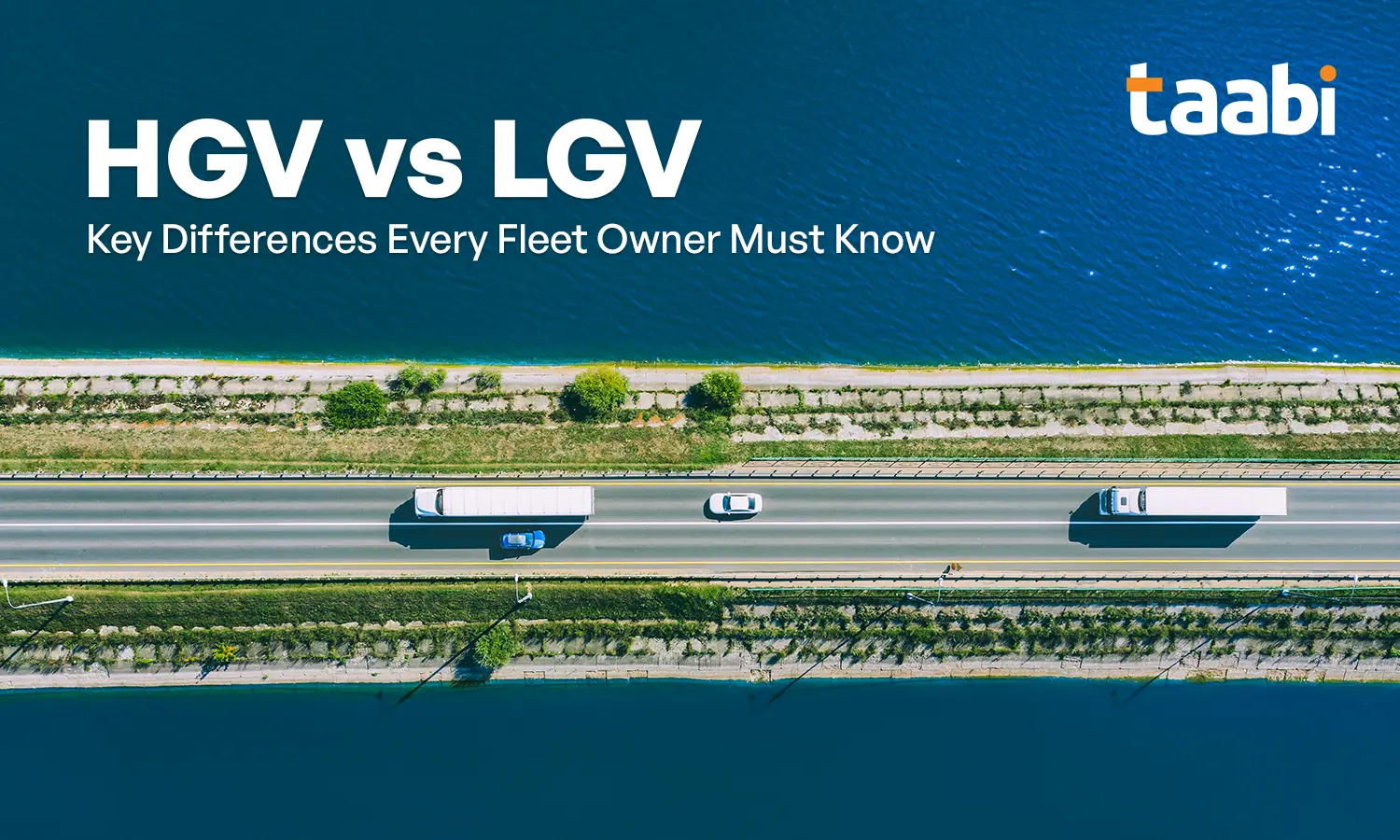
HGV vs LGV: Key Differences for Fleet Owners
Introduction
If you manage trucks, you have probably heard HGV vs LGV used in quotes, permits, and fleet conversations. The confusion is real because these terms are used differently across regions. This guide breaks down what each means, how fleets typically classify them, and why the difference matters for licensing, route planning, cost, and technology decisions.
What Is an HGV?
HGV usually stands for Heavy Goods Vehicle. In day-to-day fleet terms, it points to vehicles used for heavy goods transport. large trucks that carry high payloads over longer distances, often on national highways and intercity routes.
In many markets, HGV is associated with heavier commercial categories (the kind that require a dedicated commercial licence and trained drivers). In India, you will also see fleets refer to this as HMV-type operations, even if the exact naming varies by RTO/state process.
What Is an LGV?
This is where most confusion starts.
- ➤ In the UK/EU, LGV full form is Large Goods Vehicle, and it is often used interchangeably with HGV in modern industry use (both commonly refer to goods vehicles above 3.5 tonnes).
- ➤ In India and many fleet conversations, people still use LGV informally to mean “lighter goods carriers” like small trucks and delivery vehicles (what some call goods carrier LGV use cases).
So if you are searching for the LGV full form in vehicle, you may see both interpretations depending on geography. The safest approach is: always confirm by weight class and permit category. Examples of LGV-type use cases in fleet talk:
- ➤ local distribution vehicles
- ➤ urban delivery vehicles
- ➤ smaller commercial trucks (an lgv truck category in practical terms)
LGV vs HGV: Understanding the Key Differences
Here is the easiest way to understand HGV vs LGV for fleet operations:
-
Payload and duty cycle:
HGVs typically run heavier loads and longer routes; LGVs typically handle lighter loads and more stops.
-
Route environment:
HGVs are common on highways and long corridors; LGVs fit tighter urban and last-mile routes.
-
Operating cost and risk:
HGVs often carry a higher safety risk, claim risk, and downtime cost per hour; LGVs face more stop-start wear and route complexity.
-
Driver requirement:
An HGV driver usually needs stricter training standards and compliance discipline due to vehicle size and load risk.
-
Fleet documentation:
Your HGV vehicle list typically has heavier permits, higher insurance exposure, and stricter maintenance scheduling compared to lighter carriers.
If you operate HGV Vehicle India routes, the core difference is not the label, it is how the vehicle is permitted, driven, and maintained for commercial use.
Vehicle Categories & Qualification Requirements: LGV vs HGV
Licensing and qualification rules vary by region, so fleets should follow the local legal categories. A few practical points fleet owners use:
- ➤ In many contexts, heavier goods vehicles require a dedicated Heavy Goods Vehicle Licence or equivalent commercial driving authorisation, plus medical/skill checks depending on the region.
- ➤ In India, commercial transport driving generally requires the correct class/endorsement and permits for transport usage, issued under the Motor Vehicles Act processes.
- ➤ Training matters: whether you call it lgv training or HGV training, structured skill-building reduces incidents and improves route discipline.
Quick note for fleet queries: if your ops team is building a classification list, base it on vehicle specs and RTO documents, not just “HGV/LGV” naming.
What Role Does Technology Play in Managing HGV vs LGV Fleets
For both sides of HGV vs LGV, tech is what keeps daily operations under control. A strong fleet stack typically includes:
- ➤ Real-time tracking for dispatch and route adherence
- ➤ Telematics and monitoring for driving behaviour, alerts, and utilisation
- ➤ Vehicle health insights to reduce downtime
- ➤ Video telematics for high-risk fleets (especially HGV-heavy operations)
Taabi has been described as device-agnostic, supporting different hardware setups (GPS, OBD, fuel sensors, video) depending on the fleet problem being solved, helpful when your fleet includes multiple vehicle categories.
FAQs
Are HGV and LGV the Same?+−
In the UK/EU, they are often used interchangeably for goods vehicles above 3.5 tonnes.
Which Vehicles Come Under LGV?+−
It depends on region; fleets usually classify by weight and duty cycle, from smaller carriers to larger goods vehicles.
Is Tractor LMV Or HMV?+−
Typically, LMV is common for agricultural use, but requirements can change with trolley/load and transport use.
Is the HGV manual Or Automatic?+−
Both exist; transmission depends on the vehicle model, fleet spec, and route needs.