Fleet Vehicle Maintenance: Tracking Data Cuts Downtime
Key Takeaways
- ➤ Fleet vehicle maintenance keeps trucks safe, reliable, and ready for daily work.
- ➤ Tracking and telematics reveal vehicle stress before breakdowns happen.
- ➤ Fleet maintenance based on usage prevents costly roadside failures.
- ➤ A connected system like Taabi acts as a truck fleet maintenance software layer for better uptime.
- ➤ Fleets that use the best fleet management software reduce downtime and control repair costs.
Introduction
Downtime is one of the fastest ways a fleet loses money. When a truck is stuck on the road or sitting in a workshop, it is not earning, deliveries get delayed, and the pressure shifts to the rest of the fleet. Most of these issues do not come out of nowhere. They build up slowly, and fleets miss the warning signs. That is why fleet vehicle maintenance is no longer only about scheduled servicing. Today, fleets need live data to understand which trucks are under stress, which drivers are pushing vehicles too hard, and which routes are causing repeated wear. Tracking and telematics help managers catch these patterns early and take action before breakdowns happen. This blog explains fleet vehicle maintenance, how tracking data supports it, what fleets can do to prevent surprise failures, and how Taabi helps lower downtime for truck fleets.
What Is Fleet Vehicle Maintenance, and Why Does It Matter?
Before we go deeper, let us answer what is fleet vehicle maintenance in a simple way. It is the process of keeping every vehicle in a fleet healthy, safe, and ready for work. This includes routine servicing, part replacements, inspections, and repairs when faults are detected.
Good fleet vehicle maintenance matters because fleets depend on consistency. Even one unreliable truck can break a delivery chain. Over time, poor maintenance leads to more breakdowns, higher repair costs, and lower resale value. On the other hand, strong vehicle fleet maintenance increases uptime, reduces safety risk, and helps fleets meet deadlines without panic.
In short, maintenance is not a back-office task. It is a daily pillar of fleet performance.
How Does Telematics Tracking Data Improve Fleet Maintenance?
Tracking data makes maintenance smarter because it shows how a truck is being used, not just how long it has been running. Traditional servicing schedules are time-based. But two trucks with the same age can have very different wear depending on route load, driving style, and idle time.
Telematics helps by giving insights like:
- ➤ engine stress patterns during trips
- ➤ harsh braking and harsh acceleration frequency
- ➤ long idling hours that increase fuel and engine wear
- ➤ route-based load pressure on tyres and suspension
- ➤ Repeated alerts from sensors or fault codes
When managers see these patterns, they can plan service based on need. This is where vehicle fleet maintenance software becomes valuable. Instead of using spreadsheets, fleets track alerts, service history, and part replacements in one dashboard.
Taabi supports this approach by connecting tracking with vehicle health alerts for trucks. It helps fleets identify which vehicles need attention early, so servicing happens during planned downtime instead of emergency stops.
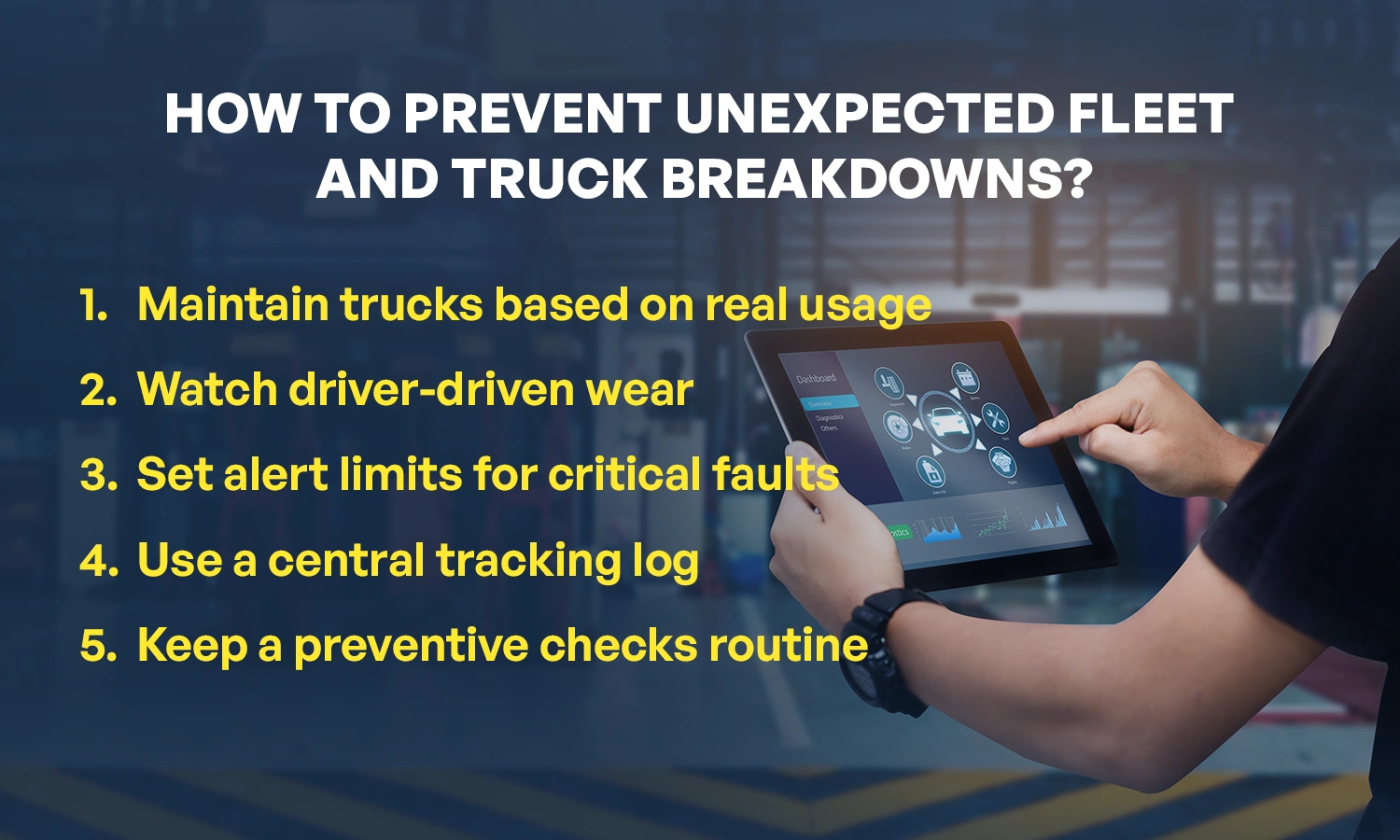
How to Prevent Unexpected Fleet and Truck Breakdowns?
Preventing breakdowns needs more than reminders. It needs discipline and data. Here are practical steps fleets can follow:
-
Maintain trucks based on real usage
Use tracking data to service vehicles that show high stress, not just those that hit calendar dates.
-
Watch driver-driven wear
Overspeeding, harsh braking, and poor gear habits damage vehicles faster. Telematics helps spot repeat patterns and coach drivers fairly.
-
Set alert limits for critical faults
Do not wait for a dashboard light to become a breakdown. If engine temperature, battery voltage, or fuel pressure crosses limits, act early.
-
Use a central tracking log
A simple fleet maintenance tracker helps ensure no vehicle is missed, especially when fleets run multiple depots and routes.
-
Keep a preventive checks routine
Daily walkarounds and weekly inspections catch tyre wear, brake issues, leaks, and mounting damage before a trip turns risky.
Fleets that follow these steps reduce surprise failures and keep fleet vehicle maintenance predictable instead of stressful.
Real-World Examples: How Taabi Uses Tracking to Lower Downtime
Many fleets reduce downtime when they connect tracking to maintenance decisions. Here are the common results seen in real operations using Taabi-type systems:
-
Early fault intervention
A truck showing repeated overheating or voltage drops is flagged early. The fleet schedules service before it fails on the route.
-
Route pressure visibility
Tracking shows which routes cause repeated wear. Fleets rotate trucks or adjust load planning to avoid pushing the same vehicle too hard.
-
Driver-linked prevention
When telematics reveals repeated harsh driving by specific drivers, managers coach them using trip evidence. This reduces wear and lowers workshop visits.
Taabi fits this flow well because it is built for truck fleets. It supports health alerts, trip stress patterns, and actionable reporting in one system. Fleets do not need to stitch together separate tools to manage maintenance.
For smaller fleets, too, this approach works. When a fleet chooses fleet maintenance software for a small business, the biggest win is avoiding even one major breakdown that disrupts a whole week of trips.
Conclusion
Reducing downtime starts with smarter fleet vehicle maintenance. Tracking data shows how trucks are driven and where stress builds up, so fleets can service vehicles before small faults become big failures. With tools like Taabi, managers get early alerts, clear trip patterns, and a single view of vehicle health and tracking. The result is fewer surprise breakdowns, safer trips, and a fleet that stays on the road more days every month.
FAQS
Is fleet maintenance software useful for small businesses?+−
Yes. Small fleets feel downtime more sharply because each vehicle carries a bigger share of work. A simple maintenance system helps schedule service on time, track history, and avoid one breakdown that can stall operations for days.
How do you maximise fleet utilisation and minimise downtime?+−
Use real trip data to plan maintenance early, rotate trucks across tough routes, and coach drivers who create repeated wear. Predictive alerts, service scheduling, and clean route planning together keep trucks available for more trips.
What is the biggest challenge in fleet management?+−
The hardest part is maintaining control at scale. Once fleets grow, it becomes difficult to track performance, maintenance, fuel, and driver habits manually. That is why connected tracking and maintenance systems are now a core need.