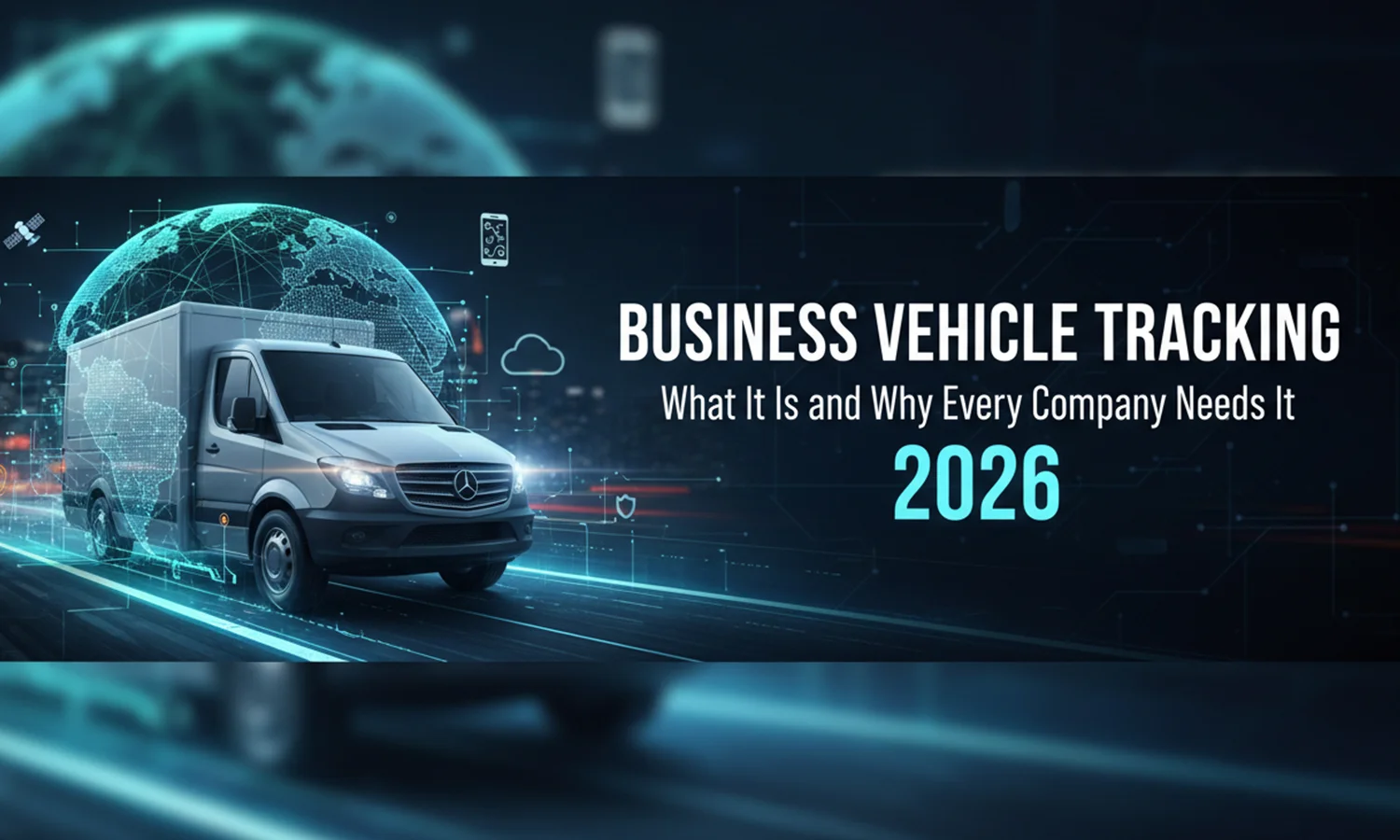
Business Vehicle Tracking: Why Your Company Needs It in 2026
Introduction
In 2026, the logistics landscape is more competitive than ever. Rising fuel costs, tighter delivery windows, and increasing regulatory demands mean that “good enough” management is no longer an option. For any company that moves goods or people, business vehicle tracking is the fundamental pillar of profitability. It isn’t just about dots on a map anymore. It’s about a comprehensive GPS vehicle tracking system that integrates with your entire business ecosystem to drive “uptime” and reduce waste.
What is Business Vehicle Tracking and How Does It Work?
Business vehicle tracking is a process that uses a vehicle tracking device to collect and transmit real-time data about an asset’s location, health, and usage. While it sounds technical, the process is streamlined for the user:
-
Hardware (The Tracker):
A truck GPS tracker or plug-and-play vehicle tracking device is installed in the vehicle.
-
The Connectivity Mesh:
Using 5G or satellite signals, the device sends data, ranging from GPS coordinates to engine fault codes, to a secure server.
-
The Intelligence Layer:
This raw data is processed by a vehicle tracking solution like Taabi AI. It converts numbers into actionable insights, such as "Vehicle A needs a battery replacement" or "Driver B is idling excessively."
Why Business Vehicle Tracking Is Essential in 2026
As we move through 2026, tracking has transitioned from a “luxury” to a “business survival tool.”
-
Predictive Maintenance:
Using fleet maintenance tracking, businesses can catch engine issues before they lead to a breakdown. This ensures maximum uptime and prevents the massive costs associated with emergency repairs.
-
Fuel Economy:
Fuel remains one of the highest expenses. A truck GPS tracker helps identify inefficient routing and unauthorized vehicle use, saving companies an average of 10-15% on fuel costs annually.
-
Data-Driven Decision Making:
In a fast-paced market, guessing is expensive. Real-time data allows you to optimize your workforce and respond to customer needs with hyper-accurate ETAs.
Business vehicle tracking also contributes to operational intelligence within fleet operations. When location data, fuel usage, driver behaviour, and vehicle health are viewed together, fleet managers gain a clearer understanding of how daily operations are performing. This helps identify inefficiencies, improve route planning, and support faster operational decisions. Platforms like Taabi bring these data points into a single dashboard, allowing logistics teams to manage fleets with greater visibility.
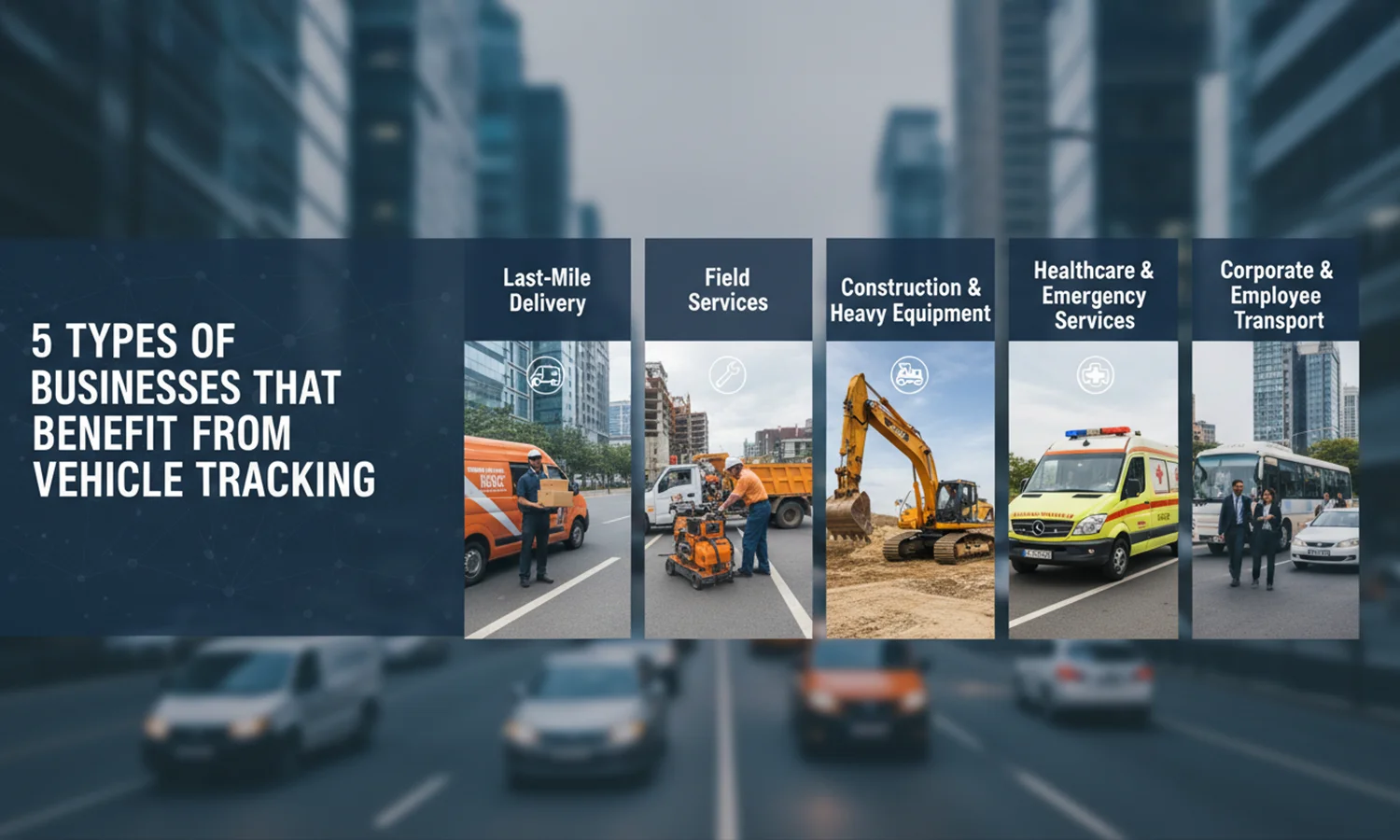
5 Types of Businesses That Benefit From Vehicle Tracking
While most think of long-haul logistics, a GPS tracker for fleet vehicles is essential across various sectors:
-
Last-Mile Delivery:
Ensuring parcels reach customers via the fastest, most fuel-efficient routes.
-
Field Services:
Plumbers, electricians, and HVAC technicians use tracking devices for fleet to manage service calls and prove time-on-site to clients.
-
Construction & Heavy Equipment:
Monitoring expensive machinery and truck GPS trackers to prevent theft and track engine hours for maintenance.
-
Healthcare & Emergency Services:
Every second counts; live tracking ensures the nearest ambulance or medical supply vehicle is dispatched.
-
Corporate & Employee Transport:
Managing shuttle services to ensure employee safety and punctuality through fleet GPS tracking.
How to Choose the Right Business Vehicle Tracking Solution
Not all tracking systems are created equal. When selecting a vehicle tracking solution for your company, prioritize these three factors:
-
Scalability:
Can the software handle 5 vehicles today and 500 tomorrow?
-
Integration:
Does it "talk" to your existing payroll or ERP( Enterprise Resource Planning) software? Taabi's platform is designed to plug into your current workflows seamlessly.
-
Actionable Analytics:
Avoid "data fatigue." Look for a system that doesn't just give you reports but gives you answers, like telling you exactly how to improve your bottom line.
Conclusion
Business vehicle tracking in 2026 is the difference between a fleet that merely survives and one that thrives. By investing in a smart GPS vehicle tracking system, you are protecting your assets, empowering your drivers, and ensuring your company is ready for the future of logistics. It also contributes to operational intelligence by turning real-time vehicle data into practical insights that help reduce downtime, optimise routes, and control costs. With Taabi AI, you get more than just a tracker; you get a partner dedicated to your fleet’s success.
FAQS
Is Business Vehicle Tracking Legal and Ethical?+−
Yes, companies have a legal right to track business-owned assets, provided they inform employees and use the data for legitimate business purposes like safety and efficiency.
Can small businesses also use vehicle tracking systems?+−
Absolutely; modern cloud-based systems are modular and affordable, allowing small fleets to gain the same high-tech advantages as large enterprises.
Will vehicle tracking systems support future technologies?+−
Yes, top-tier platforms are already built to support Electric Vehicle (EV) telematics, AI dashcams, and autonomous vehicle integration.