


Key Takeaways
- ➤ Video telematics links camera footage with truck telematics data.
- ➤ Real-time in-cabin alerts help drivers correct risky behaviour early.
- ➤ Managers get event clips and data to coach drivers and resolve claims.
- ➤ Video telematics supports safer fleets, fewer incidents, and better control.
- ➤ Taabi offers a truck-focused solution built for Indian fleet needs.
What Is Telematics in Fleet Management?
Telematics in fleet management means using connected devices to collect truck data and send it to a dashboard. This data includes location, speed, idling, route history, and engine signals. Managers use it to track trips, fuel use, and driver performance.
Why Fleets Are Turning to Video Telematics
With fleet video telematics, managers get visual proof of risky moments, while drivers get real-time alerts that help them correct early. It also reduces false claims, supports fair driver coaching, and builds safer habits across routes. For many fleets, learning what video telematics is becomes the first step toward safer operations.
How Video Telematics Works
A typical setup uses a forward-facing and cabin-facing camera tied to a telematics device. The video telematics camera records the road and driver actions. At the same time, the telematics unit logs speed, braking, cornering, and location. Many fleets also add a fleet video camera on specific truck types, like tankers or tippers, to capture blind-side events.
How Does Video Telematics Software Work?
Since the video is tied to a timeline of speed and location, a manager can replay an event and understand the cause clearly. This helps in coaching, fixing routes, and resolving disputes. It is also useful for compliance and audits. If you want to see what video telematics is in action, this dashboard is where it comes alive.
How Taabi.ai Empowers Fleets With Smarter Video Telematics
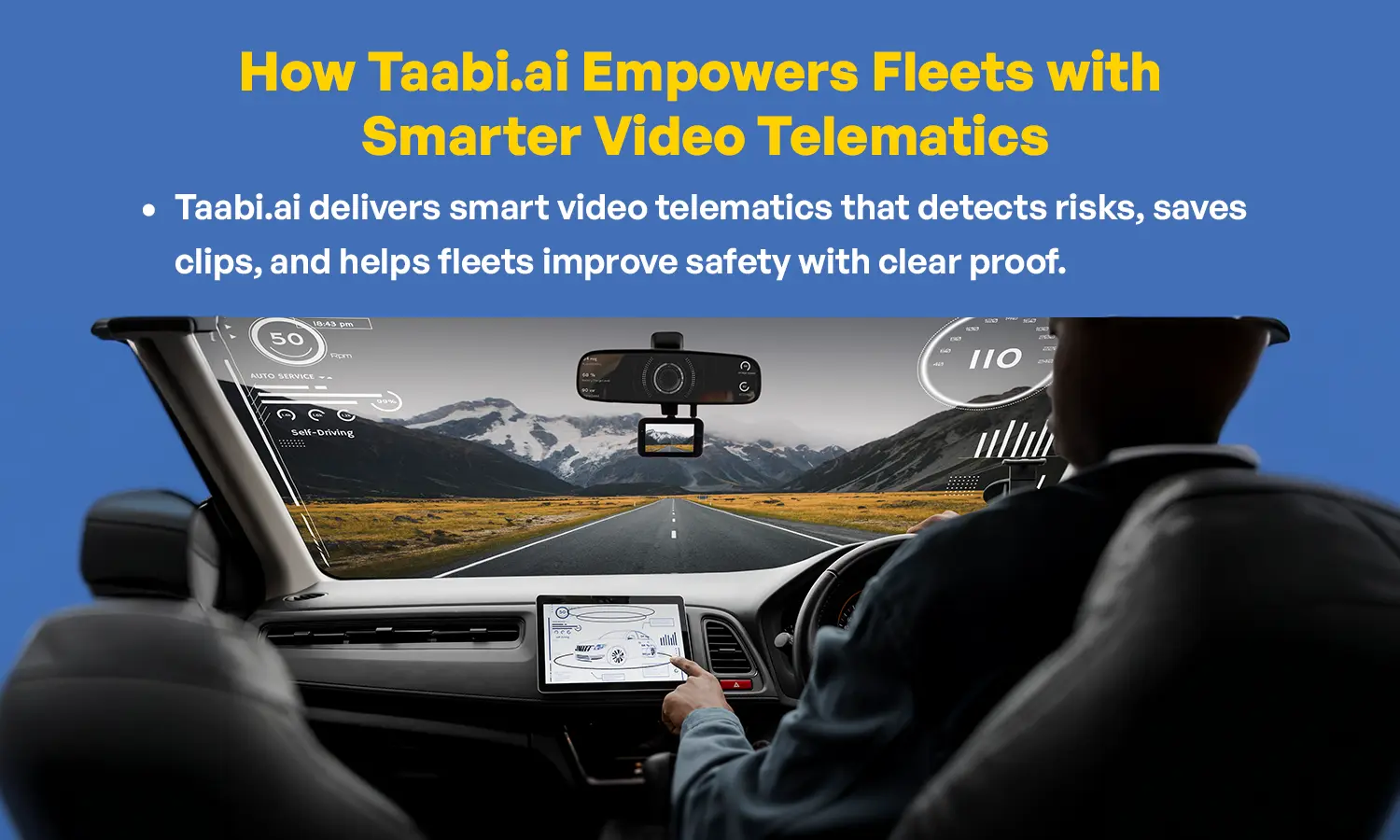
Taabi Provides video telematics for trucks, designed for Indian roads and driving conditions. Its telematics camera setup pairs road view, cabin view, and driving data into one place. Taabi flags fatigue, distraction, risky lane behaviour, overspeeding, and harsh driving in real time, and stores each event clip for later review.
Fleets can use Taabi to coach drivers fairly, reduce repeat risks, and handle claims with clear evidence. Unlike basic dashboard cameras, Taabi links every alert to data, so decisions are based on proof, not guesswork. This is a practical answer to what video telematics is for fleets that want safer routes and stronger control.
Conclusion
Knowing what is video telematics helps fleets choose safer ways to operate. By combining cameras, alerts, and driving data, fleets can prevent incidents, protect drivers, and keep deliveries on track. Taabi’s truck-first system makes this practical with real-time alerts and proof for every risky moment.