

BLOG Details

Is Video Telematics Worth It for Your Fleet? Let’s Find Out

taabi-team
Is Video Telematics Worth It

Key Takeaways

  • Video telematics links truck footage with speed, braking, and route data.
  • It helps drivers correct risky actions in real time.
  • Fleets get proof for coaching, claims, and compliance.
  • Safer driving reduces fuel waste, downtime, and repair costs.
  • Taabi offers video telematics built for truck fleets and Indian routes.

Introduction

Fleet owners keep asking one question today: Is video telematics worth it? It is a fair question. Adding cameras and software is an investment, and nobody wants tools that look good on paper but do nothing on the road.
The truth is simple. Video telematics becomes worth it when it helps you avoid the costs you face daily: accidents, fuel misuse, unsafe driving, false claims, and trucks that go down without warning. It gives you proof of what actually happened, plus alerts that help drivers correct risky actions early.
Let us break down how video telematics works, what hardware it uses, how it supports safety and maintenance, and how fleets recover the money they put into it.

How Does Video Telematics Work?

Video telematics combines two things. First, it records what happens on the road and inside the cabin. Second, it links that footage to telematics data like speed, braking, idling, and location.
A video telematics camera is installed in the truck. Most fleets use a forward-facing angle for road risk and a cabin-facing angle for driver behaviour. These cameras run continuously, but the system highlights only important events. For example, harsh braking, lane drift, or distraction triggers an alert.
The telematics device then uploads a short event clip to cloud storage along with the trip data. Managers see this on a dashboard, and drivers hear or see alerts in real time inside the cabin. So you get two wins at once: help for the driver in the moment, and proof for the fleet after the trip.
That is the main reason fleets say video telematics is worth it. It reduces guesswork and makes safety measurable.
Is Video Telematics Worth It

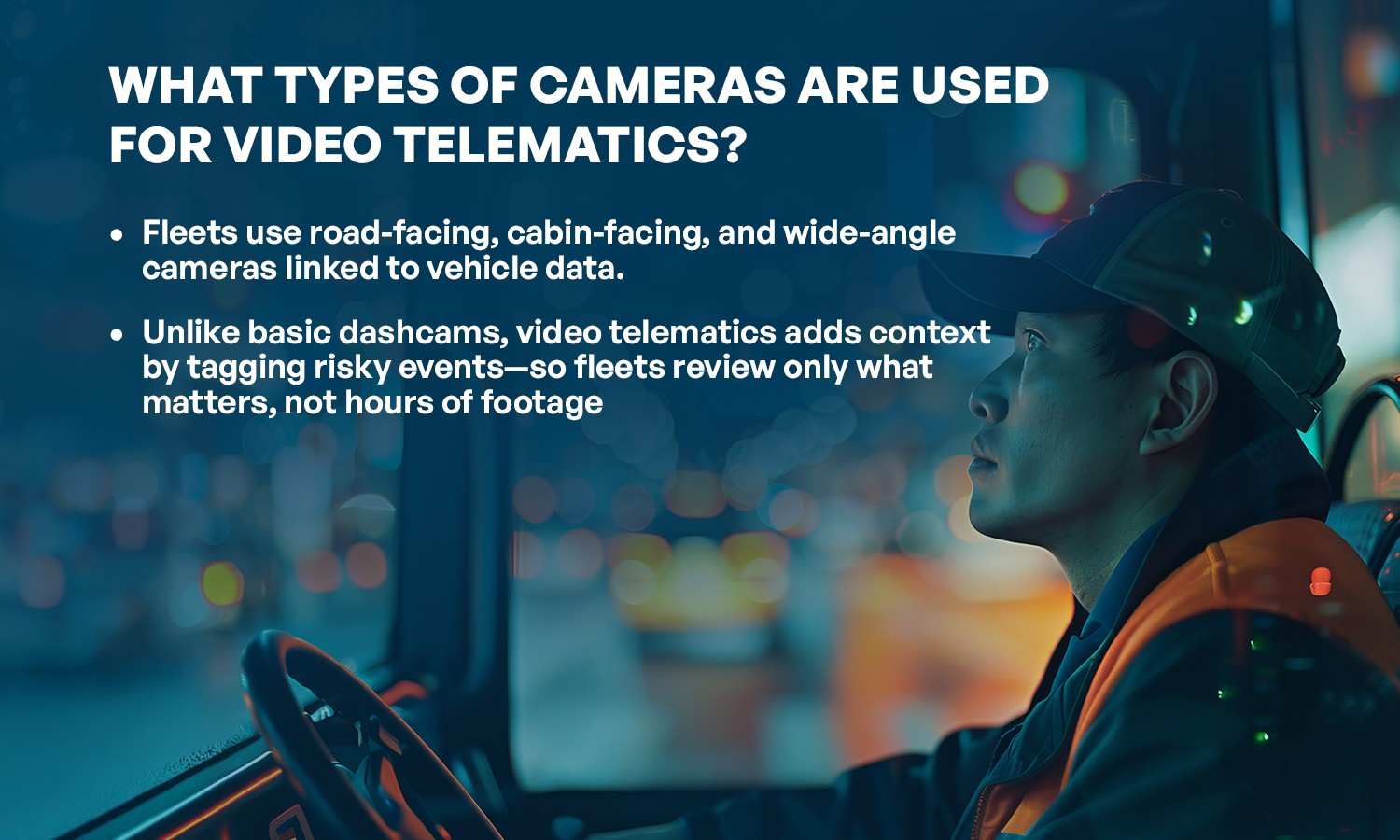
What Types of Cameras Are Used for Video Telematics?

Most truck fleets use a mix of cameras based on the risk they want to cover.
A standard setup includes a road-facing camera, a cabin-facing camera, and a telematics unit that connects video to truck data. The footage quality matters, but even more important is how the system tags and stores events. A raw dash cam video recorder gives you video, but not context. Video telematics adds context automatically.
Some fleets also use a dashcam video camera with wider angles for head-on risk and blind-side coverage. The key point is not the number of cameras. It is how well the system captures risk and connects it to data for quick action.
With the right setup, fleets stop wasting time searching through hours of video and focus only on moments that matter.

Is Video Telematics Worth It for Your Fleet?

To decide if investing in video telematics is really worth it, look at the costs you already face today.

If your fleet deals with any of these often, video telematics pays for itself:

  • accidents caused by fatigue, distraction, speeding, or unsafe lane behaviour
  • fuel loss due to idling, harsh driving, or route misuse
  • disputes where you cannot prove who was at fault
  • Repeated unsafe driving habits that coaching has not fixed
  • delayed deliveries because drivers make risky choices under pressure
With fleet video monitoring, the manager sees exactly what happened and why. Drivers get clearer feedback because it is based on real footage, not assumptions. Over time, these small corrections reduce incidents and improve trip consistency.

So yes, video telematics is worth it when safety and accountability are real pain points. In most truck fleets, they are.

How Does Video Telematics Support Predictive Maintenance?

Predictive maintenance is not only about engines. It is also about how trucks are driven.

Unsafe driving directly affects wear. Hard braking, harsh acceleration, and overspeeding put extra load on brakes, tyres, and engine parts. Video telematics helps spot these patterns early.

When a fleet manager reviews footage and telematics data together, they see what causes stress on the truck. This helps in two ways. First, drivers get coached to reduce harsh habits. Second, maintenance teams can flag trucks that are being driven in ways that increase breakdown risk.

In short, video telematics does not replace vehicle health tools, but it supports them by improving driving patterns that determine how long a truck stays healthy.

How Fleet Video Telematics Improves Cost Efficiency

The main costs of a truck fleet come from fuel, downtime, and incidents. Video telematics touches all three.
It reduces fuel waste by showing idling patterns, harsh driving, and route misuse with visible proof. It reduces downtime because fewer incidents mean fewer stopped trucks. It reduces claim costs because real footage protects fleets from false damage stories.
With fleet telematics video, managers also learn which routes and drivers create the most risk. That helps them improve planning, shift workloads, and avoid repeat losses.

Over time, the cost savings often come from many small wins, not one big change. But those small wins add up fast in fleet operations.

Taabi’s Fleet Video Telematics

Taabi builds video telematics for truck fleets and commercial vehicles, keeping Indian driving conditions in mind. The system links in-cabin and road footage with telematics alerts so fleets get both prevention and proof.

Taabi supports driver safety through live alerts for fatigue, distraction, overspeeding, and unsafe lane behaviour. Event clips are stored automatically for review and coaching. Managers can also use live streaming when risk builds up on the road.

For fleets already using Taabi’s larger stack, video telematics works as a safety layer that connects directly to daily operations. It helps reduce incident costs, improve driver behaviour, and protect fleet performance without heavy manual work.

Conclusion

So, is video telematics worth it for a fleet? If your trucks face daily safety risk, fuel loss, or claim disputes, the answer is yes. Video telematics gives drivers real-time support and gives managers clear proof to coach and protect operations. With Taabi’s truck-first system, fleets can improve safety, reduce avoidable costs, and run with stronger control on every route.

FAQS

What is the best fleet tracking software?
The best software is one that fits your fleet size, routes, and risk level. Look for real-time location tracking, driver behaviour insights, event proof, and easy reporting. If safety and claims are key concerns, choose a system that includes video telematics.
Is video telematics worth the investment for small fleets?
Yes, even small fleets benefit if they face fuel misuse, unsafe driving, or claim disputes. One avoided incident or one protected claim can cover the cost for months. Small fleets often see faster impact because the change in behaviour is easier to track.
Which is the best vehicle tracking device?
A good tracking device is one that is accurate, reliable on long routes, and linked to a dashboard that gives useful insights. For truck fleets, devices that combine GPS with driver and vehicle data offer more value than location-only trackers.

Read More Blogs

Expand your horizons with a wealth of captivating articles that complement our featured blogs; offering further perspectives, valuable insights, and a deeper exploration of the topics that intrigue you.

Subscribe now

Looking for Deep-Tech Logistics & Fleet Management Solutions?

Access the latest trends, expert commentary, and indicators for unique insights into the global economy.