


Key Takeaways
- ➤ The ways video telematics improves fleet efficiency start with safer driving and fewer incidents.
- ➤ Event video gives proof, helping fleets close claims faster and return trucks to work.
- ➤ Real clips improve driver coaching and reduce repeat risk.
- ➤ Video plus telematics helps fleets fix route and delay patterns early.
- ➤ Taabi provides truck-first video telematics to apply these gains at scale.
Introduction
That is why fleets are focusing on the ways video telematics improves fleet efficiency in day-to-day operations. Video telematics adds a camera layer to standard telematics, so fleets not only track movement but also see what caused a risky moment or delay. For truck fleets, this brings better driver support, faster decisions, and fewer surprises.
In this guide, we will explain what video telematics is, then walk through the six most practical ways video telematics improves fleet efficiency, and finally show how Taabi helps fleets apply it in the real world.
What Is Video Telematics for Fleets?
Video telematics combines vehicle data with live or event-based video. A camera records the road and sometimes the cabin. At the same time, telematics captures speed, braking, idling, and route movement. The two streams sync, so managers get full context for every event.
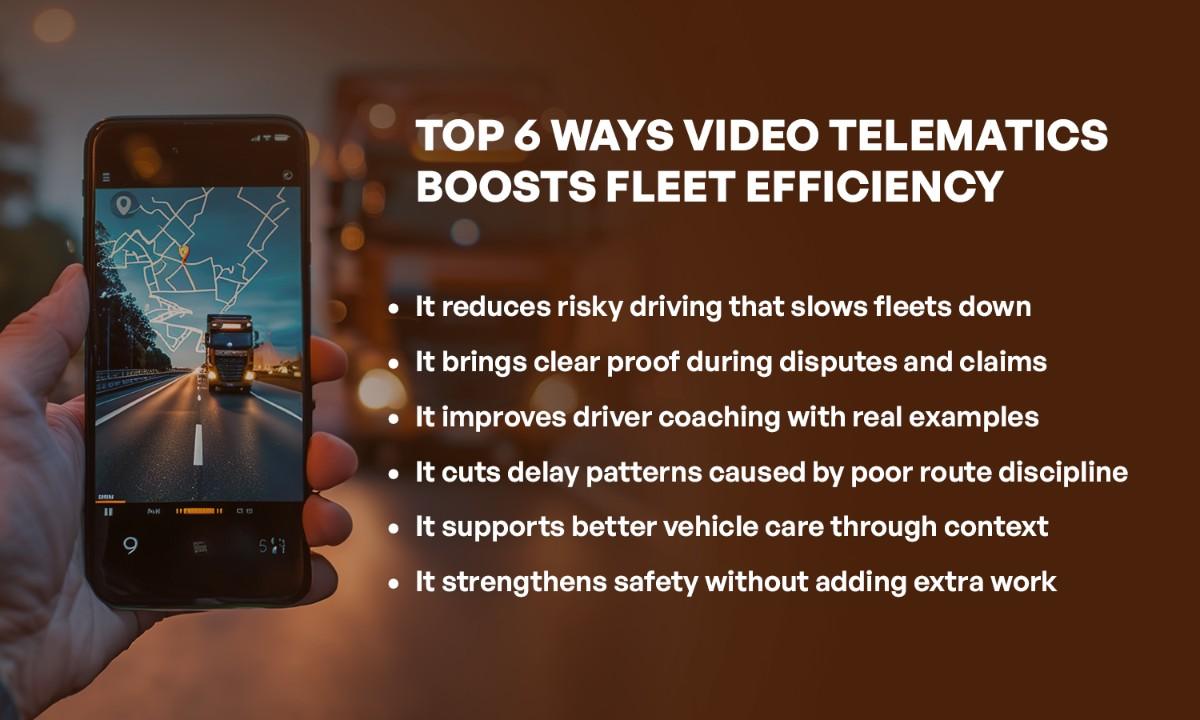
Top 6 Ways Video Telematics Boosts Fleet Efficiency
-
It reduces risky driving that slows fleets down
Unsafe driving leads to accidents, stoppages, and claim processes. With fleet video telematics, drivers receive real-time alerts, and managers see repeated risk patterns clearly. Over time, drivers improve habits, which reduces incidents and keeps trips moving smoothly.
-
It brings clear proof during disputes and claims
Fleets lose time and money when incidents are unclear. A video telematics dashboard camera stores event clips automatically, tied to speed and location. This protects fleets in hit-and-run cases, cargo claims, and insurance disputes. Faster resolution means trucks return to work sooner, which is one of the simplest ways video telematics improves fleet efficiency.
-
It improves driver coaching with real examples
Coaching based only on numbers can feel unfair to drivers. With telematics video, managers can show the exact event that needs improvement. Drivers learn faster because feedback is specific. That reduces repeat mistakes and improves performance across routes.
-
It cuts delay patterns caused by poor route discipline
Standard tracking shows where a truck went. Video telematics shows why it happened. When fleets use fleet video tracking, they can spot route deviations linked to risky road choices or driver decisions. This helps managers correct patterns early, so delays do not repeat week after week.
-
It supports better vehicle care through context
Some vehicle stress is caused by routes or driving style. Video clips linked to events like harsh braking or repeated pothole hits help managers understand why wear is happening. When paired with a good telematics camera, fleets plan maintenance better and reduce breakdown-driven downtime. That is another key reason the ways video telematics improves fleet efficiency show up quickly in real operations.
-
It strengthens safety without adding extra work
Managers cannot watch every trip manually. Video telematics uses AI to highlight only what matters. With AI video telematics, the system flags fatigue, distraction, unsafe lane behaviour, and close-following risk automatically. Managers review only the critical moments and take action quickly. This keeps efficiency high without increasing team workload.
How Video Telematics Improves Driver Behaviour and Safety
Driver behaviour affects every cost line. Overspeeding wastes fuel and increases wear. Distraction risks accidents. Fatigue causes delays and unsafe stops. Video telematics helps solve this by giving early alerts to drivers and proof to managers.
Because the system links behaviour to vehicle tracking, managers can see where and when risk builds up. They can adjust schedules, improve coaching, and even redesign routes that carry repeated hazards. Better behaviour means smoother trips, and that is one of the strongest ways video telematics improves fleet efficiency over time.
How Taabi Helps Fleets Improve Efficiency with Video Telematics
Taabi builds video telematics for truck fleets. It combines road-facing and cabin-facing video with telematics signals in one dashboard. Fleets get live alerts for unsafe moments and event clips for review. Managers can track route patterns, support drivers fairly, and respond early when risk rises.
Taabi’s system is designed for heavy vehicles and long routes, so the data stays reliable even in tough driving conditions. This makes it easier for fleets to turn the ways video telematics improves fleet efficiency into daily habits, not one-time projects.
Conclusion
Video telematics gives fleets more than visibility. It gives context, proof, and early correction. The ways video telematics improves fleet efficiency are clear: fewer risky incidents, faster claim resolution, better coaching, cleaner route discipline, and smarter safety at scale. For truck fleets using Taabi, this means smoother trips, stronger driver support, and reliable day-to-day performance.
FAQS
They help in three main ways: preventing accidents through real-time alerts, improving driver habits through data-based coaching, and protecting fleets during disputes with synced event video. Together, these improve safety and efficiency across daily trips.