


Key Takeaways
- ➤ A GPS vehicle tracking system gives live location and route history.
- ➤ GPS tracking helps fleets spot delays early and plan better trips.
- ➤ Telematics adds driving and vehicle context to tracking.
- ➤ Integrated GPS and telematics tools for vehicle tracking improve safety and control.
- ➤ Truck fleets gain the most when tracking is designed for commercial operations.
Introduction
What Is Real-Time Vehicle Tracking?
How Can You Track Vehicle Location in Real Time Using GPS?
- ➤ A GPS device is installed in the vehicle.
- ➤ It receives satellite signals and calculates the truck’s location.
- ➤ That location is sent to a central dashboard through a mobile network.
- ➤ Managers view live movement, routes, stops, and trip summaries.
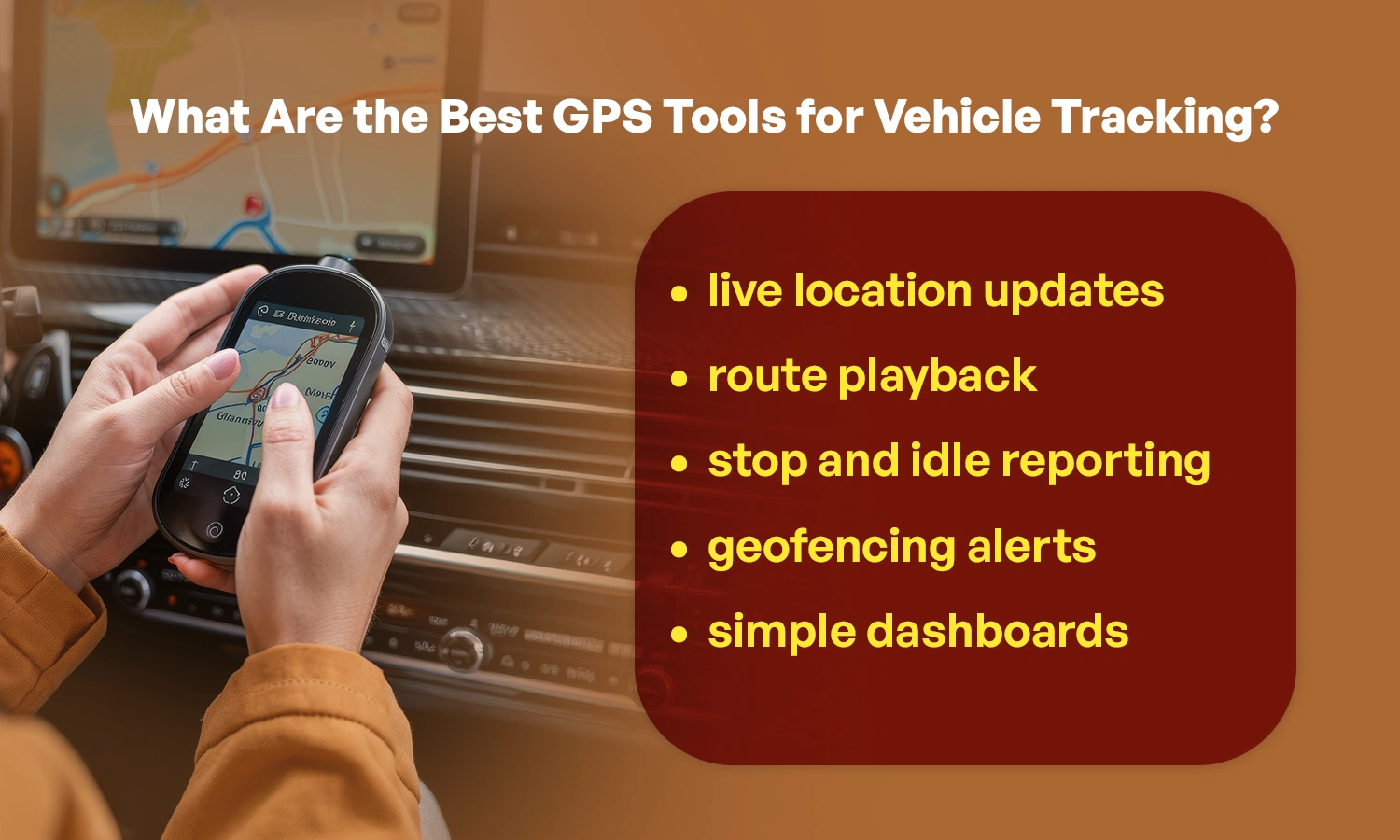
What Are the Best GPS Tools for Vehicle Tracking?
- ➤ live location updates
- ➤ route playback
- ➤ stop and idle reporting
- ➤ geofencing alerts
- ➤ simple dashboards
For trucks, it is important to choose GPS tracking devices for commercial trucks that handle long routes, rough terrain, and heavy vehicle vibration. Many fleets also prefer a vehicle tracking system with GPS that supports multiple vehicles in one view, because switching between different apps wastes time.
If you run mixed assets, choose tools designed for a commercial vehicle gps tracking system so the dashboard fits fleet operations instead of private car users.
How Does Telematics Help in Vehicle Location Tracking?
Telematics connects vehicle data like speed, braking, idle time, engine health, and driver behaviour with GPS location updates. This makes GPS and telematics tools for vehicle tracking far more useful than GPS alone.
- ➤ It explains why a vehicle stopped. Was it traffic, a breakdown risk, or a route deviation?
- ➤ It tracks risky driving patterns tied to location, so managers can coach drivers properly.
- ➤ It improves accuracy during weak signals by storing data and syncing once the network returns.
- ➤ It helps fleets move from “where is my truck?” to “is my truck safe and running right?”
How Are GPS and Telematics Technologies Evolving for the Future?
Future GPS and telematics tools for vehicle tracking will focus on:
- ➤ Sharper live alerts tied to real road risk
- ➤ better route planning using traffic and trip patterns
- ➤ deeper vehicle health signals to prevent breakdowns
- ➤ tighter integration with video safety systems for proof and coaching
Conclusion
Real-time visibility is now a daily need for every fleet. GPS shows location, but telematics makes that location meaningful. Together, GPS and telematics tools for vehicle tracking help fleets reduce delays, handle route risks early, and support safer driving. With the right system in place, tracking becomes a business advantage, not just a map feature.
FAQS
No. GPS is a satellite-based positioning technology. It tells location and movement. AI may be added on top of GPS data in some fleet platforms, but GPS itself is not AI.
Telematics in EVs works the same way as in diesel trucks. It tracks location, speed, route behaviour, and battery or motor health signals. It helps EV fleets plan charging, reduce breakdown risk, and manage drivers better.
In most cases, fleet telematics data is private and controlled by the fleet owner. Law enforcement may request access during legal investigations, but it depends on local laws and proper process. Fleets should follow compliance rules for data storage and sharing.