


Introduction
India’s trucking industry is massive, valued at over ₹16 trillion (≈$215 billion). So why are so many fleet operators still struggling with efficiency? The problem isn’t demand; nearly 65% of all freight in India moves by road. The real issue lies in a persistent technology gap.
Fleet operators face underutilized assets, compliance complexity, and operational inefficiencies. The old ways of managing fleets, manual logs, phone-based dispatches, and reactive maintenance no longer work in today’s fast-paced logistics environment.
This is where artificial intelligence (AI) comes in, not as a futuristic concept, but as a practical, proven solution that’s already transforming how fleets operate in India.
The Evolution of Fleet Management
From Paper Logs to Predictive Intelligence
Fleet management has come a long way. What started with paper logs and radio dispatches evolved into basic GPS tracking in the 1990s and early 2000s. Today, we’ve entered an entirely new phase, powered by AI and predictive analytics.
Earlier fleet management software primarily tracked locations. Modern AI-driven systems go much further, predicting maintenance needs, optimizing routes in real time, and analyzing driver behavior for safety and efficiency.
According to the Indian Foundation of Transport Research and Training (IFTRT), about 90% of India’s trucking sector consists of small fleet owners who haven’t yet tapped into technology’s potential. This gap represents both a challenge and an opportunity for digital transformation.
Pain Points in Current Systems
The reality for many Indian fleet operators remains difficult:
➤ Average fleet utilization: 50–60% (vs. 85% in developed markets)
➤ 20% of travel time is wasted at tolls and checkpoints
➤ 30–40% of return trips run empty
➤ Only 15% of fleets use advanced telematics
These inefficiencies translate to billions in lost potential, underscoring the urgent need for smarter, AI-enabled systems.
Key Features of Modern Fleet Management Systems
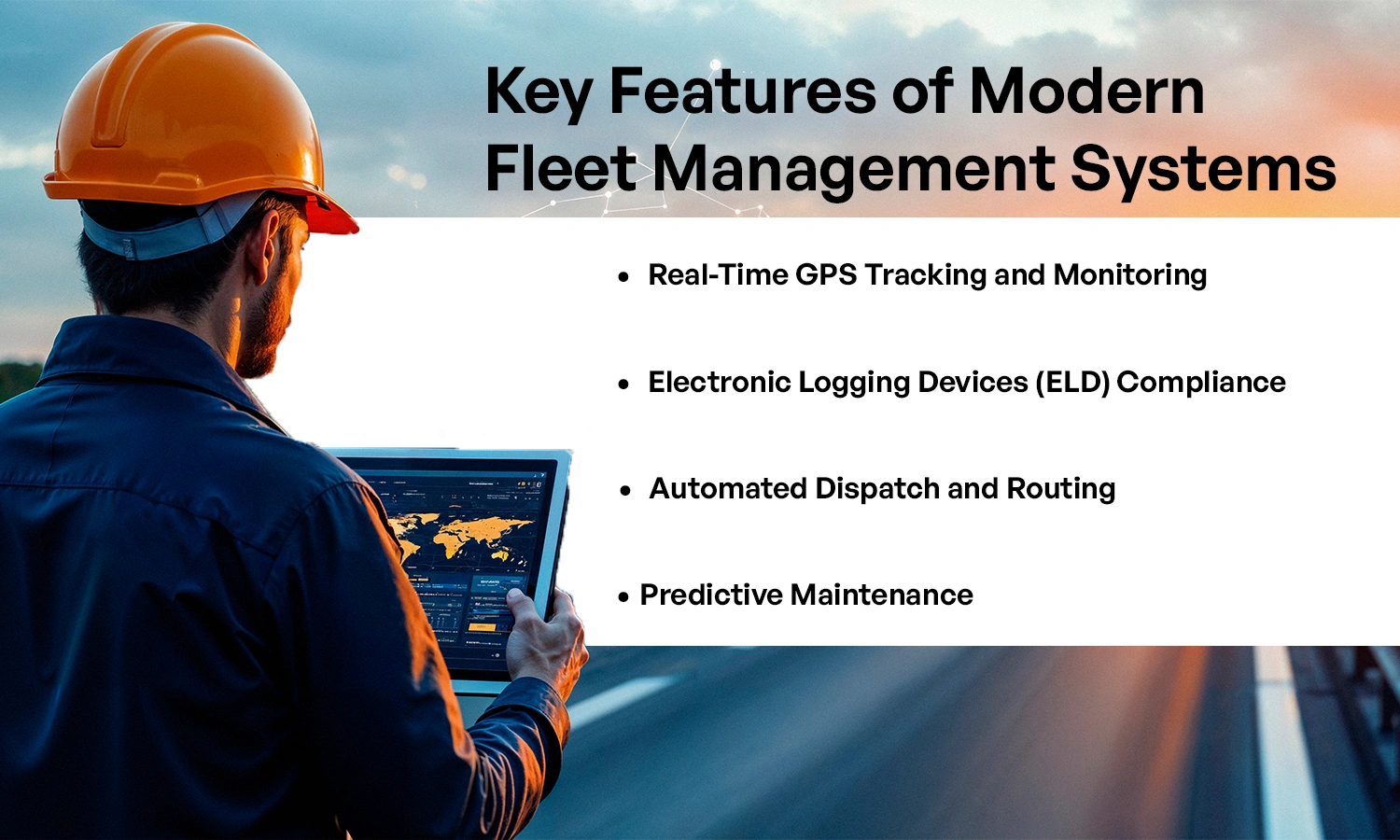
Real-Time GPS Tracking and Monitoring
Next-gen fleet telematics offer minute-by-minute location tracking combined with intelligent route optimization based on traffic, weather, and historical performance.
Fleets adopting these systems report 15–20% reductions in travel time across diverse Indian terrains.
Electronic Logging Devices (ELD) Compliance
As regulations tighten, ELDs are becoming indispensable. They automatically log driver hours, rest breaks, and trip data, alerting users to possible violations in advance.
While adoption currently sits at just 8%, this figure is projected to surge as compliance requirements expand.
Automated Dispatch and Routing
AI algorithms now match loads to trucks and calculate the most efficient route in seconds.
Operators using AI-based dispatching have reduced empty miles by up to 30%, improving fuel utilization and profitability.
Predictive Maintenance
Predictive maintenance is among AI’s biggest contributions. By analyzing engine data, driving habits, and external conditions, AI can predict failures before they happen. Early adopters have achieved up to 40% lower downtime through proactive servicing, transforming maintenance from reactive to preventive.
How Taabi.ai Is Transforming Fleet Management
Taabi.ai is leading India’s AI-powered fleet revolution. Built specifically for the country’s complex logistics landscape, it seamlessly integrates machine learning, IoT, and telematics into one unified platform.
Real-Time Analytics Dashboard
The platform processes large data streams, from vehicle sensors, GPS, weather, and traffic sources, into simple dashboards that provide actionable insights for immediate decision-making.
Seamless Integration Capabilities
Taabi.ai connects effortlessly with existing ERPs, accounting software, and management tools, making implementation fast, secure, and disruption-free.
Benefits of AI-Powered Fleet Management
1. Cost Reduction
➤ 8–12% drop in fuel expenses: Taabi has historically delivered 10–15% fuel cost reduction, consistently outperforming the 8–12% industry benchmark
➤ Up to 40% less spent on maintenance due to predictive alerts
➤ 25% fewer admin hours through automation and digital documentation
2. Efficiency Improvements
➤ 15–20% faster route completion times
➤ 25–30% reduction in empty miles via load-matching
➤ ROI realized in 8–12 months for most Indian fleets
3. Safety Enhancement
➤ 35% fewer accidents with AI-based driver monitoring
➤ Fatigue detection to prevent on-road incidents
➤ Improved driver retention (+28%) through fair, data-backed evaluation
4. Environmental Impact
➤ 15–20% lower fuel consumption via optimized routing
➤ 25% fewer emissions from reduced idle time and smart scheduling
➤ Significant reduction in carbon footprint per trip
Implementation Guide: Transitioning to AI-Powered Systems
Follow a clear, structured roadmap to ensure a smooth adoption:
➤ Assess Current Operations: Identify key inefficiencies.
➤ Set Clear Goals: Prioritize outcomes, e.g., fuel savings, uptime, or utilization.
➤ Run Pilot Projects: Start small to test system performance.
➤ Measure and Optimize: Track results, tweak configurations.
➤ Scale Gradually: Expand platform usage once ROI is proven.
Conclusion: The Road Ahead
The future of trucking is data-driven, AI-powered, and predictive.
As India’s logistics sector surges toward ₹24 trillion ($320 billion) by 2025, the divide between traditional fleets and AI adopters will only widen.
AI integration is no longer optional; it’s the foundation for efficiency, profitability, and sustainability.
For fleet operators ready to modernize, Taabi.ai offers tailored AI solutions built for Indian road conditions and operational realities.
👉 Schedule a demo today to see how artificial intelligence can revolutionize your trucking operations and unlock the future of fleet management.